Israel and Iran exchange strikes again: Can a major Middle East war still be avoided?


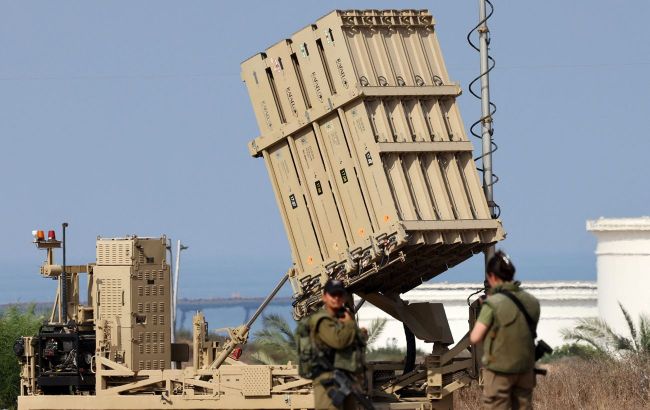 Illustrative photo: Israel and Iran have exchanged direct strikes for the first time since April (Getty Images)
Israel and Iran have launched a new round of strikes against each other's territory for the first time since April. The escalation comes amid US efforts to reach a peace agreement with Tehran.
RBC-Ukraine explains what is happening between Tel Aviv and Tehran and assesses the chances of preventing a new large-scale war in the Middle East.
Key points:
Renewed strikes: Israel and Iran have broken months of relative calm and returned to direct military confrontation for the first time since April.
Tehran's interests: Iran is carrying out limited strikes against Israel while avoiding full-scale escalation that could derail negotiations with the United States.
Economic leverage: Tehran is restraining itself from broader escalation but is pressuring Trump through the threat of blocking the Strait of Hormuz.
Domestic politics: Benjamin Netanyahu is under pressure to act proactively as Israel prepares for parliamentary elections this fall.
Likely temporary escalation: The United States has enough leverage to prevent the current flare-up from turning into a major regional war.
Rising tensions
After the 40-day war between Israel and the United States against Iran in April, tensions in the Middle East appeared to be easing. Washington became engaged in lengthy and difficult negotiations with Iran's new leadership. Meanwhile, southern Lebanon remained the region's only major flashpoint.
The Hezbollah group has long maintained close ties with Iran and supported Tehran during the conflict by launching attacks on northern Israel. In response, Israel launched a ground operation aimed at eliminating the threat.
Israel's successes have so far been limited. Hezbollah continues to employ proven guerrilla tactics.
In addition, the group has adopted lessons from the Russia-Ukraine war, focusing on cheap, mass-produced drones, against which Israel has yet to find an effective countermeasure. Fiber-optic drones, in particular, have created significant challenges for the Israeli military.
Diplomatic cover has also played a key role. During negotiations with the United States, Iran made it clear that the front in Lebanon was part of future agreements and that Israel should cease military operations there as well. As a result, Washington pressured Tel Aviv to avoid creating additional tensions.
At the same time, Hezbollah has enjoyed greater freedom of action, and attacks on Israeli territory have continued. A turning point came on June 7, when the group launched a large-scale rocket barrage for the first time in a long period.
Israel responded by striking the Dahieh district of Beirut, the Lebanese capital, where Hezbollah's leadership is based.
Even before the Israeli strike was carried out, Iranian Foreign Minister Abbas Araghchi posted the flags of Lebanon and Iran on social media platform X. The diplomatic warning was later followed by an actual attack on Israel.
Iran's and Israel's strategies
The next stage of the conflict will depend on calculations made in Tehran, Tel Aviv, and Washington.
For Iran, negotiations with the United States over the past two months have generally been moving in its favor. Tehran has exploited the fact that time is working more to its advantage than to Washington's.
Iranian leaders have skillfully leveraged their ability to influence the global economy through the potential closure of the Strait of Hormuz. This creates a powerful tool for pressuring Trump.
For the US president, several issues are at stake: reducing fuel prices for American consumers and securing some form of foreign policy success ahead of congressional elections involving his party.
Pressure from America's Arab allies in the Persian Gulf is also a factor.
At the same time, Iran's leadership understands that it can tolerate the current status quo longer because it is less sensitive to public opinion. In practice, this means Trump's threats against Iran have only limited effectiveness.
From this perspective, a new full-scale escalation is not in Iran's interests, as it could destroy everything Tehran has achieved—and still hopes to achieve—in negotiations with Washington. This explains why Iranian rhetoric remains aggressive but stops short of crossing a critical line.
"Tonight, the aggressors received their answer. This response is a warning to stop their evil actions; any further moves will be met with an even more devastating response and more severe consequences," Iranian Supreme Leader adviser Mohsen Rezaei said after the strikes.
For Israel, the situation is very different. The war against Iran was effectively concluded by the United States acting largely on its own, and it did not fully eliminate either Iran's nuclear or missile capabilities. Moreover, more radical leaders have since come to power in Tehran, with fewer restraints.
This does not reduce the threat to Israel—it increases it, especially over the long term, as Iran could rebuild its military capabilities.
Domestic politics also play a role. Parliamentary elections are expected in Israel this fall. To maintain his reputation as a strong leader, Netanyahu must continue to act proactively.
The US factor
Washington reacted with frustration to the renewed escalation between Israel and Iran, at least judging by Trump's public statements.
"You launched missiles — enough. Get back to the negotiating table," the US president said on Fox News, addressing Iran.
Trump later held an urgent phone call with Netanyahu. According to Axios, citing White House sources, Trump asked Netanyahu to temporarily delay retaliatory measures against Iran.
US officials said Netanyahu tried to resist and persuade Trump to allow Israel to strike Iran.
A few hours later, Israeli aircraft attacked Iranian targets. However, a US Defense Department official told Axios that the strikes were "relatively limited."
Given these circumstances, it is possible that Netanyahu secured Trump's approval for a limited strike simply to preserve political credibility. However, informed RBC-Ukraine sources in Israel believe the current escalation is temporary. The United States has sufficient leverage to prevent Israel from launching a larger operation.
Quick Q&A
– Why did Israel and Iran resume attacks on each other in June 2026?
The escalation followed a large-scale Hezbollah attack on Israeli territory on June 7. In response, the Israel Defense Forces struck the group's headquarters in Beirut, prompting Tehran to issue threats and resume direct missile attacks.
– What is Donald Trump's position on the conflict?
The US president has strongly opposed escalation and publicly called on Iran to return to negotiations during an appearance on Fox News.
According to insider reports, Washington is also exerting significant pressure on Netanyahu's government to postpone any major military response.
– Why is a full-scale war with Israel not currently in Iran's interest?
Tehran is satisfied with the progress of its two-month negotiations with the United States because time appears to favor Iran. A large-scale conflict would undermine Iran's diplomatic gains and likely force Washington to adopt a more aggressive approach rather than seek compromise.
– Could the current escalation develop into a prolonged regional war?
Well-informed sources describe the current escalation as temporary. The United States possesses sufficient financial and political leverage over Israel to discourage a broader military operation.