Is Iran planning missile attack on Ukraine? Here's what we know

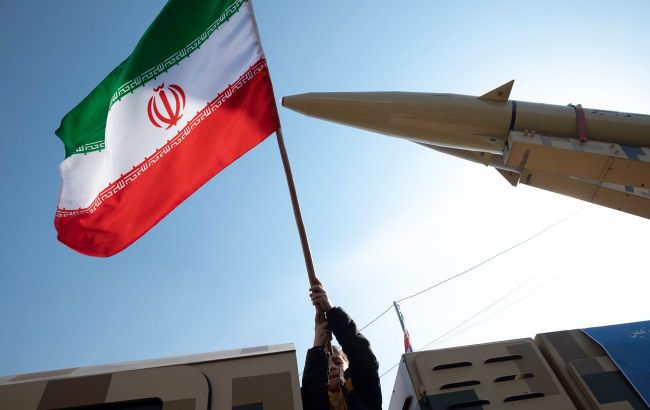 Photo: An Iranian missile (Getty Images)
There is currently no official information indicating that Iran intends to launch ballistic missiles at Ukraine. At the same time, Tehran may possess the weapons needed for such an attack, according to Andrii Kovalenko, head of the National Security and Defense Council’s Center for Countering Disinformation of Ukraine.
"I would like to add, to avoid any misinterpretation: there is currently no official information (specifically, official information) regarding preparations for such a strike. But Iran potentially possesses the weapons for such actions," he notes.
Kovalenko’s statement followed the circulation of information on Telegram channels, citing monitoring groups, about Iran’s alleged possible use of up to three ballistic missiles against Ukraine in the very near future.
What missiles does Iran have?
Defense Express reports that Iran possesses medium-range ballistic missiles capable of striking Ukrainian cities from the northern regions of the country. The range of certain models extends from 1,800 to 4,000 kilometers.
Tehran’s arsenal includes several main types of medium-range ballistic missiles:
- Ghadr and Emad: developed based on technologies from the Soviet Elbrus system. These are liquid-fueled, single-stage missiles 16.6 meters long and weighing 19 metric tons, with a 750-kilogram warhead. The Emad model features a maneuverable warhead with a strike range of up to 1,800 km.
- Sejjil: a two-stage solid-fuel missile with reduced launch preparation time. Length: 17.6 meters; weight: 26.6 metric tons. Depending on the warhead weight (700 kg or 1,500 kg), the range is between 1,000 and 2,000 km.
- Khorramshahr: the longest-range missile in the arsenal. It is capable of reaching up to 4,000 km (with a reduced warhead) or 2,000 km (with a warhead weighing up to 1,500 kg).
A cluster warhead containing 20 submunitions, which disperse within a radius of 8 km, has been developed for the Khorramshahr missile. It is designed to strike large areas and complicate missile defense operations.
Effectively intercepting Ghadr, Emad, and Sejjil missiles requires advanced missile defense systems, such as THAAD or Arrow-2. Patriot-type systems have limited capabilities to counter such ballistic missiles, depending on their speed and trajectory.
Background
On July 26, Iran’s Foreign Ministry accused Ukraine of attacking a vessel in the Caspian Sea, which Tehran described as civilian. The Iranian side claimed that one sailor was allegedly killed and another wounded as a result of the strike.
On the same day, Ukrainian President Volodymyr Zelenskyy announced very good results from long-range strikes in the Caspian Sea. According to him, the target was a vessel used to transport military cargo to Russia.
At the same time, Ukrainian Navy spokesperson Dmytro Pletenchuk, commenting on Iran’s threats regarding the strikes on vessels in the Caspian Sea, emphasized that any military logistics supporting Russia’s needs constitutes a legitimate military target.