Iron Dome missile assembled outside Israel for the first time: What we know

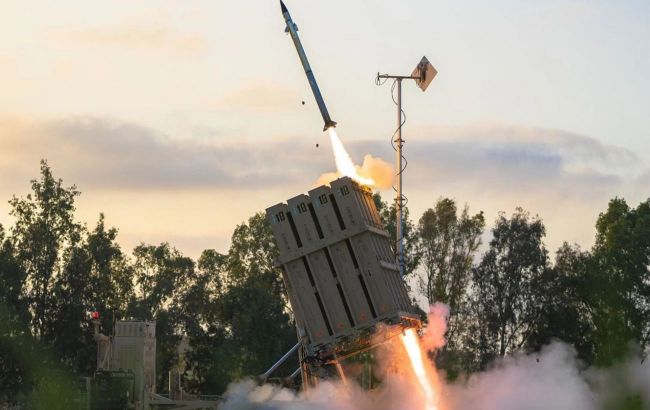 Photo: Tamir interceptor (RTX)
The US has delivered to Israel the first fully American-made Tamir interceptor missile for the Iron Dome air defense system, manufactured at the Raytheon-Rafael plant in Arkansas. This is the first time a complete Tamir missile has been produced outside Israel, according to The Jerusalem Post.
What is known about the American interceptor for the Iron Dome
The first fully American-made Tamir missile was handed over to the Israel Missile Defense Organization (IMDO) at the Raytheon-Rafael Protection Systems (R2S) facility in East Camden, Arkansas. The ceremony was attended by US and Israeli officials. The handover was announced on October 7, 2026.
Previously, American companies manufactured only components for Tamir under bilateral agreements, while final assembly took place in Israel. Now, the complete missile can be manufactured in the United States.
R2S is a joint venture between Rafael Advanced Defense Systems and Raytheon, a subsidiary of RTX. The plant opened in November 2025 following construction that began in February 2024. The investment totaled $63 million, and the facility is expected to create up to 60 jobs.
In November 2025, R2S also received a $1.25 billion contract for Tamir missiles, kits for them, and testing equipment for Israel. In addition, the plant is to manufacture SkyHunter, an American derivative of Tamir, for the US Marine Corps' Medium Range Intercept Capability (MRIC) program.
Those attending the ceremony included Arkansas Governor Sarah Huckabee Sanders, IMDO Director Moshe Patel, representatives of the US Missile Defense Agency (MDA), and representatives of Rafael and Raytheon. According to Patel, the new production line helps accelerate manufacturing for Israel's missile defense systems. He also stressed that US funding for joint programs, including emergency supplemental assistance, is reinvested in the US defense industrial base.
Tamir was developed by Rafael under IMDO supervision. It is the primary interceptor used by the Iron Dome, which has been in service since 2011. The missile is about three meters long, has a diameter of 160 mm, and weighs approximately 90 kg. It combines in-flight guidance corrections with an onboard radar seeker for the terminal phase.
The high-explosive fragmentation warhead, equipped with a radar proximity fuse, destroys targets in the air. The missile is designed to counter short-range rockets, artillery shells, and other airborne threats.
The Iron Dome system consists of Tamir launchers, an EL/M-2084 multifunction radar from ELTA Systems, and a battle management system from mPrest. A typical battery has three to four launchers, each capable of carrying up to 20 interceptors.
The system is designed to engage targets at ranges of approximately 4 to 70 km. It forms the lower tier of Israel's multilayered air defense alongside David's Sling and Arrow. According to Rafael, over its 15 years of service, Iron Dome has carried out more than 10,000 combat interceptions.
The companies have not disclosed the annual production capacity of the new plant. However, it is becoming another source of complete interceptor missiles and continues a partnership under which Tamir components have been manufactured in the United States for more than a decade.
Read also: Ukraine begins mass production of Mara drone with 1,000 km range
The shortage of interceptors and the question of their production remain a key concern for Ukraine as well. In September, German Defense Minister Boris Pistorius said he had proposed that the US establish production of PAC-3 missiles for Patriot systems in Europe, but this would require Washington's approval.
Meanwhile, Ukraine is expanding its own capabilities to counter aerial targets. In September, the Air Force said the country was preparing new interceptors to counter jet-powered Shahed drones. In an interview with RBC-Ukraine, Yartur CEO said that interceptor drones had become one of the key factors in protecting Ukrainian cities in the spring and summer of 2026, and that they would eventually be equipped with jet engines. Meanwhile, the Weapons Council noted that aviation and surface-to-air missiles account for an interception rate of 55–60%, but missiles remain in short supply.