Iran used Chinese satellite to strike US targets — FT

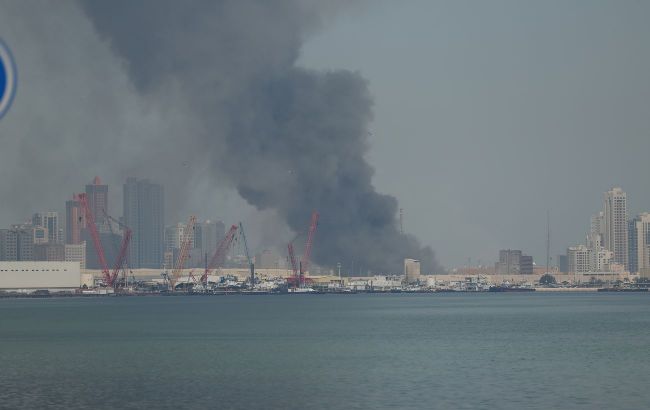 Photo: Attack on the main US naval base in Bahrain on February 28, 2026 (Getty Images)
Iran used a Chinese reconnaissance satellite to monitor US bases, and did so even before launching missile and drone attacks on them, according to the Financial Times.
The satellite was purchased by the Aerospace Force of the Islamic Revolutionary Guard Corps (IRGC).
What kind of satellite is it, and where did it come from
The satellite is called TEE-01B. It was built and launched by the Chinese company Earth Eye Co. In late 2024, following its launch from China, the IRGC acquired this satellite.
The Iranian command deployed it to monitor key US targets in the region. The FT cites lists of coordinates with timestamps, satellite imagery, and orbital analysis.
Which bases were targeted
Images taken in March captured the sites before and after drone and missile strikes. In particular, the satellite tracked:
- Prince Sultan Air Base in Saudi Arabia, on March 13, 14, and 15
- Muwaffaq Salti Air Base in Jordan
- Facilities near the US Fifth Fleet naval base in Manama, Bahrain
- Erbil Airport in Iraq.
How data access scheme worked
Along with the satellite, IRGC gained access to commercial ground stations operated by the Beijing-based company Emposat, a provider of satellite control and data transmission services. Its network covers Asia, Latin America, and other regions.
The White House, the CIA, the Pentagon, the State Department, China’s Ministry of Defense, as well as Earth Eye Co and Emposat did not respond to Reuters’ requests for comment.
According to CNN, China is carrying out a large-scale expansion of its nuclear infrastructure in Sichuan Province: new strategic facilities are being built on the sites of demolished villages.
An analysis of official documents points to Beijing’s largest nuclear weapons modernization campaign in decades.
The Chinese research vessel Xiang Yang Hong 22 deployed sensors on the seabed in Japan’s exclusive economic zone near the disputed Senkaku Islands.
Tokyo believes that under the guise of scientific research, Beijing is collecting data for underwater military operations.