Iran protest death toll may be ten times higher than confirmed, rights groups say

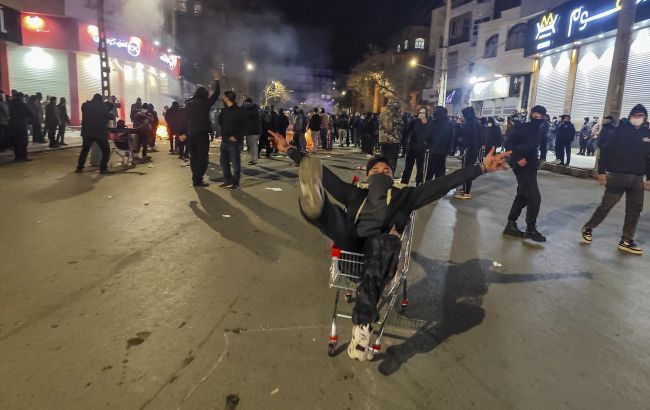 Large-scale protests in Iran have continued for 16 days (illustrative photo: Getty Images)
The confirmed death toll in Iran over 16 days of the largest protests against the ayatollah regime has reached 648 people. However, the real number of protest victims may be almost ten times higher, according to human rights organizations HRANA, Iran Human Rights, and Iran International.
Overall, human rights defenders have officially confirmed the deaths of 648 people, including protesters (among them nine children), across 14 provinces of Iran. There is also information about the injuries of thousands of protesters. On the side of the regime, at least 121 people were killed, including representatives of security forces, the military, and the judicial corps of Iran.
According to HRANA, the deaths of 646 people have been confirmed: 505 protesters, 133 security personnel, one prosecutor, and seven bystanders. Reports of another 579 deaths are being reviewed and verified.
In addition, the regime has arrested at least 10,700 people. Some of those detained face the death penalty, with the regime planning to publicly execute at least one person on January 14. Ninety-seven cases of torture aimed at extracting "confessions" from detainees have been recorded.
The largest number of deaths and detentions occurred in Iran's capital. In six hospitals in Tehran, witnesses counted up to 217 bodies, and up to another 250 in the Kahrizak morgue. Other cities with high numbers of fatalities include Isfahan, Mashhad, Rasht, Karaj, and Shiraz.
Real scale of deaths
A number of reports that cannot currently be verified indicate that the actual scale of protest casualties may exceed confirmed figures by 3 to 10 times. In particular, medics and witnesses report more than 2,000 people killed as a result of regime attacks on protesters.
According to other data, the number of civilians killed may reach up to 6,000. Verification of these claims is extremely difficult because internet access in the country has been almost completely unavailable for more than 100 hours, along with disruptions to other forms of communication.
According to another human rights group, HRANA, the country has been without internet connectivity for more than 100 hours. In addition to fixed and mobile internet, phone calls and other means of communication have been severely restricted or effectively shut down.
"Reports have emerged of gatherings and slogan-chanting by families of those killed at Behesht Zahra Cemetery in Tehran, signaling the continuation of protests even in the context of mourning, an issue that, amid the complete communications blackout, has heightened concerns over the true scale of the crackdown," HRANA writes.
Protests in Iran: What is known
Mass anti-government protests began in Iran on December 28, 2025. They were triggered by a sharp depreciation of the national currency, which harmed businesses. This, in particular, brought traders from Tehran's central market into the streets.
After the first reports of casualties, US President Donald Trump said that Iran was "beginning" to cross his "red line." According to Axios, he is leaning toward launching strikes on the country to punish the regime for the killings. However, this decision is not final, and other options are being considered.
The US State Department and the Virtual Embassy in Tehran urged their citizens to leave Iran immediately. Ukraine's Ministry of Foreign Affairs also recently called on Ukrainians to leave Iran due to the deteriorating security situation.
The fall of the ayatollah regime in Iran would cause significant damage to Russia, as it would eliminate a channel for supplying weapons and military goods via the Caspian Sea, as well as the ability to bypass sanctions with Tehran's help.