Iran asked Russia for Geran drones to fight Israel and US — FT

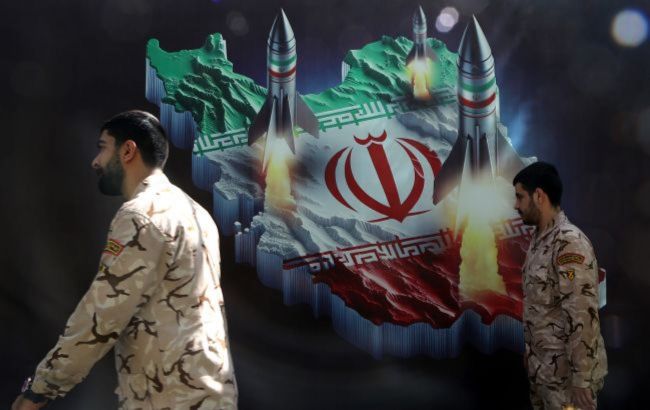 Tehran approached Moscow with a request for advanced Geran drones (photo: Getty Images)
Russia has significantly upgraded its Geran drones, developed from Iranian-made Shaheds. Tehran now wants to obtain more advanced models for its war against the United States and Israel, according to the Financial Times.
Western security officials and a person close to the Kremlin say Russia's drone capabilities have grown significantly in recent years. This year, Tehran reportedly approached Moscow to request advanced Geran drones.
Iran wants to use these drones in its war against Israel and the United States.
The request concerns a Russian version of the drones that Moscow began producing in 2023 based on Shaheds developed in Iran. Since then, the design and technical capabilities of drones have changed significantly.
How Gerans have changed
The first-generation Geran-1 can carry a warhead weighing up to 20 kg and reach a top speed of about 185 km/h.
The much more powerful Geran-5 is equipped with a jet engine. Russia reportedly used it for the first time this January. The model can reach speeds of up to 600 km/h, carry a warhead weighing up to 90 kg, and travel up to 1,000 km.
The changes extend beyond flight characteristics. The Geran-4 features a more aerodynamic version of the original airframe, while the Geran-5 design already more closely resembles a cruise missile.
New drones feature AI
The modernization has also affected the guidance systems. While older Gerans had relatively simple control systems, newer versions reportedly include thermal imaging cameras and AI-based guidance systems.
This makes the newer versions far more sophisticated than the first models Russia began producing after acquiring the Iranian technological base.
Russia has begun installing jet engines on its attack drones, making them much faster and harder to intercept.
President Volodymyr Zelenskyy said Ukraine still does not have enough means to destroy them, but more than 60 companies are already developing solutions to counter the threat.