Iran appoints new supreme leader

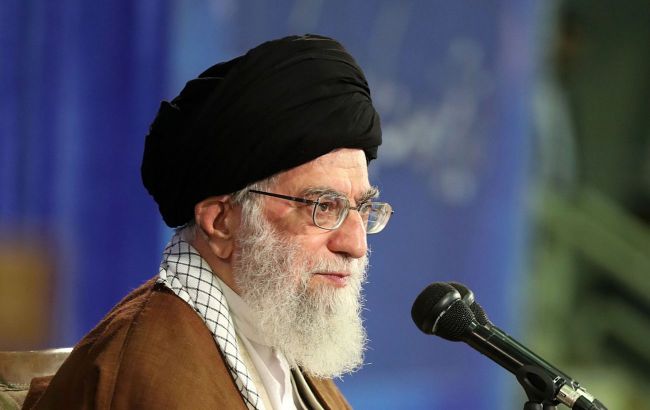 Ali Khamenei (Photo:Getty Images)
Iran's state media have reported the appointment of the country's new supreme leader. He is Mojtaba Khamenei, the son of Ayatollah Ali Khamenei, who, according to Iranian sources, was killed on February 28th as a result of American-Israeli strikes, according to a CNN report.
Decision of the Assembly of Experts
The selection of the new head of state is carried out by the Assembly of Experts, a body consisting of 88 elected senior clerics. This body is vested with the authority to determine Iran's Supreme Leader.
Since the founding of the Islamic Republic in 1979, the Assembly has made such a decision only once. At that time, following the death of Ayatollah Ruhollah Khomeini, Ali Khamenei was chosen. That event took place over three decades ago.
Powers of the supreme leader
In Iran's political system, the Supreme Leader holds a key position and possesses the final say on all matters of state. His authority extends to both the political and religious spheres.
According to the principle of Velayat-e faqih, the guardianship of the Islamic jurist, this post must be held by a senior religious leader who combines spiritual authority and political influence.
Temporary leadership after Khamenei's death
Immediately after the death of Ali Khamenei, a three-member special council was formed to temporarily govern the state. It included Iranian President Masoud Pezeshkian, the head of the judiciary Gholamhossein Mohseni Ejei, as well as jurist and leader of the Basij volunteer force Alireza Arafi.
At the same time, no public information had previously emerged indicating that Ali Khamenei had named his possible successor in advance.
Khamenei's son's appointment intensifies disputes within Iran
According to sources, Mojtaba's rise to power could shift the balance of influence within the Iranian elite, as his appointment strengthens the security forces' position while weakening other influential groups.
The new leader is considered an ultra-conservative and advocates for increased support for terrorist groups in the region, as well as for a harsh crackdown on protests inside the country.
Additional controversy has been sparked by the fact that Mojtaba Khamenei does not hold the religious title of Ayatollah, which has traditionally been considered important for occupying the highest office in Iran's power structure.
According to sources, the decision on the appointment was made on an emergency basis under pressure from the Islamic Revolutionary Guard Corps (IRGC) to prevent political chaos amid the Israeli and US attacks and to ensure a swift transition of power.
Israeli Prime Minister Benjamin Netanyahu stated that the future of relations between Israel and Iran depends on the Iranians themselves. According to him, it is the citizens of Iran who must rise up against the current regime if they wish to change the country's political course and pave the way for normalization of relations between the states. Netanyahu emphasized that only internal changes in Iran can create the conditions for restoring friendly ties with Israel.
French President Emmanuel Macron reported having a telephone conversation with Iranian President Masoud Pezeshkian. During the conversation, the parties discussed the situation in the Middle East, focusing on Iran's role and actions in the region.