iPhone proved to be millions of times more powerful than NASA's computer

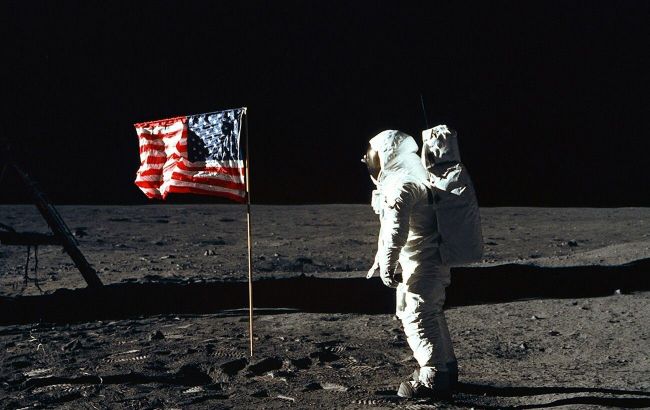 iPhone outperformed the NASA computer that sent humans to the Moon (Photo: NASA)
Modern iPhones are vastly more powerful than the computer that helped NASA land humans on the Moon in 1969. A comparison of their specifications clearly shows just how rapidly technology has advanced over the past 50 years, according to research by MIT scientists.
The Apollo 11 command module was equipped with the Apollo Guidance Computer (AGC), which was considered cutting-edge technology at the time. By today's standards, however, its specifications appear remarkably modest.
What do the numbers show?
According to MIT documentation, the AGC had 2,048 words of rewritable RAM. Since each word consisted of 16 bits, the total RAM capacity was 32,768 bits, or exactly 4,096 bytes (4 KB).
Modern hardware specifications:
- The iPhone 17 Pro comes with 12 GB of RAM, roughly 2.93 million times more than the AGC.
- The AGC's processor operated at 2.048 MHz (with an effective speed of around 0.043 MHz), while an iPhone processor runs between 850 MHz and 2.1 GHz.
- The spacecraft's read-only memory (ROM) stored 72 KB of non-rewritable data, whereas modern iPhones can store up to 1 TB of data.
Even if the computing power of every AGC ever built were combined into a single system, it still wouldn't match the capabilities of a modern smartphone.
Why an iPhone can't replace a rocket computer
Despite the enormous advantage smartphones have on paper, installing an iPhone inside a spacecraft would actually be a step backward for the aerospace industry.
Scientists explain that rocket guidance systems require an entirely different architecture, along with exceptional reliability and resistance to radiation.
Modern spacecraft rely on highly specialized onboard computers. For example, SpaceX's Falcon 9 rocket uses dual-core processors clocked at around 4.10 GHz, roughly twice the peak frequency of today's mobile chips.
In addition, experts note that the biggest challenge for future lunar missions isn't raw computing power but the physical reliability and safety of the spacecraft's systems.