Investment, tariff rollback, and business: US and India reach framework trade deal

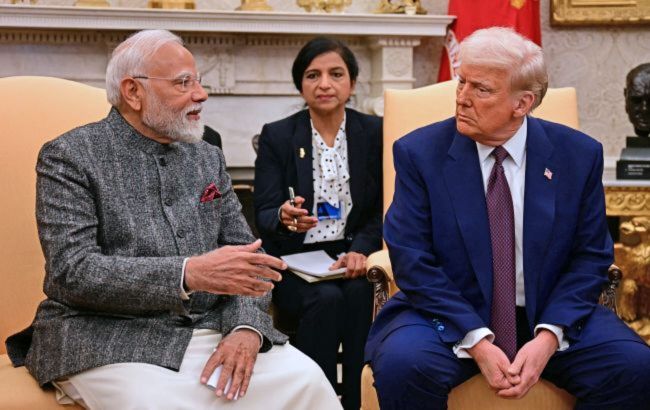 Photo: Indian Prime Minister Narendra Modi and US President Donald Trump (Getty Images)
On Friday, February 6, the US and India reached a framework agreement on mutually beneficial trade, covering investments, tariff reductions, and market access, according to the White House website.
US-India Interim Agreement
The US and India have finalized a framework trade agreement, reaffirming both countries’ commitment to a broader bilateral deal with expanded market access and more resilient supply chains.
"The Interim Agreement between the United States and India will represent a historic milestone in our countries’ partnership, demonstrating a common commitment to reciprocal and balanced trade based on mutual interests and concrete outcomes," the White House said.
Key provisions of the agreement:
-
Tariff reductions: India will remove or lower duties on US industrial goods, food products, and agricultural exports.
-
US tariffs on Indian goods: The US will apply an 18% reciprocal tariff on Indian products, including textiles, apparel, leather goods, plastics, organic chemicals, home decor, handicrafts, and certain machinery and equipment.
-
Future tariff removals: If the temporary deal succeeds, the US will eliminate reciprocal tariffs on products such as biologic drugs, precious stones and diamonds, and aircraft components.
-
Aviation and automotive parts: US tariffs on certain aircraft and related components, as well as automotive parts, will be removed.
-
Market access commitments: Both countries agree to provide each other ongoing access in mutually beneficial sectors.
-
Rules of origin: The agreement establishes rules ensuring benefits under the deal.
-
Non-tariff barriers: India will remove barriers affecting US pharmaceutical trade, including restrictive import licensing procedures. Both sides will discuss standards and evaluation procedures in mutually agreed sectors.
-
Tariff adjustments: Any changes to agreed tariffs allow the other country to adjust its commitments accordingly.
-
BTA negotiations: Both nations will work to expand market access through Bilateral Trade Agreement talks.
-
Economic security and supply chains: The agreement strengthens coordination to enhance supply chain resilience and foster innovation.
-
US exports to India over five years: India will purchase $500 billion in energy products, aircraft and aviation components, precious metals, technology products, and coking coal from the US. Trade in technology products, including GPUs, will increase substantially.
-
Digital trade: Both countries commit to removing discriminatory or burdensome practices and other barriers to digital trade.
"The United States and India will promptly implement this framework and work towards finalizing the Interim Agreement with a view to concluding a mutually beneficial BTA consistent with the roadmap agreed in the Terms of Reference BTA consistent with the roadmap agreed in the Terms of Reference," the White House said.
Additional context
On February 2, President Trump announced that India had agreed to halt Russian oil purchases, which he said would help stop the war in Ukraine. Shortly afterward, Trump also canceled the 25% tariffs on all Indian goods previously imposed due to India’s Russian oil imports.