Insect eyes instead of lenses: New tech may reshape smartphone cameras

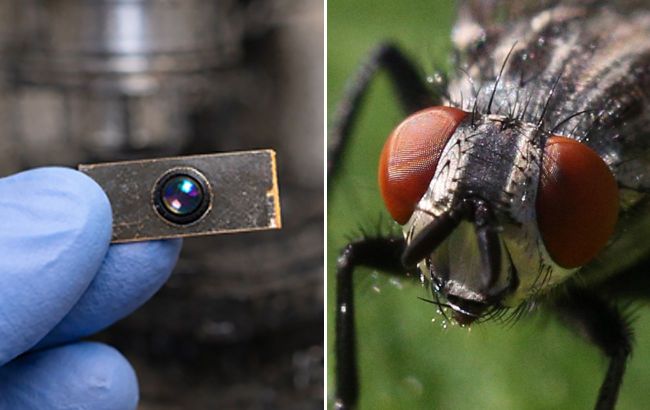 What new smartphones will look like (collage: RBC-Ukraine)
A research team from the Korea Advanced Institute of Science and Technology (KAIST) has developed a camera just 0.94 mm thick that provides a wide 140-degree field of view without any lens protrusion. The technology mimics the visual system of insects and could radically change the design of future smartphones, according to Nature Communications.
Insect eye effect in the lens
Usually, to achieve a wide field of view, manufacturers stack multiple lenses on top of each other, making the camera thicker and causing it to protrude from the body. Korean scientists turned to nature by studying the vision of the parasitic insect Xenos peckii.
Instead of a single large lens, the researchers used an array of microlenses. Each of them captures only part of the scene, and then a special algorithm combines these fragments into a single high-resolution image.
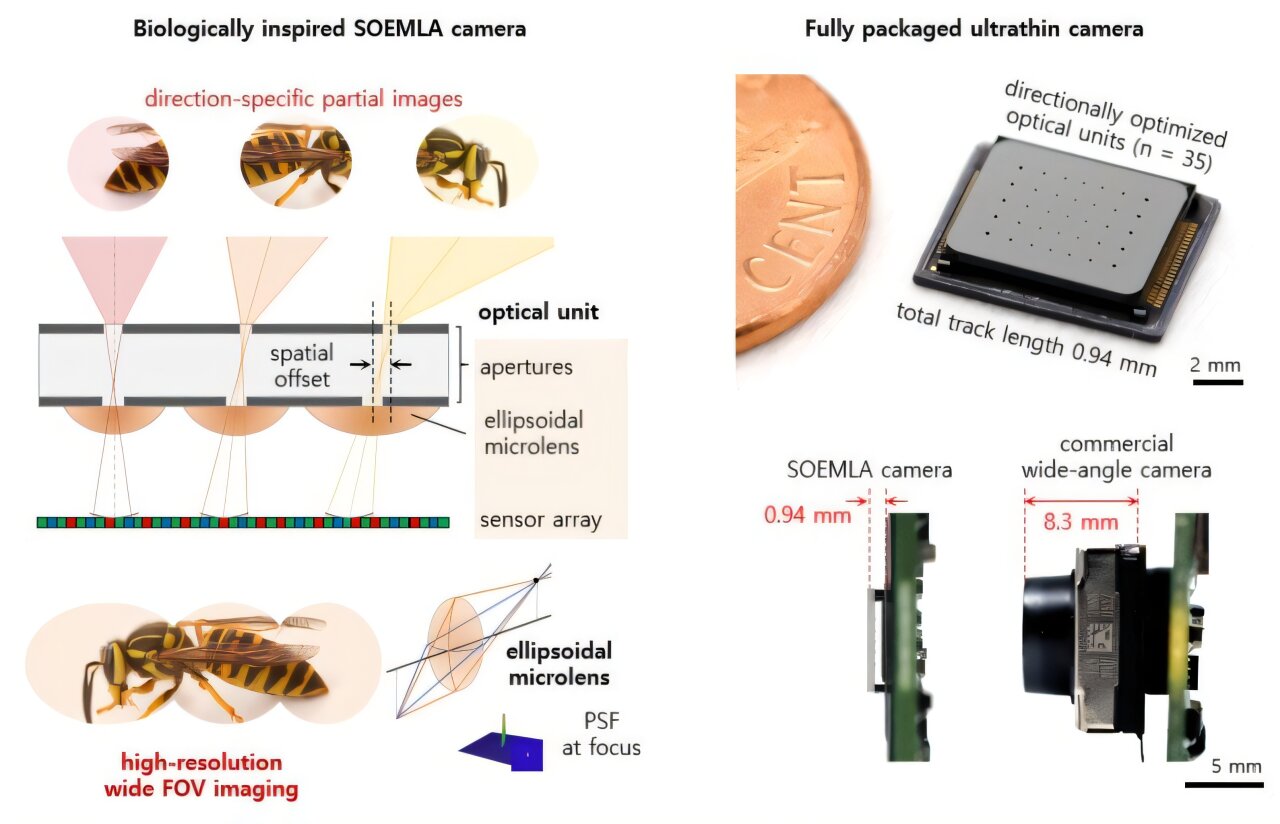
Schematic diagram of a camera structure that mimics the working principle of an insect’s compound eye (photo: Nature Communications)
This approach made it possible to:
- Reduce the camera thickness to 0.94 mm (about the thickness of a coin);
- Provide a 140-degree field of view (wider than human peripheral vision);
- Eliminate edge blur, which is common in wide-angle lenses.
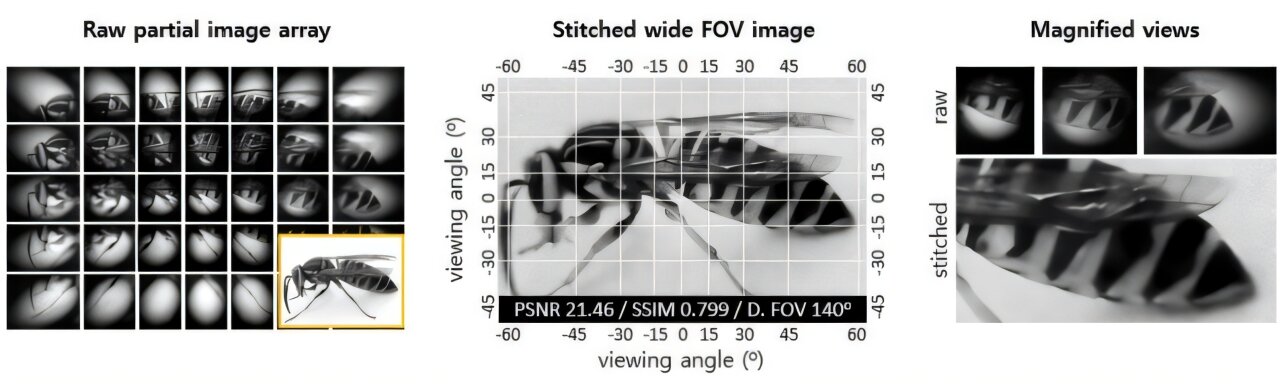
Result of reconstructing a single scene by combining image fragments captured with a microlens array (photo: Nature Communications)
Where the new cameras will be used
The technology is already being prepared for commercial launch. The development has been handed over to MicroPix Co., Ltd. Mass production could begin as early as next year.
In addition to smartphones, where cameras will finally be flat, the technology will be applied in:
- Medicine: ultra-thin endoscopes will allow doctors to see more inside the body with minimal intervention.
- Robotics: micro-robots will gain vision without increasing their weight or size.
- Optics: augmented reality devices will become significantly lighter and more streamlined.
Scientists have already tested the camera on various objects, from human faces to microchannels. In all cases, images remained sharp even at a distance of just 20 mm.
Users may see the results of integrating this new technology into consumer electronics as early as 2027. They can also check their gadgets’ readiness for the new standards in system settings.