India returns to Russian oil as deep discounts outweigh sanctions risks

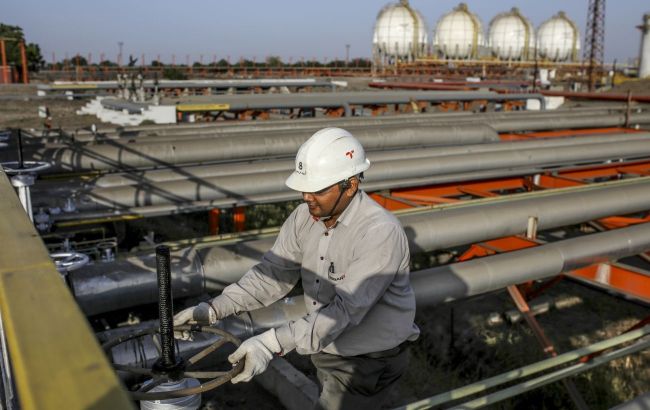 Illustrative photo: India returns to importing Russian oil (Getty Images)
Part of major Indian oil-refining companies are actively seeking new batches of Russian oil despite sanction risks and Western pressure, Bloomberg reports.
According to the outlet’s sources, the state-run Indian Oil Corp. and Bharat Petroleum Corp. purchased around 10 cargoes of unsanctioned Russian oil. Hindustan Petroleum Corp. is expecting deliveries in January.
Another major importer, Nayara Energy, has not stopped purchases even after the EU added the company to its blacklist. Together, these four companies accounted for more than 60% of India’s total oil imports in 2025, according to Kpler analytics.
However, the biggest intrigue is the absence of Reliance Industries Ltd. from the market.
The conglomerate, which had been the main buyer of Russian oil in India until recently, has almost halted imports, even under its long-term contract with Rosneft for 500,000 barrels per day.
According to the sources, the company fears falling under US and EU sanctions.
Prices for Russian oil for Indian traders currently stand at 40–45 dollars per barrel, which is keeping demand steady even along "grey" routes.
It is expected that India’s imports of Russian crude will fall from the peak of 2 million barrels per day (in June) to 1.3 million in December, and even lower in January.
Despite the declining volumes, the question remains: will these reductions satisfy the Trump administration?
Washington accuses India of financing Russia’s war and insists on a radical reduction in cooperation with the Kremlin. A US–India trade agreement has still not been signed.
Kpler analysts note that Reliance is expecting one more delivery — the tanker Aqua Titan, which is scheduled to arrive at the Jamnagar port on December 17. However, due to the lack of signals from many vessels transiting the Red Sea, it is possible that other cargoes may still be heading to India.
If Reliance ultimately steps away from Russian oil, Rosneft will be forced to seek new markets.
"While other refiners can partially offset the decline, they are unlikely to fully replace the volumes Reliance was able to absorb at its peak," said Sumit Ritolia, lead refining and modeling analyst at Kpler.
In his view, in 2026 India’s imports of Russian oil may stabilize at around 1–1.2 million barrels per day.
Smaller companies, such as Mangalore Refinery and Petrochemicals Ltd. and HPCL-Mittal Energy Ltd., have already completely halted purchases from Russia.
India reassesses imports of Russian oil
After the start of Russia’s full-scale war against Ukraine, India became one of the largest buyers of Russian oil, taking advantage of low prices and Western sanctions restrictions.
In 2023–2024, India provided a significant share of Moscow’s revenue from energy sales.
In 2025, the situation changed: the US and the EU increased pressure, expanded blacklists, and introduced new requirements for complying with the price cap. Key Russian companies — Rosneft and Lukoil — came under sanctions, complicating official supplies.
For India, Russian oil remained important due to its low price; however, the geopolitical balance became far more complicated. Delhi has been forced to balance between economic benefits and the risk of losing access to American technologies, financing, and partnerships.
The reduction in imports and the caution shown by major players are signs that the market is entering a phase of restructuring, and future supply volumes will depend on whether India can maintain equilibrium between the West and Russia without provoking new restrictions.
In October, the US imposed sanctions on Russian energy giants Rosneft and Lukoil. After these restrictions were announced, the market value of both corporations dropped sharply, and the companies had to begin selling off foreign assets.
At the same time, major state-owned oil refiners in China suspended purchases of the ESPO blend in response to US sanctions. India is now demonstrating similar caution.
We also reported that nearly 48 million barrels of Russian oil may be left without a designated route due to US restrictions. As a result, dozens of tankers will have to look for new ports to unload their cargo.