India might scrap Russian Su-57 purchase — Here's why

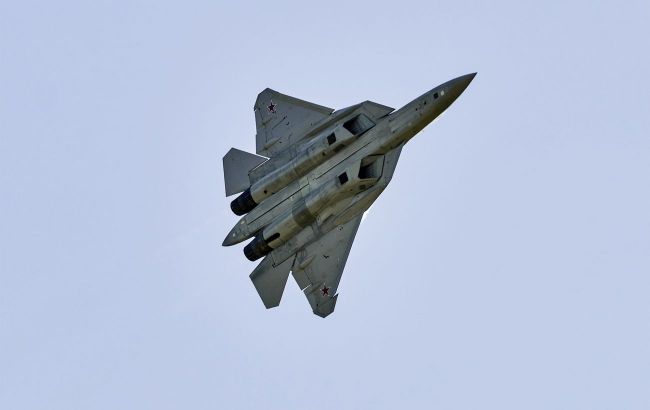 Photo: Russian Su-57 fighter jet (Getty Images)
India officially pulled out of the joint Su-57 project with Russia back in 2018, saying the fighter didn't meet fifth-generation requirements. Yet Moscow hasn't stopped trying to push its jet on New Delhi, according to Defense Express.
India's plans vs Russia's offer
According to the military-analytical portal, India’s interest in joining one of the sixth-generation fighter projects — either the British-Italian-Japanese Tempest or the French-German-Spanish FCAS — raises questions about whether it would realistically buy Russian Su-57s.
Analysts note that Moscow has promised New Delhi a range of "bonuses" for the Su-57, which Russia still calls a fifth-generation fighter. These include a new engine and a yet-to-be-patented aircraft variant.
Apparently, India is seriously evaluating the offer, even though it officially left the joint project in 2018, clearly stating the Su-57 didn't meet its requirements.
Domestic development and costs
"India's government has confirmed the importance of building its own fifth-generation AMCA fighter. At the same time, joining a sixth-generation project quickly, alongside investing in domestic development, involves massive costs. The total budget for a sixth-generation fighter program is estimated at over €50 billion," reports Defense Express.
If India becomes the fourth participant in a project, the contribution would be around €12.5 billion, or over €16.5 billion if it replaces Germany in FCAS.
Developing the AMCA domestically will also require billion-dollar budgets due to the sheer volume of technology India plans to master. This raises the question of phased modernization for the Indian Air Force, which could be a decisive factor.
Currently, India is receiving Rafale jets, planning to order an additional 114 aircraft, bringing the total to roughly 150 (26 of them in naval versions for the Navy).
Meanwhile, India’s air force still relies heavily on about 260 Russian Su-30MKIs, a number gradually decreasing due to accidents. By early March, India had lost 14 Su-30MKIs, about 5% of the total fleet.
To cover gaps after retiring the MiG-21s — which saw over 60% lost to crashes — India is turning to its own Tejas fighters. However, progress has been slow, and the country lost three Tejas jets over the past two years.
All these programs share roughly the same timeline, aiming for completion in the mid-to-late 2030s.
Fleet modernization
By 2035, India plans to start delivering AMCA fighters. By 2040, the air force should field a modernized fleet of Su-30s, Rafales, Tejas, the first domestic AMCA jets, and the first sixth-generation fighters. In this context, the role of the Russian Su-57 in India's air force looks increasingly uncertain.
"Ultimately, New Delhi could still take seemingly illogical steps — like continuing to buy Russia's S-400 systems despite Moscow failing to fulfill an eight-year-old contract," Defense Express notes.
What we know about the Su-57
The Su-57 is Russia's first serial fifth-generation fighter, designed as a multi-role aircraft for achieving air superiority and striking ground targets.
Its main feature is the use of stealth technologies, achieved through the aircraft’s specific fuselage shape and internal weapons bays.
The jet is capable of flying at supersonic speeds without afterburners and is equipped with a modern onboard suite, including an active phased array radar.
Despite its ambitious specifications, the program has faced numerous production delays and issues with developing the second-stage engine.
In the full-scale war against Ukraine, Russian forces use Su-57s sparingly, mainly launching missiles from long distances outside the range of Ukrainian air defenses due to concerns about losing such expensive equipment.
Currently, the number of combat-ready Su-57s in the Russian Aerospace Forces remains relatively small, limiting their impact on the course of the fighting.