Import substitution woes push Russia to revive 1940s-era An-2 biplanes - Intel

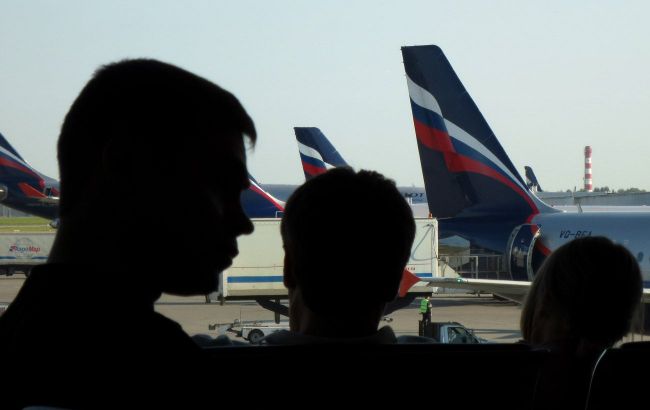 Russian aviation is going through tough times (Photo: Getty Images)
Due to sanctions and the failure of import substitution projects, Russia has decided to revive old An-2 aircraft (known as "kukuruznik"), reports the Foreign Intelligence Service of Ukraine.
Research institute's proposal
The Siberian Aeronautical Research Institute proposed raising about 700 An-2 aircraft from storage depots. The reason is a catastrophic hole in the country's small aviation sector. There are no alternatives left: sanctions have cut off access to new equipment, and both homegrown import substitution projects have failed.
Without air travel, roughly 60% of Russia's territory — areas not reachable by road or rail — is effectively cut off from the rest of the country.
An-2 and its condition
The An-2, designed back in the 1940s, was for decades the workhorse of small aviation, first in the USSR and then in Russia. Over time, more than 17,000 units were assembled in several countries (including Ukraine, Poland, and China). Most of them have been decommissioned and scrapped for a long time.
Today, only 249 of these aircraft remain in active operation within Russian territory, with another 276 listed under DOSAAF (the Voluntary Society for Assistance to the Army, Aviation, and Navy). Since 2024, Russia has stopped decommissioning old aircraft and has returned 16 units to the skies. Passenger safety does not appear to be a factor in these calculations.
Import substitution failures
In parallel, a series of failures have occurred with modern replacements:
- The Baikal aircraft, which was supposed to replace the Ukrainian An-2 in Russia's aviation fleet, has been continuously delaying certification since 2023 — first to 2025, then to 2026, and now hints point to 2027. Technical and financial issues make it impossible to set a firm date.
- The second project — TVS-2MS (a deep modernization of the same An-2, developed without state money and deemed technically successful) — has been shut down in Russia. The Mongolian company MUNKH AERO will operate these aircraft in their country, but with American engines.
Engine problem
Engines are becoming the main obstacle to reviving the 700 stored aircraft. There are two options — both dead ends:
- American engines — unavailable due to sanctions.
- The Russian TVD-10B engine exists only on paper. Experts describe the prospects for its serial production under conditions of technical and financial exhaustion of the industry as quite murky.
The Kremlin plans to impose an additional windfall tax on large companies to close budget gaps that are making it harder to wage war. At the same time, Vladimir Putin's ratings are falling sharply: even Kremlin polls are showing a collapse in popularity due to the Telegram ban and internet disruptions.
In addition, Russia has stepped up the forced recruitment of migrants. The State Duma plans to adopt amendments to the Code of Administrative Offenses that would effectively legalize deportation for discrediting the army and petty hooliganism. The only way to avoid expulsion is to sign a contract with the Russian Armed Forces. This creates a legally formalized mechanism for forcibly replenishing frontline losses.