IMF prepares for possible rapid asset sell-off

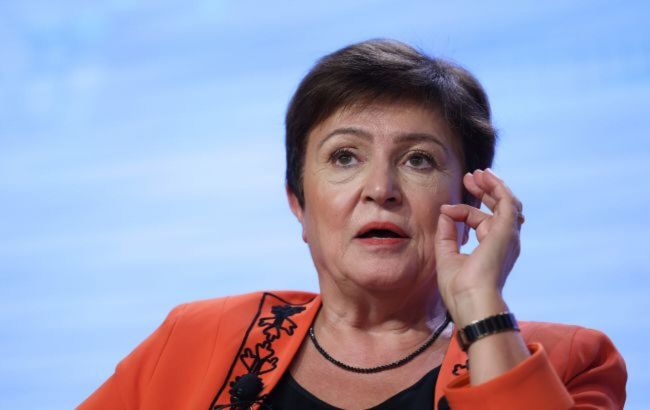 Photo: Kristalina Georgieva (Getty Images)
The International Monetary Fund said it is preparing for unconventional scenarios in global financial markets, including a possible decline in confidence in dollar-denominated assets amid growing investor concerns, according to Euractiv.
She said the Fund is analyzing even those developments that were previously considered unthinkable.
"At the Fund, we are developing the capacity to hypothetically model scenarios of unthinkable events and then decide what measures should be taken," Georgieva said.
Asked about the possibility of panic around dollar assets, she stressed that the IMF is looking at "a wide range of scenarios" as part of its current analysis.
Pressure on dollar and investor reaction
The comments came amid market concerns over sweeping trade tariffs and criticism of the independence of the US Federal Reserve.
Since Donald Trump returned to the White House in January 2025, the dollar has fallen by more than 9% against a basket of global currencies, while its decline against the euro has approached 12%.
Fears over the dollar’s status as a safe-haven asset have boosted investor interest in gold, with bullion prices reaching a record high of $5,100 per troy ounce.
Diversification and EU's position
The IMF also pointed to a long-term trend of a declining share of the dollar in global foreign exchange reserves, from 72% in 2001 to less than 57% now.
Additional pressure comes from initiatives by BRICS countries, which in recent years have openly sought to de-dollarize settlements in order to reduce vulnerability to Western sanctions.
Georgieva said the European Union should step up the issuance of joint debt to offer investors a safe asset alternative to gold and US Treasuries.
"This would create what is in demand: a greater supply of European securities that people can buy, hold and use," she said, adding that such a move would also help reduce the investment gap and support economic growth.
At the same time, she acknowledged that joint borrowing remains an extremely difficult issue for the EU and that the dollar’s status as the world’s reserve currency is unlikely to change in the near term.
"As long as this factor is so evident, it is hard to expect any sharp changes," she said.
Ukraine has not yet confirmed its readiness to fully meet the IMF program’s requirements, including introducing VAT for sole proprietors with annual income above 1 million hryvnias.
The IMF is also considering giving Ukraine a year to implement changes to VAT for sole proprietors under a new $8.1 billion lending program.