Hungary pushes back against Ukraine's EU membership by 2030

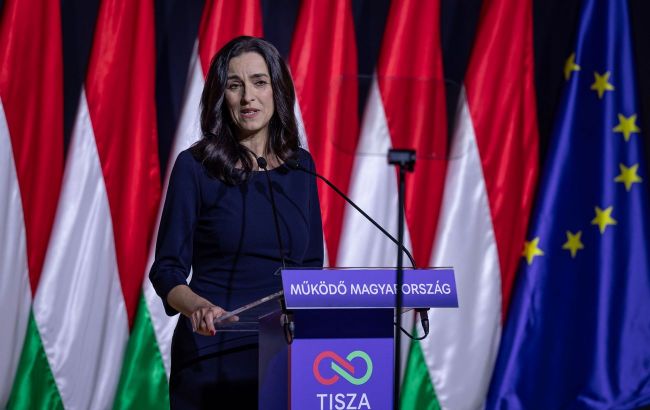 Photo: Anita Orbán (Getty Images)
Ukraine's accession to the European Union by 2030 is unrealistic, and the process itself should follow standard procedures without any expedited steps, says Hungarian Foreign Minister Anita Orbán.
In Vilnius, she answers a question about whether Ukraine's European integration by 2030 is possible.
"We do not think this is realistic. [...] We strongly support a merit-based process, and I think we agree with Lithuania on this issue," Orbán emphasizes.
She adds that all countries must follow the same path without exceptions or special procedures.
"Every country must go through the same procedure that we went through. [...] We also do not support any fast-track entry," the Hungarian Foreign Minister stresses.
At the same time, she notes positive developments in Ukraine's reforms. According to Orbán, Ukraine has made significant progress by opening four out of six negotiation chapters.
The Hungarian Minister attributes this success to improved bilateral relations, particularly thanks to the agreement on the protection of the rights of the Hungarian national minority in Ukraine's Zakarpattia region.
Lithuania takes more optimistic view
In contrast, Lithuanian Foreign Minister Kęstutis Budrys expresses a more optimistic view and called for setting a clear target date for accession.
"We are more optimistic about dates. We believe that a date as a target can and should be set," he says.
Budrys emphasizes that completing all procedures by 2030 remains theoretically possible if Ukraine implements reforms quickly and the EU promptly completes the necessary steps.
The European Commission revealed a report on Ukraine's progress toward EU membership. The document notes significant progress in implementing reforms despite the full-scale war, as well as the fulfillment of the conditions for opening three negotiation clusters.
At the same time, the European Commission notes that Ukraine lags behind Moldova on the path to EU membership due to insufficient results in the fight against corruption.