Human brain tissue research comes to the ISS via new SpaceX delivery to NASA

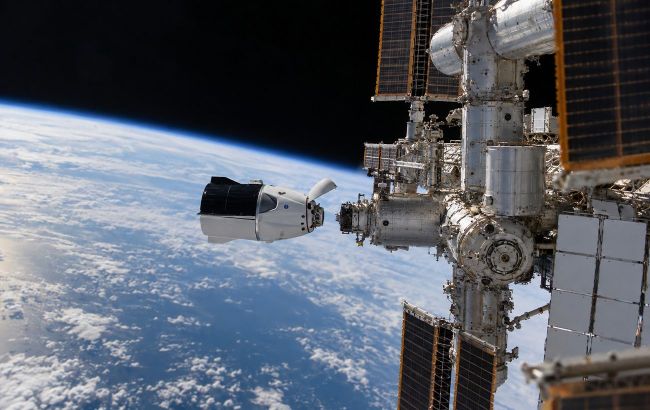 New technologies being tested on the ISS (collage: RBC-Ukraine)
The SpaceX Dragon spacecraft successfully docked with the International Space Station (ISS) as part of NASA's 35th commercial resupply mission. Equipment for brain and heart research, printing artificial retinas, and protecting astronauts from dangerous infections was delivered on board, according to Discover Magazine.
Brain research and Alzheimer’s disease treatments
Experiments involving the growth of laboratory models of the human brain, known as miBrains, take a key place on the ISS.
In particular, the AVATAR-ORg1 project will monitor changes in brain tissue models over five weeks in microgravity conditions, comparing them with control samples on Earth.
This will help determine whether it is possible to grow and study brain tissues in space to protect the health of astronauts during long-duration missions.
Another experiment, called MINDS, will investigate the link between inflammatory processes and neurodegenerative diseases.
Scientists use organoids created from the cells of many individuals. The data obtained may assist in developing new treatments for Alzheimer’s, Parkinson’s, and multiple sclerosis.
A separate project, Stellar Spheroids, will study the effect of weightlessness on three-dimensional models of the human heart for testing new drugs.
Creating an artificial retina in weightlessness
Another important biotechnological experiment is LambdaVision-1, aimed at creating an artificial retina to restore vision for people with degenerative eye diseases.
The prosthesis is created using the protein bacteriorhodopsin, which reacts to light. The research was moved to space because, on Earth, gravity deforms the hundreds of thin layers of this protein, making them unstable.
Researchers expect that the absence of gravity on the ISS will allow for the formation of significantly more uniform and stable layers, making the artificial retina more effective.
Don't miss: Signal from absolute void: astronomers discover a mysterious anomaly in space
New protection and analysis systems for astronauts
To preserve the health of the crew itself, the ELISA MABL system was delivered to the station. This is a compact device for measuring levels of proteins, antibodies, and antigens in biological samples.
It will allow astronauts to conduct analyses directly in orbit, including monitoring bone tissue loss in microgravity conditions.
Furthermore, the GEARS experiment is dedicated to studying antibiotic-resistant bacteria Enterococcus faecalis and Enterococcus faecium detected on board the ISS.
The results will help understand how superbugs develop in enclosed spaces and protect the crew from potential infections.
More interesting: