How Japan became playground for Russian spies and why it may be over

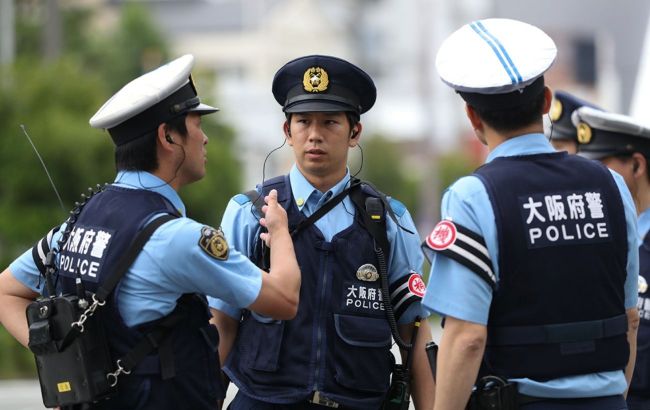 Photo: Japanese police (Getty Images)
Japan is no longer the easiest target for foreign intelligence services and is urgently establishing a robust counterintelligence system. Tokyo has been forced to take this step due to the widespread activity of Russian spies hunting for technology to use in the war against Ukraine, according to The Guardian.
For decades, Japan was considered the most welcoming place for foreign agents in the democratic world. Espionage was often not considered a crime there, but that has changed. Today, Tokyo is carrying out the most sweeping reform of its intelligence services since World War II.
Spy charter from EU to Japan
Following the full-scale invasion of Ukraine, Russian spies flocked to Japan. They were being expelled from Europe en masse, so they were looking for a new place to operate. According to local media reports, at least 120 Russian spies were operating in the country, attempting to gain access to employees of technology companies.
The Tokyo office of Aeroflot became one of the centers of espionage. Through it, the Kremlin organized the procurement of critically important technologies.
It also came to light that there was a Foreign Intelligence Service of Russia (SVR) officer at a trade mission. He oversaw the collection of classified information. Recently, police exposed an engineer at a Japanese company who was leaking trade secrets to a Russian handler.
Why Japan was vulnerable to spies
The reason lies in the past. After World War II, the country was traumatized by state-sanctioned suppression of dissent. The government was afraid to establish strong intelligence agencies, and the Constitution protected the privacy of communications to such an extent that it was nearly impossible to officially monitor spies.
Attempts to pass strict laws have consistently failed. For example, in 1985, parliament rejected a draft anti-espionage law due to public protests. Even today, those found guilty are often punished under the unfair competition statute. This lenient punishment, of course, does not deter professional agents.
Does Japan have its own spies
However, Japan was not entirely defenseless. Japan’s Directorate for Signals Intelligence (DFS) has been in operation since the 1950s. It has worked closely with the US National Security Agency.
In central Tokyo, within the Ministry of Defense complex, stands an unassuming building. About 1,700 employees work there. They monitor digital communication channels around the clock. They report on their work only to the country’s prime minister. For years, the US has provided Japan with access to the most advanced mass internet surveillance systems.
New CIA and Takaichi’s reform
Sanae Takaichi’s government decided to take decisive action, and parliament passed a law establishing the National Intelligence Council. Now, the operations of various agencies will be consolidated into the National Intelligence Bureau (NIB).
The main development is the creation of a foreign intelligence agency. This will be Japan’s equivalent of the CIA or MI6. Its launch is scheduled for early 2028, and by the end of 2026, the government plans to introduce new laws to combat foreign operatives.
"In a rapidly changing security environment, the need to deal with foreign information activities that threaten our national security, such as theft of important information, is growing," says government spokesperson Minoru Kihara.
Context
Russian spies have established themselves in Japan and are obtaining technology there for ballistic missiles and other weapons. About 90% of Russian missiles and drones contain Japanese components.
The Russian intelligence (GRU) is seeking partners among Japanese logistics companies to transport goods to third countries and, from there, to Russia.
Russia plans to import jet fuel from Japan through a network of trading intermediaries.