Hiroshima atomic bomb left behind secret material no one knew existed for 80 years

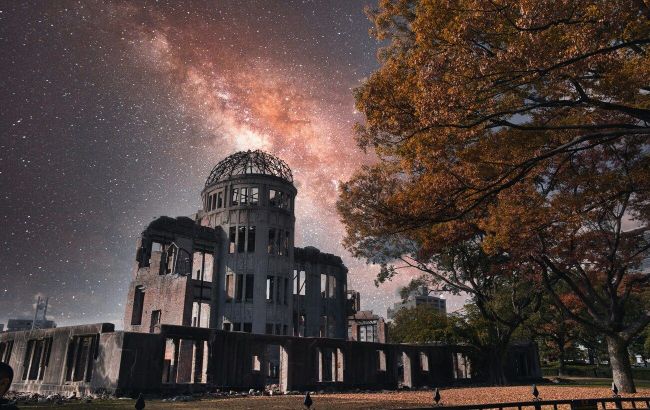 Photo: Scientists discovered a unique crystal in the ruins of Hiroshima (Unsplash)
Scientists made an unexpected discovery while studying the aftermath of the atomic bombing of Hiroshima. They identified a new type of alloy that formed during the nuclear explosion and remained unnoticed for nearly 80 years, according to a study published in Science Advances.
A unique alloy forged from plasma and a vaporized city
A team of researchers led by geologist and crystallographer Luca Bindi of the University of Florence analyzed microscopic samples collected in Hiroshima.
During the 1945 explosion, the fireball, with temperatures exceeding 7,000 degrees Celsius, instantly transformed buildings, soil, metal, and glass into a chaotic cloud of plasma.
This process created tiny molten metal droplets, known as hiroshimaites, which were scattered across the city and eventually settled in the surrounding environment.
"We discovered a previously unknown silicon-rich multicomponent alloy inside a microscopic sphere formed during the atomic explosion in Hiroshima," Luca Bindi said.
"This shows that extreme conditions combined with rapid cooling make it possible to systematically explore unusual structural and chemical states of matter," the scientist added.
Researchers examined 34 hiroshimaite samples using microscopy, chemical analysis, and X-ray diffraction. The newly discovered particles measured about 10 micrometers across, only slightly larger than a human red blood cell.
An ordered structure born from chaos
Inside the tiny grain, scientists found an ordered atomic structure made of iron, nickel, silicon, and aluminum. All of these elements originated from vaporized buildings and structures at the center of the blast.
The discovery shows that nuclear explosions do more than melt or deform existing materials; they can also create highly ordered crystalline alloys with complex compositions.
The researchers highlighted several key findings:
- A difference from the Trinity test: The Hiroshima bomb detonated at a much higher altitude, creating different physical conditions for crystal formation.
- A record of the explosion: These microscopic compounds preserved information about a blast that lasted only a few seconds.
- Scientific value: From a nuclear forensics perspective, such crystals contain diagnostic information about the bomb's materials, the surrounding environment, and the thermochemical conditions during detonation.
Similar multicomponent alloys are typically known for their exceptional mechanical strength, as well as high thermal and corrosion resistance.
The researchers believe that studying such extreme events under controlled conditions could help scientists better understand not only historical nuclear explosions but also previously unknown chemical processes that occur in nature.