Hibiscus losing leaves in fall? Here's what you need to know

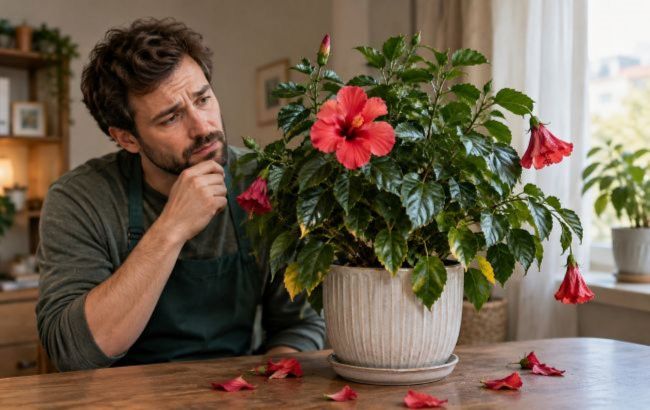 What to check if China rose turns yellow in November and how to help it survive winter (collage: RBC-Ukraine)
In late fall, hibiscus may turn yellow and drop leaves, even if it looked perfectly healthy during the summer. Possible causes include insufficient light, temperature fluctuations, improper watering, or pests. However, losing some leaves does not necessarily mean the plant is diseased.
RBC-Ukraine explains why indoor hibiscus drops its leaves in fall and how to care for it properly.
Why indoor hibiscus drops its leaves in fall
Indoor hibiscus, also known as the China rose, is an evergreen plant. However, it may lose some leaves in fall because growing conditions change.
Experts at Iowa State University explain that tropical hibiscus is particularly sensitive to seasonal changes in light. The plant may drop leaves after being moved indoors or because of shorter daylight hours. Leaf drop usually gradually stops once the plant adjusts to its new conditions.
The main reasons for leaf drop include:
-
Insufficient light. Daylight hours shorten in fall, so hibiscus receives less sunlight. In low-light conditions, the plant may lose leaves and flower buds.
-
Temperature fluctuations. Cold air coming through a window, drafts, or sudden temperature changes can cause leaves to turn yellow. Chinese rose is sensitive to sudden changes in its growing conditions.
-
Improper watering. Hibiscus growth slows in fall, so its water requirements may decrease. If you water it as frequently as you did in summer, the soil may remain excessively wet. However, allowing the soil to dry out completely can also harm the plant.
-
Dry air and pests. As the heating season begins, indoor humidity often drops. Spider mites can multiply rapidly in warm, dry conditions, damaging leaves and causing them to fall off.
How to care for hibiscus properly in fall
-
Provide enough light. Place the pot near a well-lit window. According to RHS recommendations, a bright spot near a south-facing window suits hibiscus in winter. During freezing weather, move the plant away from cold window glass.
-
Adjust your watering routine. Check the soil with your finger before watering. Water when the top layer has dried out, but do not let the entire root ball dry out completely for extended periods. Experts at the University of Illinois recommend checking the actual soil moisture rather than following a fixed watering schedule. After watering, empty any excess water from the saucer.
-
Monitor the temperature. Keep hibiscus in a room with stable temperatures. Do not place the pot right next to a hot radiator or cold window glass. Protect the plant from drafts when airing out the room.
-
Maintain humidity. If the air in your home is very dry, use a humidifier. The University of Georgia also recommends grouping houseplants together or using trays filled with water and pebbles to increase humidity around them. Make sure the bottom of the pot does not sit in water.
-
Do not rush to fertilize. If hibiscus has stopped actively growing, postpone fertilizing until new shoots appear. During dormancy, the plant needs fewer nutrients than in spring and summer.
When leaf drop indicates a problem
If hibiscus gradually loses some of its older leaves while its stems remain healthy, the cause may simply be seasonal adjustment.
However, there are several warning signs to watch for:
-
Leaves turn yellow in large numbers while the soil remains constantly wet.
-
The plant wilts even though the soil is still moist.
-
Small pale spots or fine webbing appear on the leaves.
-
Young shoots become deformed, and tiny insects are visible on them.
According to the University of California's Integrated Pest Management Program, spider mites often settle on the undersides of leaves. Small pale spots and fine webbing may indicate their presence.
If you detect pests, temporarily move the hibiscus away from other houseplants. For minor infestations, gently rinse the leaves with water, paying particular attention to the undersides.
If this does not help, choose a treatment approved for the identified pest and suitable for indoor plants. Apply it according to the manufacturer's instructions. Do not use ordinary household cleaning products as substitutes for specialized treatments, as they may damage the plant.
Root condition also requires special attention. If the soil stays wet for a long time, check the drainage holes and make sure water isn't accumulating in the saucer.
Experts at the University of Wisconsin explain that plants affected by root rot may wilt even when the soil is moist. When inspecting the roots, look for soft, brown areas, sometimes accompanied by an unpleasant smell.
Will indoor hibiscus grow new leaves after winter?
Even significant leaf loss does not necessarily mean the China rose is dying. If the root system and stems remain healthy, the plant may resume growing once lighting and temperature conditions improve.
Experts note that tropical hibiscus can overwinter indoors as a houseplant or enter dormancy. As it adjusts to new conditions, it may shed some leaves and temporarily stop growing.
During this period, reduce watering without letting the soil become waterlogged. Resume fertilizing when new shoots and leaves begin to appear on the hibiscus.