Hegseth to skip key NATO defense ministers' meeting - Politico

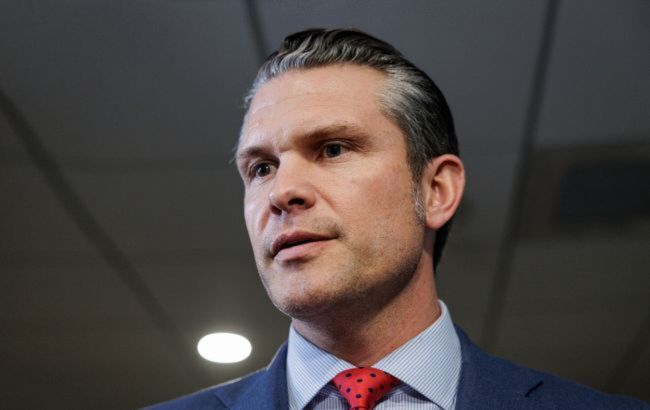 Photo: US Defense Secretary Pete Hegseth (Getty Images)
US Defense Secretary Pete Hegseth will not attend the NATO defense ministers’ meeting scheduled for February 12 in Brussels. Instead, the United States will be represented by his undersecretary for policy, Elbridge Colby, according to Politico.
This marks the second consecutive case in which a senior US official has skipped key consultations within the Alliance, raising concerns among allies about Washington’s role in Euro-Atlantic security.
According to sources, Pete Hegseth’s absence may be linked to his support for proposals to reduce the US military presence in Europe, as well as changes to the US National Defense Strategy that shift priorities toward homeland defense and countering China.
The US delegation in Brussels will be led by Elbridge Colby, who is known as one of the architects of the Pentagon’s new strategy reassessing Washington’s traditional role in Europe. Colby has also argued that European allies should assume greater responsibility for addressing security challenges on the continent.
Experts and former NATO officials say Hegseth’s absence from such meetings at a critical moment sends a negative signal and raises questions about US commitment to the Alliance, particularly amid growing strains in transatlantic relations.
Hegseth has previously skipped important NATO meetings. Similarly, US Secretary of State Marco Rubio did not attend the NATO foreign ministers’ meeting in December 2025, delegating participation to his deputies.
More broadly, the United States is increasingly seen as distancing itself from NATO, prompting European allies to consider how to defend themselves without Washington’s support. Rubio has recently said NATO needs to be reimagined, and that European countries must significantly boost their defense capabilities.
Against the backdrop of shifting transatlantic relations, President Volodymyr Zelenskyy proposed the creation of a European army. However, the idea was not embraced within the EU, where officials argued that "parallel structures would only hinder the effective functioning of existing national armies and NATO."