Hantavirus after COVID: Could cruise ship outbreak become new global threat?


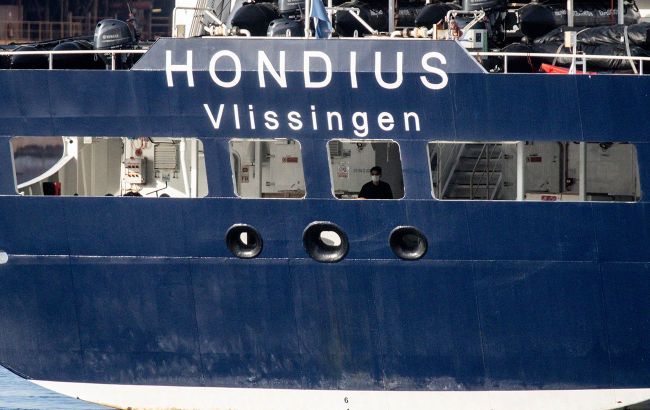 Hantavirus outbreak occurred aboard Dutch cruise ship MV Hondius (photo: Getty Images)
An outbreak of a rare and dangerous Andes strain of hantavirus occurred aboard the cruise liner MV Hondius. Disease has already led to several deaths, while passengers who traveled across the world became subjects of unprecedented monitoring by epidemiologists.
How events unfolded, why the disease is dangerous, and what awaits Ukrainians who were aboard the vessel?
Key points:
- Where liner is now: MV Hondius arrived in Tenerife for evacuation, triggering local protests, although the World Health Organization insists there is no threat of a new COVID-level pandemic.
- Situation with Ukrainians: Of the 5 Ukrainian citizens aboard, one is being evacuated, while four remain as crew members. They currently show no symptoms of disease.
- Scale of situation: Before quarantine was announced, passengers traveled to 12 countries, forcing epidemiologists to monitor contacts around the world.
- Number of victims: At present, 7 cases of disease and 4 deaths have been confirmed.
- Deadly danger: The Andes hantavirus strain, with a fatality rate of up to 60%, broke out aboard a vessel and is capable of human-to-human transmission.
Beginning of voyage and first victims
The story began on April 1, when Dutch-flagged liner MV Hondius departed on a three-week cruise from the Argentine city of Ushuaia. About 150 people were aboard. The route included Antarctica and the Falkland Islands.
First alarming signs appeared already on April 6: a 70-year-old passenger from the Netherlands developed fever, headache, and diarrhea. By April 11, man's condition became critical, and he died from respiratory failure.
 Hantavirus detected after cruise has already been identified in Europe and the United States (photo: Getty Images)
The 69-year-old widow left the vessel together with the body to transport it back home, but she also became ill during the journey and died on April 27.
Later, on April 24, a citizen of the United Kingdom sought medical help. He was urgently evacuated to Johannesburg, South Africa. By May 4, laboratory tests confirmed that the Briton and the deceased Dutch woman were infected with hantavirus.
Geography of spread
Meanwhile, the situation aboard worsened: on May 2, a passenger from Germany died. Symptoms were also detected in three people who had contact with her.
It is believed that the source of infection was likely a couple from the Netherlands. Before the cruise, they visited Argentina, Chile, and Uruguay, where they could have come into contact with rodents carrying the Andes strain.
The problem is that after the first deaths, some passengers managed to leave the vessel and travel to at least 12 countries, including the United States, Switzerland, and Singapore.
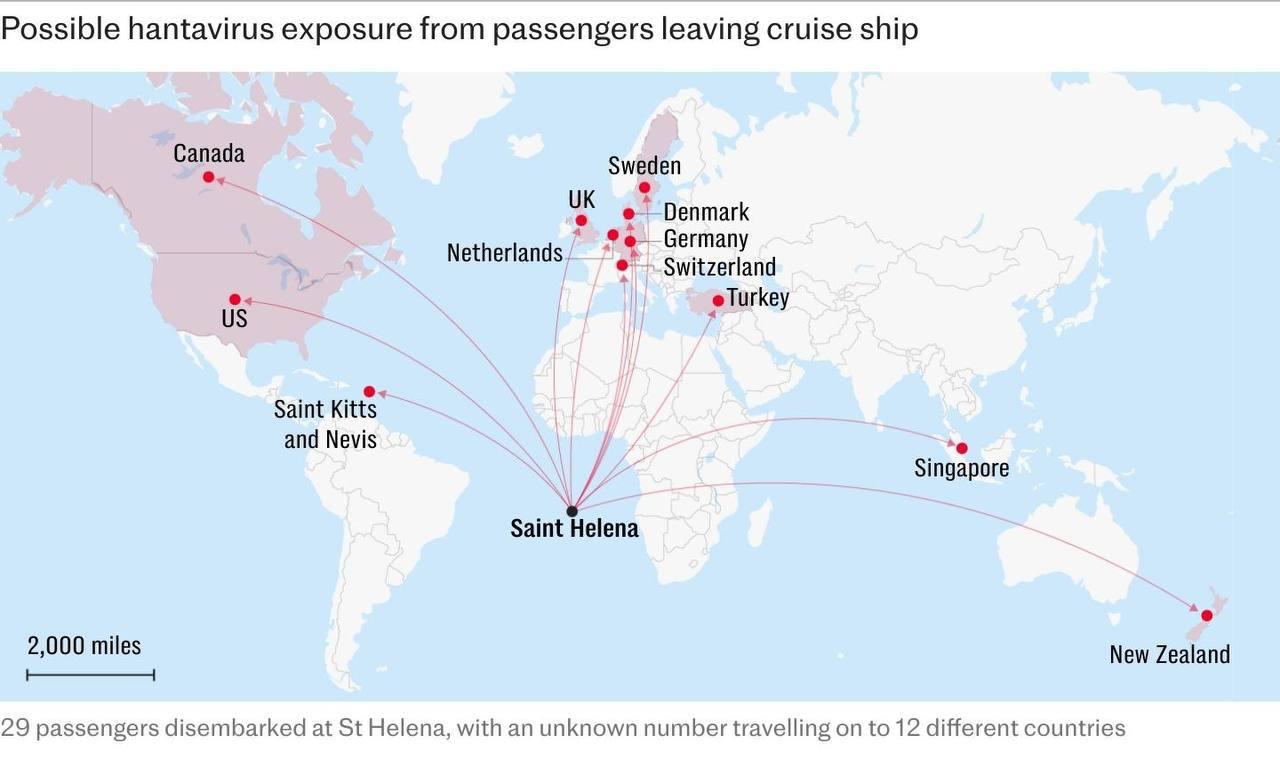 Photo: hantavirus exposure linked to cruise passengers across 12 countries
At present, suspicious cases and symptoms have been recorded in:
- Spain and the Netherlands: infections confirmed among evacuated passengers;
- United Kingdom: one passenger is in intensive care;
- United States, Switzerland, and Singapore: positive tests and suspicious symptoms detected;
- Poland: monitoring was introduced for a person who had contact with a cruise ship passenger.
- Cases of disease are also suspected among KLM airline personnel and contacts in Alicante, Spain.
Ukrainians aboard
According to the Ministry of Foreign Affairs of Ukraine, five Ukrainian citizens were aboard. One Ukrainian is being evacuated from the liner together with the main group of passengers.
Four more Ukrainians remain on the vessel as part of the crew to ensure its transfer to the Netherlands.
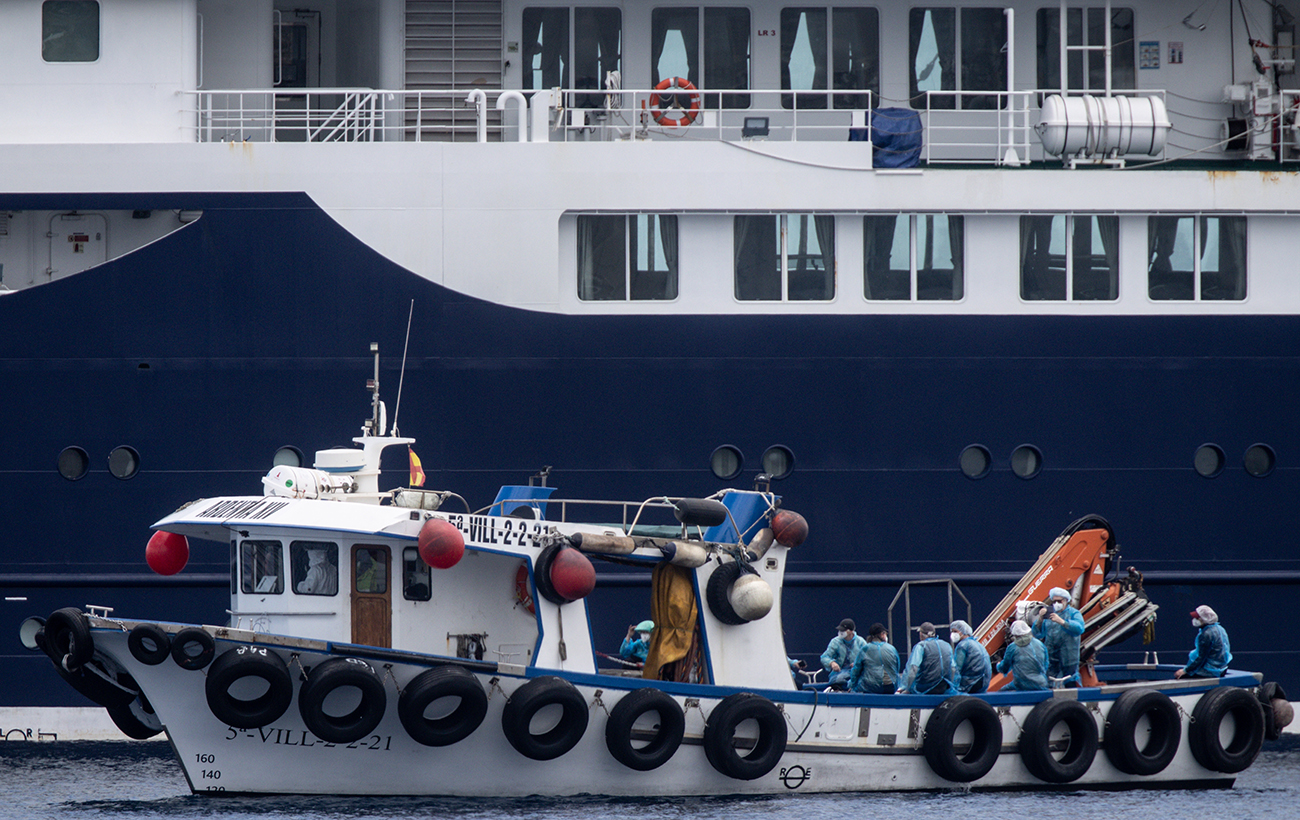 Passengers evacuated from MV Hondius and sent to quarantine (photo: Getty Images)
After completion of the mission, they will also be sent to a medical facility for quarantine. At present, no signs of disease have been recorded among Ukrainian citizens, and the situation remains under the special control of diplomats.
Why the Andes virus is dangerous
Hantaviruses are a group of viruses usually transmitted from rodents such as mice and rats to humans. In some cases, including the Andes strain, human-to-human transmission through close contact is possible.
Hantaviruses pathogenic to humans cause two main types of diseases: hemorrhagic fever with renal syndrome and hantavirus pulmonary syndrome.
Andes is considered the most dangerous type of hantavirus due to a high fatality rate of up to 60% and the ability to spread from person to person through close contact.
Symptoms: high fever, severe weakness, muscle pain, shortness of breath, diarrhea.
Incubation period: usually lasts from 1 to 6 weeks.
There is no vaccine against hantavirus, as it has remained in the development stage for years due to the rarity of the disease and lack of funding.
Current situation
At present, the vessel has arrived in Tenerife, Canary Islands, where a large-scale evacuation of tourists by nationality groups has begun. Spanish authorities call the operation to prevent the spread of the Andes strain unprecedented.
If by the end of May no mass increase in new cases outside the "narrow circle" of contacts is recorded, the outbreak will be considered localized.
Meanwhile, protests erupted in Tenerife over the arrival of the cruise liner MV Hondius. Against the background of public concern, Director-General of the World Health Organization Tedros Adhanom Ghebreyesus called for calm.
He assured island residents that this outbreak has no potential to turn into "another COVID," since the situation remains under control.
This material is for informational purposes only and should not be used for medical diagnosis or self-treatment. Our goal is to provide readers with accurate information about symptoms, causes, and methods of detecting diseases. RBС-Ukraine is not responsible for any diagnoses that readers may make based on materials from the resource. We do not recommend self-treatment and advise consulting a doctor in case of any health concerns.