Graham's 'bone-crushing sanctions' may pass in September, Zelenskyy's office says

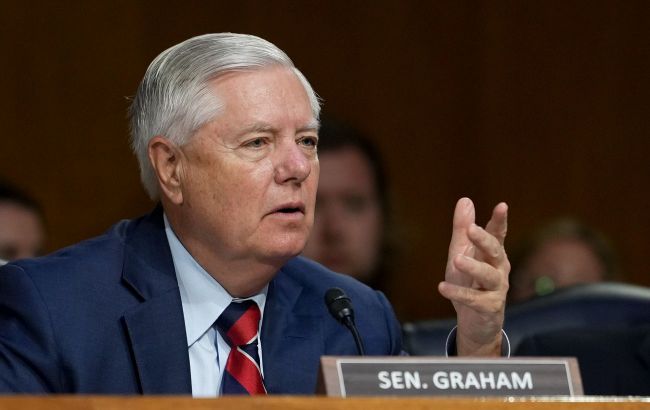 Photo: late US Senator Lindsey Graham (Getty Images)
Bipartisan support for Lindsey Graham’s sanctions bill remains strong in the US Congress, and lawmakers could consider passing it as early as September, Commissioner of the President of Ukraine for Sanctions Policy Vladyslav Vlasiuk said.
According to Vlasiuk, the US House of Representatives will return to work next week. Ukraine plans to use this opportunity to step up talks with US lawmakers.
Vlasiuk said he plans to work in the US to support the bill and convince lawmakers to pass it.
"We are interested in the tools that will emerge to put pressure on Russia and, at the same time, on Iran. We will convince congressmen that this is truly necessary for Ukraine and for Ukraine's victory," he said.
The presidential сommissioner for sanctions policy added that there is still strong bipartisan support in Congress for increasing pressure on Russia. However, the timing of the vote will depend on how the bill moves through the US legislative process.
Separately, an ally of Lindsey Graham said the sanctions bill against Russia could be passed as early as September.
For Ukraine, this could become an additional tool for putting pressure on Russia if the bill receives the necessary support from US lawmakers.
Bone-crushing sanctions against Russia
On August 7, the US Senate approved a bill to increase sanctions against Russia and Iran. The late Republican Senator Lindsey Graham was one of its co-sponsors. The bill received the support of 86 senators.
The bill includes sanctions against Russia’s leadership, banks, the energy sector, oligarchs and the shadow fleet. It also allows the US to impose high tariffs on countries that continue to buy Russian energy.
The bill has now been sent to the House of Representatives for consideration.
Ukraine hopes the US could introduce a new package of tough sanctions against Russia as early as September 2026. Ukrainian officials believe the measures being prepared in Washington could be significantly tougher than the European Union’s current sanctions.