Graham's 'bone-crushing' sanctions bill against Russia splits US Democrats in Congress

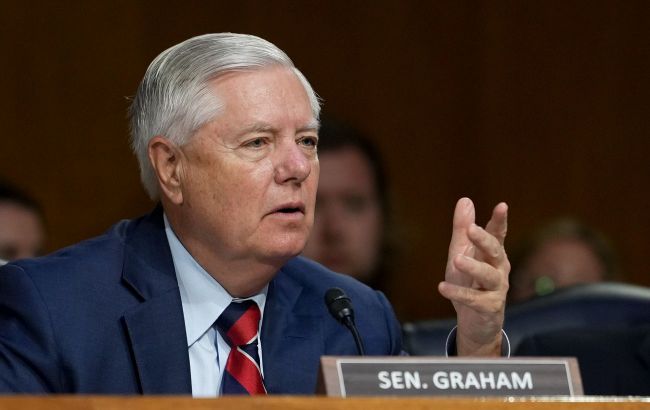 Photo: Late US Senator Lindsey Graham (Getty Images)
Voting on new US sanctions against Russia may be at risk. Some Democrats have come out against the bill backed by the late Senator Lindsey Graham, Axios reports.
Democratic leaders in the House of Representatives have openly opposed a bill imposing sanctions on Russia that is expected to come up for a vote this week. However, there is no consensus within the party on the issue.
This could create a problem for Republicans, as they will likely need Democratic votes. In this way, they will be able to compensate for the potential loss of support from members of their isolationist wing and push the bill through the House of Representatives.
Why Democrats are divided
The bill, named after the late Senator Lindsey Graham, would allow the Donald Trump administration to impose tariffs of up to 100% on the five biggest importers of Russian oil.
That provision has put Democrats in a difficult position. The party supports Ukraine and wants to increase pressure on Russia, but at the same time does not want to give Trump additional power over trade policy.
As a result, for some Democrats, the issue of sanctions against Russia is tied not only to support for Ukraine but also to their position on the president's economic policies.
Democratic leaders oppose the bill
Last week, three influential House Democrats — Greg Meeks of New York, Don Beyer of Virginia and Richard Neal of Massachusetts — jointly announced their opposition to the bill.
They stressed that House Democrats remain committed to supporting Ukraine but believe the proposed legislation could do more harm than good.
The lawmakers specifically criticized two provisions. The first concerns a significant expansion of the president's powers regarding tariff setting. The second concerns the absence of mandatory sanctions specifically against Russia.
They said both provisions were unacceptable.
Not all Democrats are ready to vote against it
At the same time, the party leadership's position does not mean the entire Democratic Caucus will oppose the bill.
Rep. Jared Golden of Maine, who often breaks with party leaders, told Axios that he will almost certainly vote for the document.
He said he considers sanctions a useful tool and generally supports the use of tariffs. Golden was previously the only Democrat to back several of Trump's most controversial protectionist trade measures.
Rep. Marcy Kaptur of Ohio has also not decided how she will vote. She is co-chair of the bipartisan Congressional Ukraine Caucus and said she is carefully reviewing the bill with other members of the group.
Kaptur stressed the need to send Russia a signal that it should back down.
Another Democratic co-chair of the Congressional Ukraine Caucus, Rep. Mike Quigley of Illinois, has also not made up his mind. He said his vote will depend on the exact wording of the bill.
Democratic amendments rejected
Democrats tried to amend the legislation. Greg Meeks and former House Majority Leader Steny Hoyer, who is also a strong supporter of Ukraine, proposed changes to the provisions dealing with trade policy.
Their goal was to make the language more acceptable to Democrats.
However, the Republican-controlled House Rules Committee rejected the proposed amendments on Monday. The bill was sent to a procedural vote in the House of Representatives.
On August 7, the US Senate approved the "bone-crushing" sanctions against Russia and Iran. Eighty-six senators voted for Lindsey Graham's bill, while 11 voted against it.
The legislation includes tariffs of up to 100% on the biggest buyers of Russian energy, sanctions targeting Russia's leadership, banks, energy projects and shadow fleet, as well as tariffs of up to 500% on direct imports from Russia.