Germany's Merz faces record low approval amid rising threat from AfD - Bloomberg

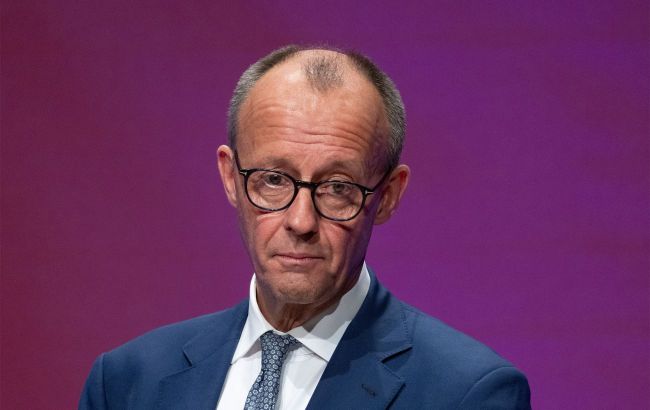 Photo: German Chancellor Friedrich Merz (Getty Images)
The government of German Chancellor Friedrich Merz has hit record lows in public trust and job approval. Analysts warn that the drop has boosted pro-Russian parties, including Alternative for Germany, reports Bloomberg.
According to a recent poll by RTL/n-tv, only 16% of Germans want Merz as a candidate in the next federal election. The CDU/CSU–SPD governing coalition is stalled by rivalry and persistent internal disputes.
After taking office, Merz promised to revive Germany's economy, rebuild infrastructure, curb mass migration, strengthen the Bundeswehr, and elevate the country's political influence. None of these pledges has been delivered. Pro-Russian forces, including the controversial Alternative for Germany, have gained traction amid the government's setbacks.
"There are people in his caucus who are questioning all of the chancellor’s talk and asking themselves, where are the results?... But the outlook is grim," one expert told Bloomberg.
Economic pressure
Last week, the Merz government cut Germany's economic growth forecast to below 1%. The downgrade underscores the scale of the challenge facing the Chancellor's plan to restart the economy. Long-term structural problems and geopolitical risks, including pressure from the United States, have placed significant strain on the country's economic model.
"Voters are already getting frustrated that trains are still late, bridges are still crumbling, and highways are still closed. Politically, the only result of the plan so far has been that conservatives blame Merz for breaking a promise to contain borrowing and are worried about the country's fiscal situation," Bloomberg reported.
Threat from AfD
Bloomberg notes that 2026 will be decisive for the Chancellor. Most of his economic reforms will take effect in January, which could improve conditions.
Voters in five federal states will also head to the polls. In Mecklenburg-Vorpommern and Saxony-Anhalt, eastern regions that were part of the Soviet-backed GDR until 1989, the far-right, pro-Russian AfD has strong chances of winning.
A victory would give the AfD its first opportunity to control a regional government in Germany. It remains unclear how Merz's coalition would counter the party if it survives its internal disputes.
Earlier in November, the pro-Russian far-right Alternative for Germany barred its members from meeting former Russian President Dmitry Medvedev in Sochi, with the restriction imposed by the party itself.
Before that, German Interior Minister Alexander Dobrindt said Alternative for Germany was signaling alignment with the Kremlin and "acting like Putin's German party."
Lawmakers even considered banning the AfD at the national level, despite the party's presence in the Bundestag. But Chancellor Friedrich Merz's Christian Democratic Union (CDU/CSU) opposed the proposal.