Germany explains why EU must abandon unanimity in decision-making

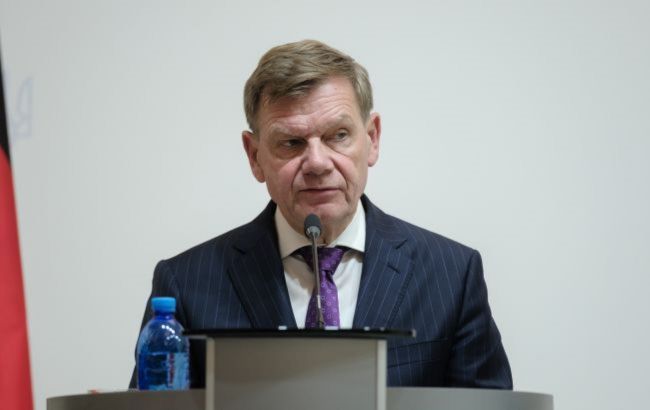 Johann Wadephul, German Foreign Minister (photo: Vitalii Nosach, RBC-Ukraine)
The European Union must abandon the principle of unanimity in decision-making to improve efficiency, as issues with certain member states are putting the EU's effectiveness into question, according to German Foreign Minister Johann Wadephul.
The minister says the EU's ability to act is being undermined by obstacles artificially created by certain countries. Germany hopes that the EU will soon decide to move away from the unanimity principle.
"To be an effective player on the international stage, to truly come of age, we in the EU must abolish unanimity in foreign and security policy before the end of this legislative term," he said.
Wadephul added that Germany supports a shift to qualified majority voting, meaning decisions would require only a majority of votes, thereby reducing the influence of certain of the aforementioned countries.
"All our recent experience regarding aid to Ukraine and sanctions against Russia supports this approach," he concluded.
EU loan for Ukraine, political sabotage
The EU approved a two-year €90 billion loan for Ukraine in late 2025. However, Ukraine cannot access the funds because a procedural decision required to release the money is being blocked by Hungary.
President Volodymyr Zelenskyy said that unblocking the EU loan is critical for Ukraine and its defense capabilities. The military and drone production would suffer without funding.
The problem stems from the fact that decisions such as granting loans or extending anti-Russian sanctions in the EU are made solely by unanimity, meaning they must be approved by all member states.
Hungarian Prime Minister Viktor Orbán, along with another pro-Russian figure, Slovak Prime Minister Robert Fico, are using this mechanism to block decisions. Fico has even threatened that his country could obstruct future loans to Ukraine.