Fuel prices may stay high despite US-Iran peace deal, analysts warn

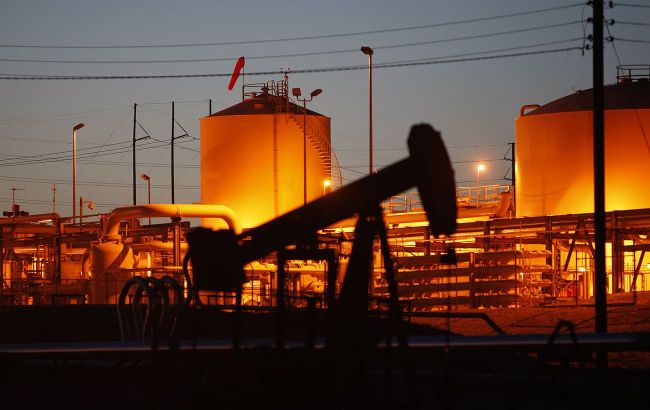 Oil production (photo: Getty Images)
The preliminary peace agreement between the United States and Iran triggered a sharp decline in energy prices and a rally in stock markets. However, experts warn that millions of barrels of oil will not reach Europe overnight due to damaged infrastructure and logistical bottlenecks, Politico reports.
The market reacted immediately to Trump's peace announcement, with oil and gas prices falling to their lowest levels since early March. The benchmark Brent crude price dropped below 80 euros per barrel. European and Ukrainian gas stations felt the effect immediately.
However, experts say it is too early to celebrate. Research firm Kpler notes that due to the conflict, the global market is losing 12 million barrels of oil per day. Even under an ideal scenario, this deficit will shrink only to 2.6 million barrels per day by the end of August. Full restoration of supplies from Iraq and Kuwait is not expected before December.
Experts remain skeptical. Oxford Economics chief economist Daniel Kral emphasized that the decline in prices remains limited for now.
"We're nowhere near out of the woods," he said.
One of the main problems remains the physical safety of tankers. Following the February attacks, Iran mined vast areas of the Strait of Hormuz. Clearing the mines will take time.
Specialists say it could take anywhere from several weeks to six months to clear the waters. Until the sea becomes safe, insurance companies will keep premiums high. This is automatically reflected in the final price of the resource.
"In this regard, today's market reaction seems to be too good to be true," said Carsten Brzeski, global head of macro at ING.
In his view, the optimism is based solely on the fact that this is the first agreement officially confirmed by Tehran after numerous statements by Donald Trump.
Possible tariffs continue to weigh on oil
Kpler surveyed tanker owners, and the results were not encouraging:
-
Most shipowners do not want to enter the strait if new tariffs are introduced.
-
There are currently 118 loaded tankers stranded in the Gulf.
-
Their departure will be a one-time event rather than a continuous flow.
-
Traffic recovery will be twice as slow as pre-war levels.
What about gas prices?
Even if oil flows steadily again, the situation with natural gas is more complicated. Europe is entering fierce competition with Asia for liquefied natural gas (LNG).
Reasons for the competition include:
-
Damaged infrastructure that will take years to repair.
-
The EU's urgent need to replenish reserves before winter.
-
The El Niño weather phenomenon, which will force Asia to buy more gas to cool homes during the summer.
-
China's return to the market as an active buyer replenishing its own reserves.
This means gas prices could quickly recover their losses. Experts predict that any warming weather or industrial growth in Asia will force Europe to pay a premium to secure cargoes. The peace agreement removes the threat of attacks, but it does not eliminate the global energy shortage, the article concludes.
What is known about the oil market situation
Due to the uncertain situation between the United States and Iran, several hundred vessels have been waiting in the Persian Gulf, fearing new attacks from Iran, and that is not the only reason.
Despite the congestion in the Strait of Hormuz, global oil prices began to decline on an optimistic note. Brent crude futures fell by $4.08, or 4.7%, to $83.25 per barrel, while US West Texas Intermediate crude dropped by $4.35, or 5.1%, to $80.53 per barrel.