Europe's winter heating plans face uncertainty — FT

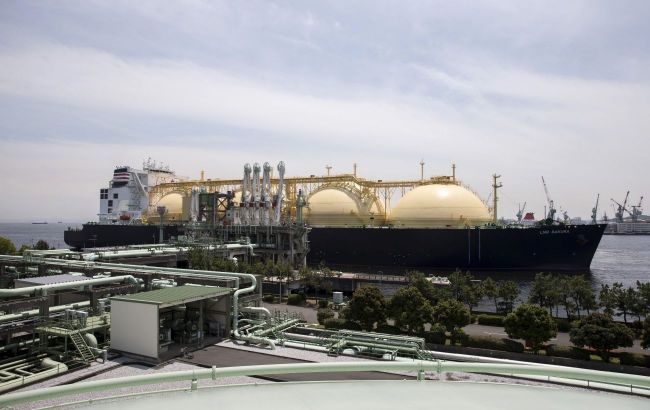 Photo: a gas tanker (Getty Images)
Europe risks facing the coming winter with the lowest natural gas reserves in the past one and a half decades. This poses a serious threat to the stability of energy prices for both large businesses and ordinary households, according to the Financial Times.
The consulting firm Wood Mackenzie has released an alarming report. Analysts estimate that EU storage facilities will end the injection season at only 76% capacity. This will happen as early as October. These figures are the worst since 2011.
European storage facilities began the season with only 28% of their capacity filled. Currently, the fill rate stands at about 48%, which is significantly lower than usual for this time of year.
Iran war and Gas stalemate
The main cause of the shortage is the major conflict in Iran. The fighting has effectively blocked the Strait of Hormuz, through which one-fifth of the world’s liquefied natural gas (LNG) supplies pass.
Qatar and the United Arab Emirates have also sharply reduced their gas production. Europe has lost stable sources of imports at a critical moment.
Gas prices initially skyrocketed and then temporarily plateaued. This lull occurred amid rumors of a ceasefire between the US and Tehran. However, it created a new problem.
Fuel prices at European hubs fell too low. This made the EU market unattractive to American LNG tankers. It is more profitable for suppliers to ship gas to other regions of the world. The gas simply isn’t reaching European consumers.
Brussels is trying to reassure the markets. A European Commission spokesperson stated that current storage levels do not pose an immediate threat to energy security.
Gas situation in Ukraine
At this point, preparations for winter are proceeding steadily despite the Russian strikes, but the wait-and-see strategy adopted by Naftogaz’s leadership poses serious risks. If Russia intensifies its attacks on infrastructure, the lack of imported reserves could trigger a crisis.
As for the resilience plan, however, things are not going so smoothly, although preparations are actively underway. Currently, with nearly four months to go before the start of the heating season, resilience plans across all regions of Ukraine are only 40% complete.