Europe develops plan to counter Trump — NYT

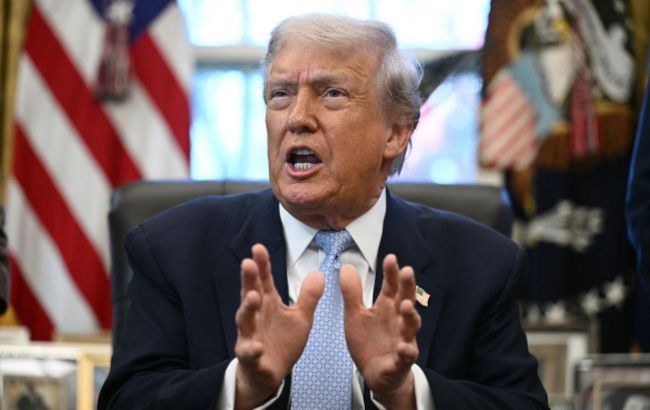 Photo: Donald Trump (Getty Images)
European leaders have crafted a strategy to respond to US President Donald Trump's provocations, aiming to remain calm while threatening tariffs, according to The New York Times.
The strategy was formulated during an emergency dinner the day after Trump, at the World Economic Forum, threatened Europe with economic difficulties, criticized its leaders, and questioned European values.
Leaders discussed how Europe should manage the rapid deterioration in its relations with the US, which has been highlighted by Trump's persistent interest in Greenland.
Italian Prime Minister Giorgia Meloni proposed continuing dialogue with Trump, while German Chancellor Friedrich Merz pressed for immediate measures to reduce business regulations across Europe to boost growth and reduce reliance on the US economy.
French President Emmanuel Macron emphasized that Europe must demonstrate its readiness to push back against Trump's threats to earn his respect.
The meeting resulted in the creation of a response action plan. According to three sources, the agreed approach involves remaining composed in the face of Trump's future provocations, threatening targeted tariffs, and working behind the scenes to reduce Europe's economic and military dependence on the US.
In the short term, leaders are discussing ways to strengthen Arctic security to appease Trump. Long-term efforts focus on diversifying trade, improving military capabilities, and reducing reliance on American technology.
However, Europe still lacks a plan to quickly achieve full military autonomy from the US, and the region's financial and banking systems remain fragmented, complicating funding for ambitious projects.
Decision-making is slow, and leaders remain divided on how to execute initiatives that could take years—or even decades—to reduce transatlantic dependence.
Europe-US tensions
Despite rising defense budgets across most EU countries, Europe faces significant gaps in weapons production that could take trillions of dollars and decades to close.
Nevertheless, European nations have significantly ramped up production of artillery shells, armored vehicles, ships, and submarines to achieve greater military independence from the US.
The media recently reported that US trade rhetoric toward Europe amid the Greenland situation could influence global financial flows and currency markets, potentially strengthening the euro's position.