EU plans new blow to Russia to force Putin toward peace this summer

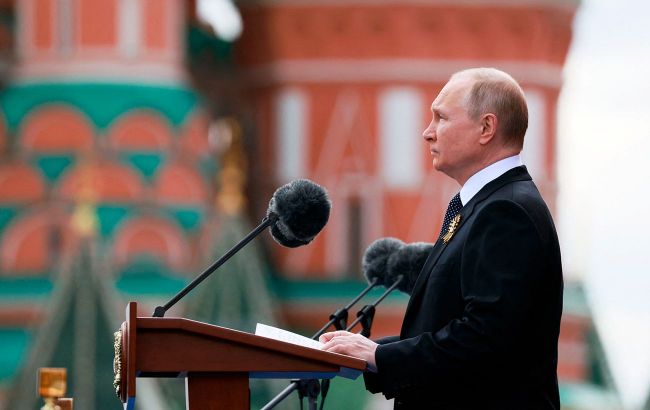 Photo: Russian president Vladimir Putin (Getty Images)
Europe is preparing a new package of sanctions against Russia. This time, the main focus is expected to be on fighting the shadow fleet, reports Politico.
The EU believes that cutting off this channel would significantly reduce the Kremlin’s revenues and increase economic pressure on Russian president Vladimir Putin to make him abandon his maximalist demands in any peace agreement with Ukraine.
The 21st sanctions package is expected to be introduced in late June or early July. It will also target Russian banks, financial institutions, and military-industrial companies, as well as firms selling stolen Ukrainian grain.
Officials also see an opportunity to move forward with sanctions that had previously been blocked by former Hungarian Prime Minister Viktor Orbán.
These include measures targeting senior members of the Russian Orthodox Church, in particular its leader, Patriarch Kirill, a close ally of Putin.
The European Commission may also revive the idea of banning maritime transportation by Russian vessels, which had so far been blocked by Malta and Greece, one diplomat said.
Brussels is convinced that the Russian economy is currently going through one of its most difficult periods since the start of the full-scale war.
EU economic adviser Valdis Dombrovskis said Russia is under pressure from a static inflationary shock. That is why, according to him, now is not the time to ease sanctions pressure.
European officials also believe that Ukraine is in a much stronger position than it was a year ago. This is due to €90 billion in EU financial support, battlefield successes, the development of its own long-range weapons, and the psychological effect of disrupting Russian plans for the May 9 celebrations in Moscow.
"Ukraine's allies argue that a summer wallop could work in Kyiv's favor, as Hungary's new prime minister, Péter Magyar, is in power, there may be a durable ceasefire in Iran and the November's midterm US elections could refocus American minds on the peace process," Politico writes.
EU foreign policy chief Kaja Kallas and European Commission President Ursula von der Leyen intend to double down on this momentum and want to introduce a big package of sanctions, a second senior EU official directly involved in preparing the restrictions said.
Sanctions against Russia
In April 2026, the European Union officially approved its 20th package of sanctions against Russia, which became one of the largest in the past two years.
Seven Russian oil refineries were sanctioned — in Tuapse, Komsomolsk, Angarsk, Achinsk, Ryazan, Afipsky, as well as a Lukoil facility in Usinsk.
Two major Russian oil producers — Bashneft and Slavneft — were also added to the sanctions list, along with companies in the UAE linked to the operation of the shadow fleet and subsidiaries of Rosneft and Gazprom.
Ukraine’s presidential sanctions policy commissioner, Vladyslav Vlasiuk, shared details of the 20th sanctions package and announced new problems for the Kremlin’s mouthpieces.