EU officially restricts financial transactions with Russia: New blow to Kremlin’s economy

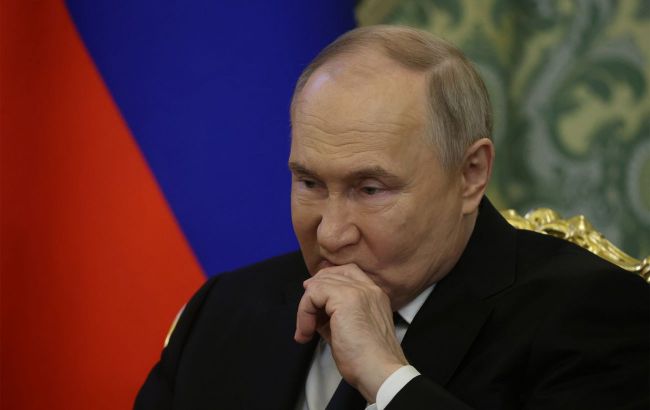 Photo: Russian President Vladimir Putin (Getty Images)
The European Union has officially added Russia to the blacklist of countries with a high risk of money laundering and terrorist financing, according to the Official Journal of the Council of the EU.
The decision entered into force on January 29 and provides for enhanced scrutiny by European banks over any transactions linked to Russia.
It is known that the European Commission adopted this decision back on December 3, 2025. Today, 20 days after its publication, it came into effect, as neither the European Parliament nor the Council of the EU raised any objections.
Earlier, Russia was not included in the FATF blacklist — the international body combating money laundering — despite Ukraine’s demands. This was due to objections from countries such as China, India, Saudi Arabia, and South Africa, which allowed Russia to remain off the list.
As a result, the European Commission decided to act independently and added Russia to the blacklist regardless of FATF.
Consequences of the decision
The new rules mean that any transactions linked to Russia in European banks will now be subject to thorough scrutiny, while financial risks for Russian entities in the EU will be significantly curtailed. This is another signal to Moscow that financing the war in Ukraine and ignoring international norms is unacceptable.
As a result, all EU financial institutions are now required to strengthen checks on transactions related to Russia, and banks that have not yet introduced additional measures against Russia must do so.
Why Russia was added to the blacklist
Russia’s membership in FATF was suspended due to its gross violation of the organization’s core principles. The assessment identified a number of key shortcomings in Russia, including deficiencies in legislation and policy in the field of financial intelligence — in particular, its independence and ability to effectively cooperate with counterparts from other countries.
The EU also identified problems with the transparency of beneficial ownership and the accuracy of available information, as well as with the application of anti-money laundering and counter-terrorist financing rules to crypto-assets.
Russia’s reaction
Russian financial authorities said the EU’s decision is politicized and does not contain concrete evidence of shortcomings in Russia’s anti–money laundering system.
For the EU, however, this move is an important step toward Russia’s financial isolation and the strengthening of sanctions pressure over its aggression against Ukraine.
Earlier today, Ukraine’s Foreign Minister Andrii Sybiha outlined key options for the European Union to exert pressure on Russia.
On January 26, 2026, the Council of the European Union finally approved a complete ban on supplies of Russian liquefied natural gas in order to "cut off" the Kremlin’s funding of the war in Ukraine.