EU moves closer to finalizing 20th sanctions package against Russia - Wadephul

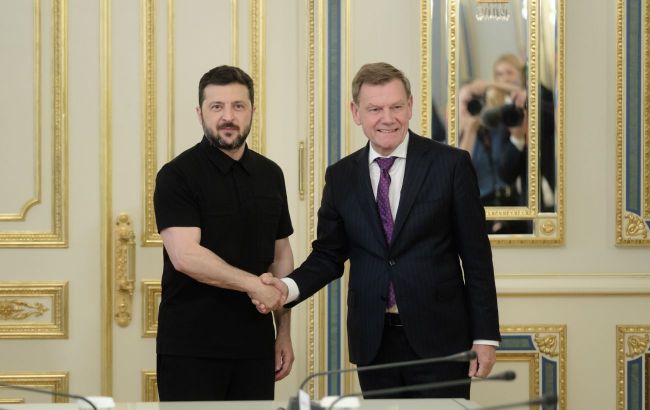 Ukrainian President Volodymyr Zelenskyy and German Foreign Minister Johann Wadephul (photo: Getty Images)
The EU has nearly completed the coordination of its 20th sanctions package against Russia, increasing pressure on the Kremlin and supporting Ukraine, German Foreign Minister Johann Wadephul said ahead of the Ministerial Council meeting of the Organization for Security and Co-operation in Europe (OSCE) in Vienna.
According to him, the European Union continues to support Ukraine and increase pressure on Russia. Wadephul noted that, in his view, Russia's return to the negotiating table depends on the EU standing firmly behind Ukraine and maintaining its support. He said the NATO defense ministers' meeting the previous day had demonstrated the EU's readiness to provide even larger assistance packages and pointed out that making frozen Russian assets available for use was also part of this effort.
He added that a large group of countries, both in Europe and beyond, supports Ukraine.
The minister stressed that strengthening sanctions pressure remains the second key pillar of the EU's policy toward Russia. He said the 20th sanctions package would be completed soon. He explained that the new measures are designed to increase economic and political pressure on Russia and its allies, particularly in the energy and financial sectors.
Wadephul also highlighted a third aspect — readiness for dialogue. He said Ukraine is prepared for talks, while Russia is absent from the negotiating table, but will eventually have to appear there. He emphasized that every war ultimately ends, and the EU's goal is to ensure that Ukraine reaches that point with a strong negotiating position.
Earlier, the European Commission announced plans to introduce separate sanctions lists targeting shadow-fleet tankers, which may be included in the new package of restrictive measures.
Sanctions against Russia
The European Union is continuously expanding its package of restrictive measures against Russia in response to its aggression in Ukraine. The sanctions include economic, financial, and individual restrictions aimed at increasing pressure on the Kremlin and limiting the financing of the war.
Moreover, in October, the United States announced sanctions against Russia's two largest oil companies — Rosneft and Lukoil — to force Putin to sit down at the negotiating table with Ukraine.
In addition, on October 20, the Council of the European Union, by a majority vote, supported the launch of the RePowerEU mechanism, which provides for the gradual and complete phase-out of the EU's reliance on Russian fossil fuels.