EU leaders fail to agree on 2028–2034 budget, will try again in December

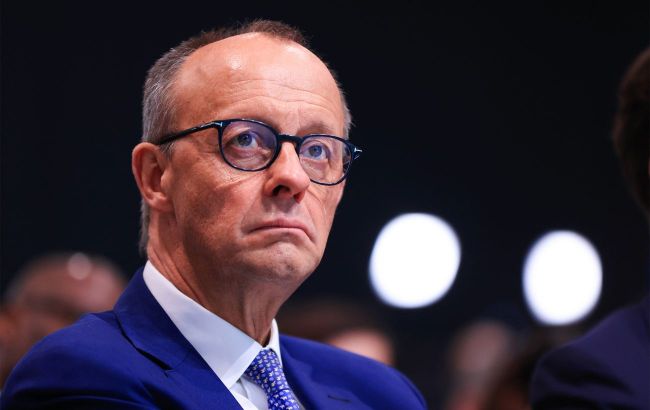 Photo: German Chancellor Friedrich Merz (Getty Images)
EU leaders failed to agree on the bloc’s long-term budget for 2028–2034 at a summit in Brussels. However, they will try again at the next European Council summit on December 17, according to German Chancellor Friedrich Merz.
“Clearly, our visions of how to shape it differ significantly. Given the current stage of negotiations, this is not surprising. We all understand that it will take time and considerable goodwill to bring these opposing views closer together,” Merz said.
At the same time, he noted that the intensive discussions lasted exactly as long as expected, and the next attempt to reach an agreement would take place at the European Council summit on December 17–18.
The chancellor stressed that Germany’s approach to these negotiations is based on two fundamental considerations.
First, public finances in many member states are far from ideal, so everyone must ensure that national budgets remain sustainable, avoid making promises at the European level that cannot be financed, monitor Europe’s debt levels, and guarantee the stability of the euro.
“Second, we are negotiating the budget under entirely new conditions. We must make Europe economically strong and ensure its ability to defend itself. This is particularly important given the greatest external threat Europe faces — the war in Ukraine and the related risks to our common security,” Merz stressed.
That is precisely why a final agreement could not be reached today, he explained.
According to the German chancellor, EU leaders have yet to reach a common understanding that the budget cannot grow indefinitely and that the associated burden must be distributed fairly.
“Contributions need to be adjusted. This is a matter of fairness. Germany provides around a quarter of the European budget, while receiving only about 8% of the funds back. In the case of the so-called EU Cohesion Funds, this share is even smaller,” the chancellor said.
He also called for strengthening Europe’s economy and ensuring its security to be among the priorities.
“This also requires a reserve — for example, to ensure long-term funding for Ukraine. Everyone must contribute to this effort,” Merz stressed.
He also advocated for decisions to be made by qualified majority voting.
In the German chancellor’s view, the EU should avoid taking on new debt, as it has already accumulated enormous debt under the NextGenerationEU program and through aid to Ukraine. As a result, interest payments over the next seven-year MFF will exceed €150 billion.
Merz also added that elections are scheduled next year in several large and medium-sized European countries, making it even more difficult for the European Council to approve a new multiannual financial plan.
“That is why we all want to reach an agreement by the end of the year. So we are preparing for a rather intense European Council meeting on December 17. We must make every effort to succeed. I cannot say for certain, but I have not lost hope that we will manage to do so,” the German chancellor concluded.
Earlier, German Chancellor Friedrich Merz threatened to block approval of the EU’s next seven-year budget unless all member states agreed to support Ukraine.