EU funding Putin’s war machine through LNG imports, human rights activists say

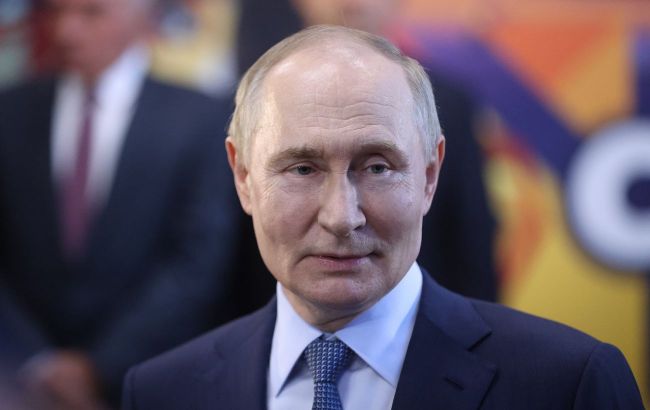 Photo: Vladimir Putin, Russian President (Getty Images)
European governments continue to actively purchase Russian liquefied natural gas, which helps Moscow finance its war against Ukraine, states the German human rights organization Urgewald, according to The Guardian.
According to Urgewald, in 2025, over 15 million tons of LNG from Yamal were delivered through Arctic ice to EU ports, generating approximately €7.2 billion for the Kremlin.
The organization’s report emphasizes that although Europe reduced pipeline gas supplies from Russia after the full-scale invasion of Ukraine, the EU’s share of global LNG deliveries from Yamal increased last year to 76.1% from 75.4% in 2024.
Urgewald also reports that one of the two European shipping companies providing logistical support for Yamal LNG is the British company Seapeak. Seapeak transported 37.3% of this LNG, while the Greek company Dynagas handled 34.3%.
Eleven of the fourteen specialized Arc7 icebreaking tankers that carry LNG from Yamal are owned by Seapeak and Dynagas.
"In the current geopolitical situation, we cannot afford another year of complicity. We are not just customers, we are the essential infrastructure keeping this flagship project alive. Every cargo that offloads at an EU terminal is a direct deposit into a war chest that fuels the slaughter in Ukraine. We must stop providing the oxygen for Russia’s energy profits and shut the Yamal loophole now," said Urgewald energy and sanctions expert Sebastian Rötters.
The Yamal plant depends on access to European ports and the use of Arc7-class icebreaking LNG tankers built specifically for this project. Without unloading or transshipment in EU ports, including Zeebrugge in Belgium, the vessels would have to take much longer routes.
Ban on LNG imports from Russia
Under sanctions against Russia, the European Union has committed to fully banning imports of Russian LNG starting January 1, 2027.
These restrictions were included in the EU’s 19th sanctions package, which was approved at the end of October last year.