EU fears over frozen Russian assets are being imposed by Moscow - MFA

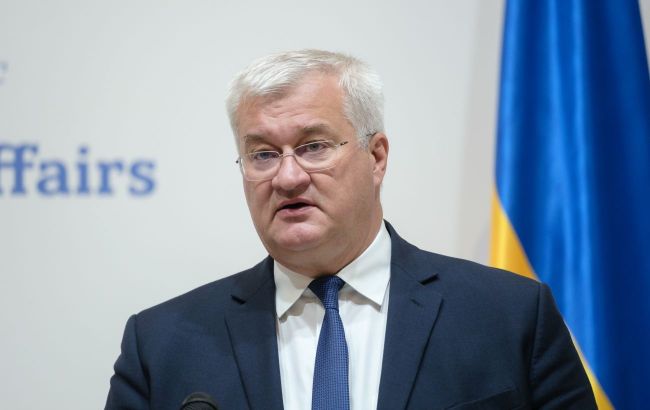 Photo: Ukraine’s Foreign Minister Andrii Sybiha (Vitalii Nosach, RBC-Ukraine)
Ukraine considers concerns about financial and legal risks related to providing a reparations loan using frozen Russian assets to be unfounded, Euractiv repots.
The outlet cites Ukraine’s Foreign Minister on Twitter (X), who claims that the risks cited by certain EU countries are largely based on Russian disinformation.
"In reality, none of these threats are credible, and most of these fears are completely unfounded. Moscow simply sells fear, as it usually does before major steps to counter its aggression," Andrii Sybiha said.
The Foreign Minister urged European Union leaders to agree on using frozen Russian assets, mostly held in the Belgian Euroclear depository, to provide Ukraine with a reparations loan. The issue is set to be discussed at the EU summit on Thursday, December 18.
Germany and several other countries support the creation of a €210 billion loan scheme. Meanwhile, Belgium, backed by Italy, Bulgaria, and Malta, opposes it, citing excessively high financial and legal risks.
Specifically, Belgian authorities fear that in the event of a future court ruling in favor of Russia, the country would have to cover any potential losses on its own. Brussels insists that all EU member states should bear equal risks.
Sybiha called this a "matter of justice" and emphasized that the mechanisms proposed by the European Commission are legally sound.
"The mechanisms developed by the European Commission are legally sound, morally correct, and fair in terms of risk sharing. We urge all EU member states to take this important strategic step this week," the minister said.
Timeline for the reparations loan
As reported, on December 16, Members of the European Parliament decided to use an accelerated procedure to consider the proposal for a reparations loan for Ukraine.
According to the European Parliament’s statement, funds from the reparations loan are planned to support Ukraine’s financial needs and state budget, including military capabilities, the country’s defense industry, and its integration into the European defense-industrial base.
The decision on the reparations loan is expected to be approved by EU member state leaders at the summit scheduled for December 18–19.
Ukraine’s Foreign Minister, Andrii Sybiha, outlined five reasons why the decision on the reparations loan must be made now.