EU considers major reform that could accelerate Ukraine's EU accession

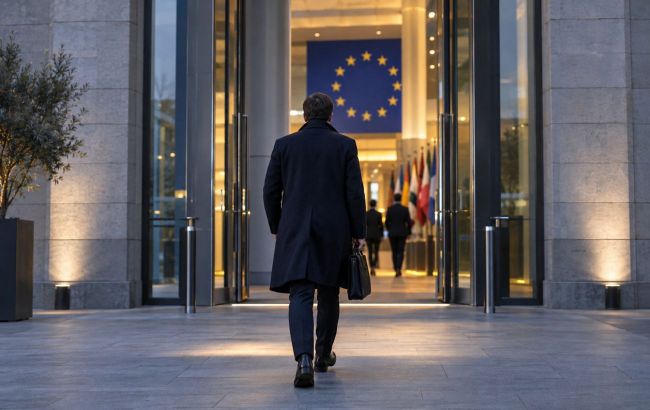 Illustrative photo
The European Commission is preparing a reform that would allow the EU to make decisions without being blocked by national vetoes. This would make it easier for new members to join the bloc, including Ukraine, Rapporteur reports.
EU reform could help Ukraine join the bloc
The European Commission will propose a major overhaul of the EU’s decision-making process. The aim is to bypass national vetoes and introduce new rule-of-law safeguards. Montenegro and Albania are currently on the agenda for EU accession.
Ursula von der Leyen will present the reform plan next week, outlining how the bloc can prepare for enlargement to more than 30 members without amending the Lisbon EU Treaty.
Two internal draft documents propose using legal transitional provisions to abolish the requirement for unanimity among the 27 member states at various interim stages of a candidate country’s accession process.
The measure, which would require unanimous approval, could significantly speed up the accession process for countries such as Ukraine, Montenegro and North Macedonia. They currently face blockages from a small number of EU members.
Current EU members are expected to resist the changes, the outlet reports, fearing they could lose their veto power. However, the draft includes an "emergency brake" that governments could activate if their "vital national interests" are at risk.
What is being proposed
The Commission proposes a lower threshold for qualified majority voting: 15 countries representing two-thirds of the bloc’s population.
"As the Union enlarges, the risk that decisions are delayed or blocked will inevitably increase," an internal document says.
Therefore, transitional provisions in EU treaties would allow voting rules in certain policy areas to be permanently changed from unanimity, when every country can exercise its national veto, to qualified majority voting.
Obstacles to the changes
Another controversial proposal would mean that only two-thirds of EU countries would have a European commissioner after the bloc’s enlargement.
With the EU currently consisting of 27 countries, nine countries would have to give up their right to send a representative to Brussels.
This is expected to upset smaller member states, which have traditionally argued that their influence in Brussels has declined as the bloc has expanded.
New safeguards
The draft documents propose that new members could be placed on a probationary period of 10 years or longer. During this period, they would face increased scrutiny from Brussels.
Penalties during the probationary period could include:
- suspending their voting rights in the Council;
- financial sanctions under recently introduced "financial" and "institutional safeguards."
New members would have to sign a legally binding "temporary commitment" not to block decisions agreed upon by the rest of the EU.
Standard temporary safeguards on joining key EU policy areas would also remain in place.
Another "financial safeguard" would allow the Commission to penalize new members if they backslide on democratic and judicial standards.
New members would also have to join the European Public Prosecutor’s Office, which investigates fraud involving EU funds, before accession.
Earlier, RBC-Ukraine reported that the EU is developing special road maps for Ukraine, Montenegro, Moldova and Albania. The documents are intended to outline specific steps and estimated timelines for completing EU accession negotiations.
In addition, German Chancellor Friedrich Merz said that the idea of Ukraine joining the European Union by January 1, 2027, as proposed by President Volodymyr Zelenskyy, is unrealistic.