Estonia says eliminating gray zones is key to lasting peace in Europe

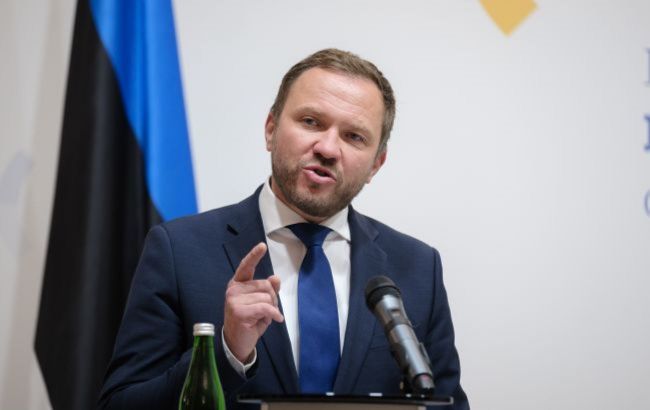 Estonian Foreign Minister Margus Tsahkna (photo: Vitalii Nosach/RBC-Ukraine)
Achieving lasting peace in Europe requires eliminating the "gray zones" between Russia and EU and NATO countries. Neutral territories between them only encourage Moscow to pursue further aggression, Estonian Foreign Minister Margus Tsahkna said ahead of the EU Foreign Affairs Council meeting in Brussels.
Tsahkna noted that the new European security architecture must eliminate "gray zones" and neutral zones between Russia on one side and the European Union and NATO on the other.
"But we know what we need to achieve lasting peace. Namely, to get rid of these 'gray zones' or neutral zones between Russia, NATO, and the European Union, because they have always encouraged Russia to continue its aggression in Europe. That is what the new security architecture should look like," he stressed.
Why Estonia rejects Russia's demands
The minister criticized Moscow's demand to roll back NATO's military presence to its 1997 positions. He said Europe cannot negotiate its own security with Russian President Vladimir Putin, who is himself the source of the threat.
"We cannot discuss our security with Putin because the real threat of aggression lies with him. So how can you discuss your security, your family's security, with someone who is planning to attack you? You cannot," Tsahkna said.
He also urged Europe to have greater confidence in its own capabilities and not allow others to decide its future, warning against a Yalta 2.0.
What path to peace should look like
The Estonian foreign minister stressed that Tallinn would not agree to discuss any arrangements involving a NATO retreat or excluding its members from the Alliance.
"This is not a peace plan if the intention is to push NATO back and kick Finland out of NATO," he said.
According to Tsahkna, the peace process requires a clear sequence of steps: a ceasefire, negotiations between Russia and Ukraine accompanied by security guarantees, and the creation of conditions for lasting peace and justice.
As reported according to The New York Times, Russia is once again demanding that NATO roll back its military presence to its 1997 positions and stop supporting Ukraine. In particular, Moscow is calling for the withdrawal of Alliance forces from countries on its eastern flank.
Earlier, Tsahkna also said Putin must not be allowed to secure at the negotiating table what he failed to achieve on the battlefield. The minister stressed the need to tighten sanctions and reduce Russia's war revenues.