Doctor reveals accessible solution for stronger legs and bones

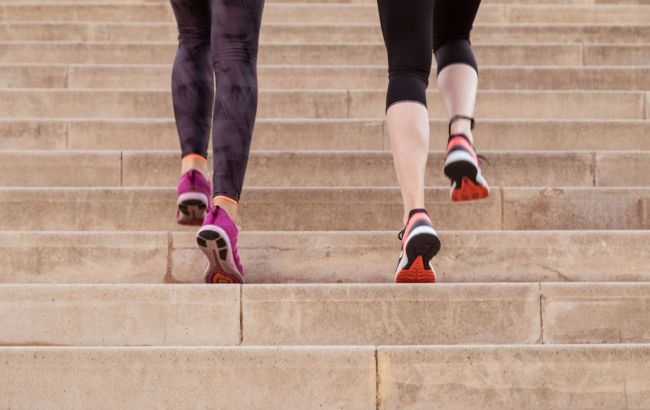 Why stair climbing is good for you (photo: Freepik)
Regular stair climbing can be a simple and effective way to maintain bone health in adulthood. Such weight-bearing activity stimulates bone strengthening, reduces the risk of osteoporosis, and helps preserve mobility and leg strength even later in life, according to Eating Well.
Impact of stair climbing on bones
Neurosurgeon Betsy Grunch, MD, FAANS, FACS, said that climbing stairs improves bone health, especially after the age of 40.
"Bones are living tissue, and they only stay strong if they’re challenged. Every step is going to create ground reaction force, so that force travels up your foot, through your leg, and into your hips and your spine. And bone cells, they sense that stress and respond by laying down more bone," the doctor explained.
According to the doctor, osteoporosis is extremely common. One in two women over 50 has an increased risk of fractures. Bone loss accelerates after menopause, and most women do not realize they are losing bone mass until they suffer a fracture.
Why speed matters
Speed also plays a role — more vigorous movements stimulate bones much more effectively than slow ones. Walking is also beneficial for mental health.
Climbing stairs, combined with strength training and aerobic exercise, is a simple movement that can help strengthen bones with age.
In addition, it is important to include more bone-friendly foods in the diet, such as tofu, prunes, dairy products, and salmon.
What harms bone health
Reduced calcium and vitamin D levels. The body absorbs calcium less efficiently with age, and the skin produces less vitamin D. This leads to decreased bone density (osteoporosis).
Hormonal changes. In women, estrogen levels drop after menopause, accelerating bone loss. In men, testosterone declines with age, which also affects bone health.
Sedentary lifestyle. A lack of physical activity weakens bones, as bone tissue only strengthens under load.
Unhealthy habits. Smoking and excessive alcohol consumption reduce the bones’ ability to regenerate.
This material is for informational purposes only and should not be used for medical diagnosis or self-treatment. Our goal is to provide readers with accurate information about symptoms, causes, and methods of detecting diseases. RBС-Ukraine is not responsible for any diagnoses that readers may make based on materials from the resource. We do not recommend self-treatment and advise consulting a doctor in case of any health concerns.