Microwave-powered drones: China reveals way to keep UAVs airborne for hours

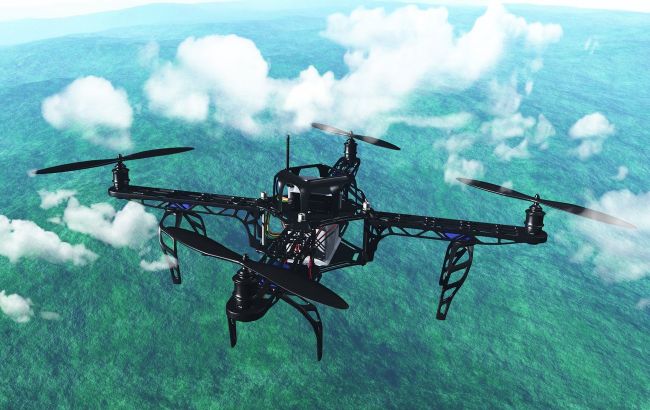 China tests new drone charging system (photo: Magnific)
Researchers from China’s Xidian University, together with military engineers, have developed and tested a system that focuses and directs microwave radiation toward the antennas of a moving UAV. Despite significant early challenges with energy transfer efficiency, the project successfully solved a critical problem — precise beam tracking in motion using GPS-based guidance, according to BGR.
How microwave wireless recharging works
One of the biggest limitations of modern drones is the capacity of lithium-ion batteries. As a result, frontline units must frequently return drones to base for battery replacement, limiting mission duration and increasing the risk of losing equipment during landings in hostile areas.
The Chinese system proposes a solution based on a mobile ground station. A specialized vehicle generates microwave pulses and transmits them to receivers installed on the underside or tail of the drone.
Thanks to advanced flight controllers and precise satellite positioning, the system synchronizes the navigation of both transmitter and target, enabling a continuous power supply to a fixed-wing UAV in flight for up to three hours.
However, the technology is still far from perfect. Researchers highlight several key issues:
Low efficiency: currently, only about 3–5% of transmitted energy is actually absorbed by the drone’s antennas.
Weather sensitivity: strong winds, humidity, and other environmental factors significantly reduce beam accuracy.
US response: laser energy webs
The United States is pursuing a parallel direction. The Defense Advanced Research Projects Agency (DARPA) is developing a large-scale wireless energy web under its POWER program.
The US concept involves powerful ground-based lasers that transmit energy through a chain of airborne relay platforms directly to aircraft receivers.
US engineers have already set a record by transmitting 800 watts of power over a distance of more than 5 miles (about 8 km). Like the Chinese system, the DARPA project still suffers from energy losses, but Pentagon officials believe removing fuel limitations could fundamentally reshape future aircraft and drone design.
A new face of modern warfare
The importance of wireless power is reinforced by recent conflicts in Eurasia and the Middle East. For example, in the Russia–Ukraine war, Ukrainian drones already regularly strike targets more than 1,600 km from the border.
In addition to lasers and microwaves, defense agencies are also testing alternative approaches:
Drone power banks: a US Army patent describes large UAVs capable of recharging smaller drones mid-air.
Solar-powered drones: US Navy projects in July 2025 demonstrated multi-day flight endurance using solar energy.
Container-based stations: DARPA is developing autonomous sea and land containers for automated launch, recovery, and recharging of drone swarms.
The ability to extend drone flight time is becoming a decisive factor in the global arms race. Countries that first improve the efficiency of wireless energy transfer could gain a strategic advantage in both reconnaissance and continuous aerial operations.