Buying new smartphone - Key tips to pick perfect model

 Key points to know before buying new phone (illustrative photo: Freepik)
Buying a new smartphone always comes with many questions and doubts. It can be hard to understand which features are truly important and where you can save.
CNET shares key points to help you choose the ideal smartphone for your needs.
Tips for choosing a smartphone
Set your priorities
What matters most – screen size, camera quality, or battery life? Flagship models like the iPhone 17 Pro, Galaxy S25 Ultra, or Xiaomi 15 Ultra have cameras that are close in quality to mirrorless cameras. For mobile photography enthusiasts, these devices may be justified; if everyday functionality is more important, you can save by choosing a less advanced model.
Don’t forget mid-range devices
Features from last year’s flagships gradually appear in mid-range models. For example, the Pixel 10 Pro offers an excellent camera with zoom, while the basic Pixel 10 retains key features at a more reasonable price. Even budget devices like the Nothing Phone 3A Pro provide a decent experience at a low cost.
Watch for sales
Discounts and promotions during major holidays, especially Black Friday, can help you save. Always check the return and exchange policies.
Consider previous-year models
After a new smartphone is released, last year’s flagships often become cheaper. It’s also worth looking at trusted second-hand devices – the savings can be significant if the device still receives security updates.
Hold the phone in-store
The look and feel in your hands are often more important than technical specifications.
Consider apps you’ve already purchased
If you’ve invested in the iOS or Android ecosystem, it’s worth staying on the same platform to retain access to your purchases.
Protect your device
A case and screen protector will help safeguard your smartphone from damage and preserve its resale value.
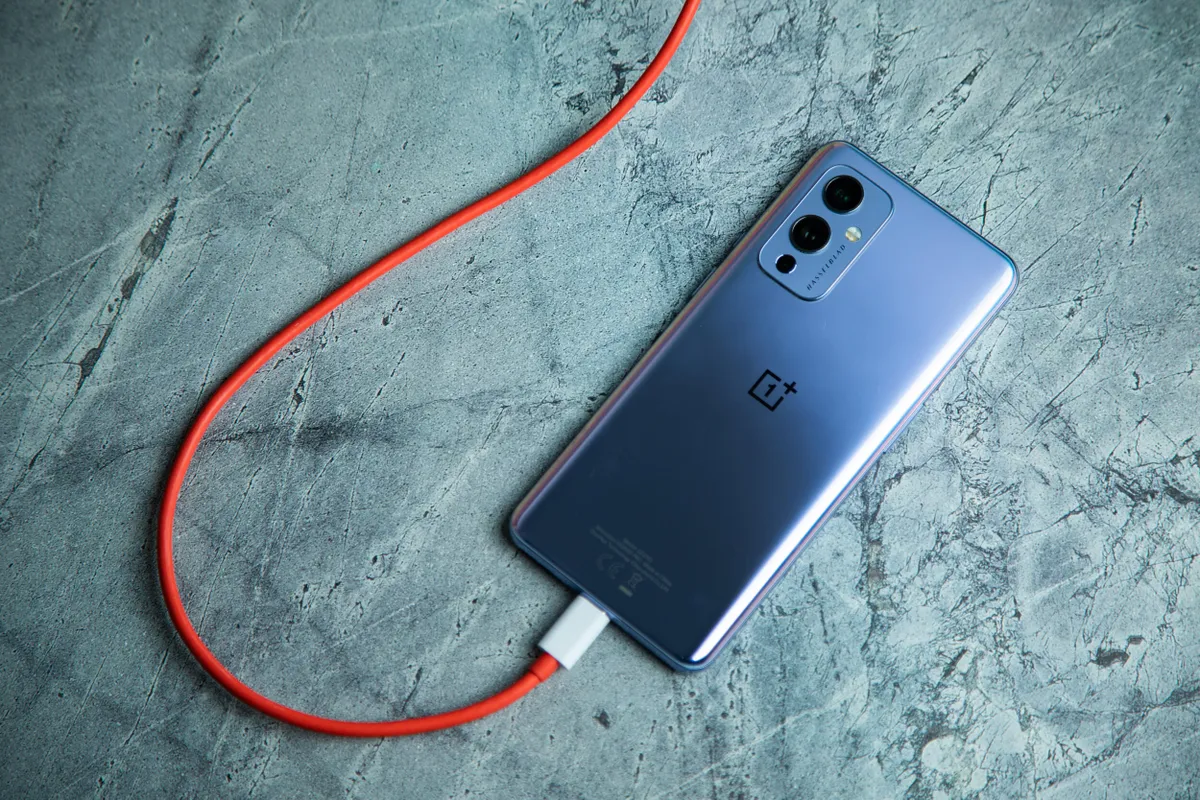 Decide what is truly important for you when choosing a smartphone (photo: CNET)
Performance and budget
In general, a device’s performance corresponds to its price. Flagships offer the best cameras, the most powerful processors, and sometimes innovative technologies like foldable screens. Such phones are justified only for those who want the latest tech.
For others, mid-range and budget devices are sufficient. Many features that were previously exclusive to flagships – wireless charging, multi-lens cameras – are now available in more affordable models. Even inexpensive smartphones provide enough performance for internet browsing, messaging apps, and social media.
Screen size
Smartphones are getting increasingly larger. For example, the iPhone 17 Pro Max and Galaxy S25 Ultra feature 6.9-inch displays. Smaller models have almost disappeared: most modern devices have screens of six inches or larger.
Apple has discontinued the iPhone Mini lineup. While the iPhone SE 2022 remained the most compact model, it was replaced by the iPhone 16E, which has a 6.1-inch screen and can no longer be considered small.
Among Android devices, the Pixel 8A with its 6.1-inch screen was one of the most compact, but the Pixel 9A increased the display to 6.3 inches. Fans of small smartphones seem to be left without suitable options.
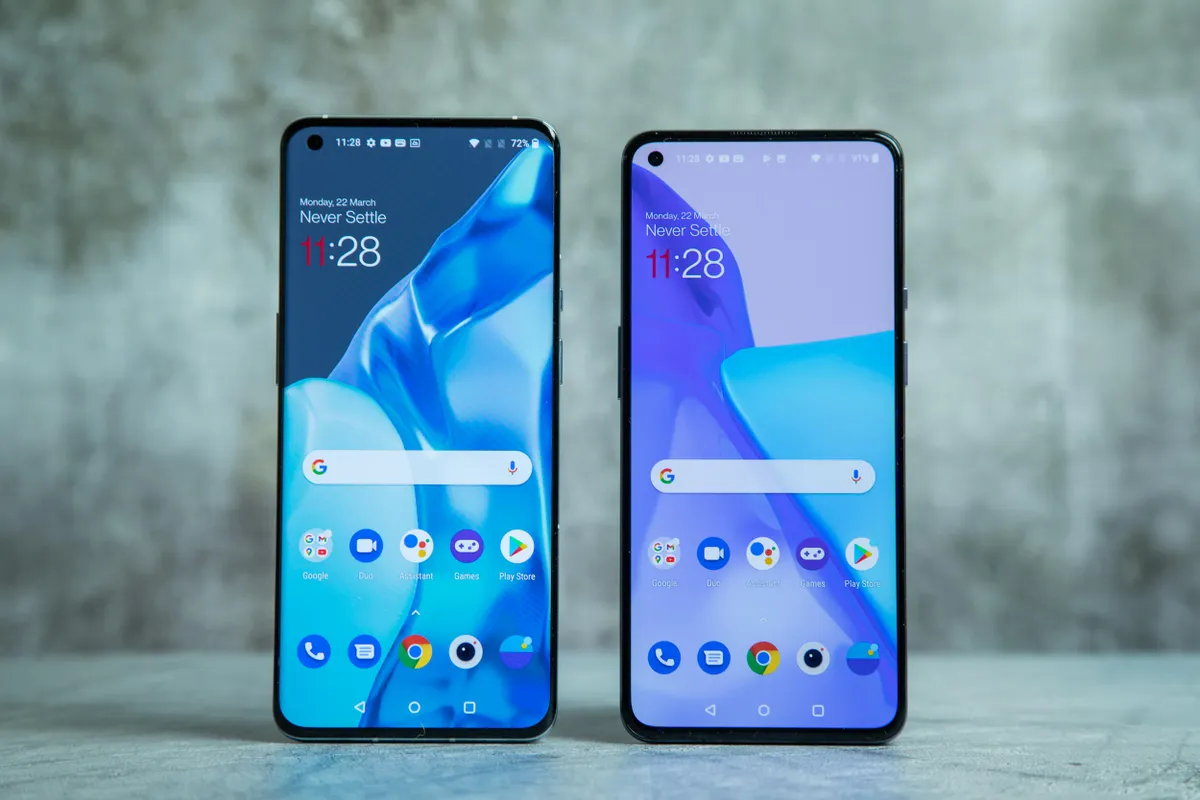 Over the past few years, all phones have become significantly larger (photo: CNET)
Software support period
A smartphone remains secure only as long as it receives security updates from the manufacturer, which protect against hackers. Previously, most phones were supported for just two to three years, limiting their relevance. Today, extended support has become a competitive advantage: Google, for example, promises seven years of updates for its latest models.
This means the Pixel 10 Pro will remain reliable until 2032, while Samsung guarantees a similar period for the Galaxy S25 lineup. Meanwhile, the Galaxy S20, released in 2020, received its last update in 2024.
Extended support not only provides better value for money but also has a positive environmental impact – older but still functional devices remain in use, reducing the number of new gadgets produced and transported.
Camera
Cameras have become one of the main reasons to buy flagship phones: manufacturers strive to increase the number of megapixels and lenses. Today, triple rear cameras – standard, ultra-wide, and telephoto – are found even in budget models.
More lenses mean more shooting possibilities, but this doesn’t mean that every multi-camera system is equally good. As with processors, the higher the price, the better the camera usually is. Pay attention to optical zoom, night mode, and optical stabilization. Before buying, it’s worth checking reviews and sample photos to understand the camera’s real capabilities.
 Cameras have become one of the main reasons to buy flagship phones (photo: CNET)
Battery
Most modern smartphones can last almost a full day on a single charge. Larger models have bigger batteries, but their screens and processors also consume more power.
Tips to extend battery life:
-
Use fast-charging features: for example, the OnePlus 15 supports 80W charging, fully charging in 30 minutes.
-
Reduce resource-intensive tasks: gaming, streaming videos, lower screen brightness, and turn off Wi-Fi and Bluetooth when not needed.
Processor
Flagships are equipped with powerful processors and 12 GB or more of RAM, allowing them to handle any task effortlessly. For most users, mid-range models are sufficient for everyday tasks: gaming, photo editing, social media.
In the budget segment, performance may slow down in demanding 3D games, but basic functions – email, messaging apps, browsing – work without issues.
4G or 5G
5G provides high mobile internet speeds. Although coverage is still limited, most new phones already support the standard, from flagships to budget models. 4G is worth considering only when buying an older, used device.
Storage
Even budget smartphones offer at least 64 GB of storage, part of which is used by the system and apps. For active users, models with 128 GB or more are preferable. Flagships that support 4K video often offer 256 GB or more.
Expandable storage via microSD is rare, but support for external storage through USB-C remains an option for storing large amounts of videos and photos.
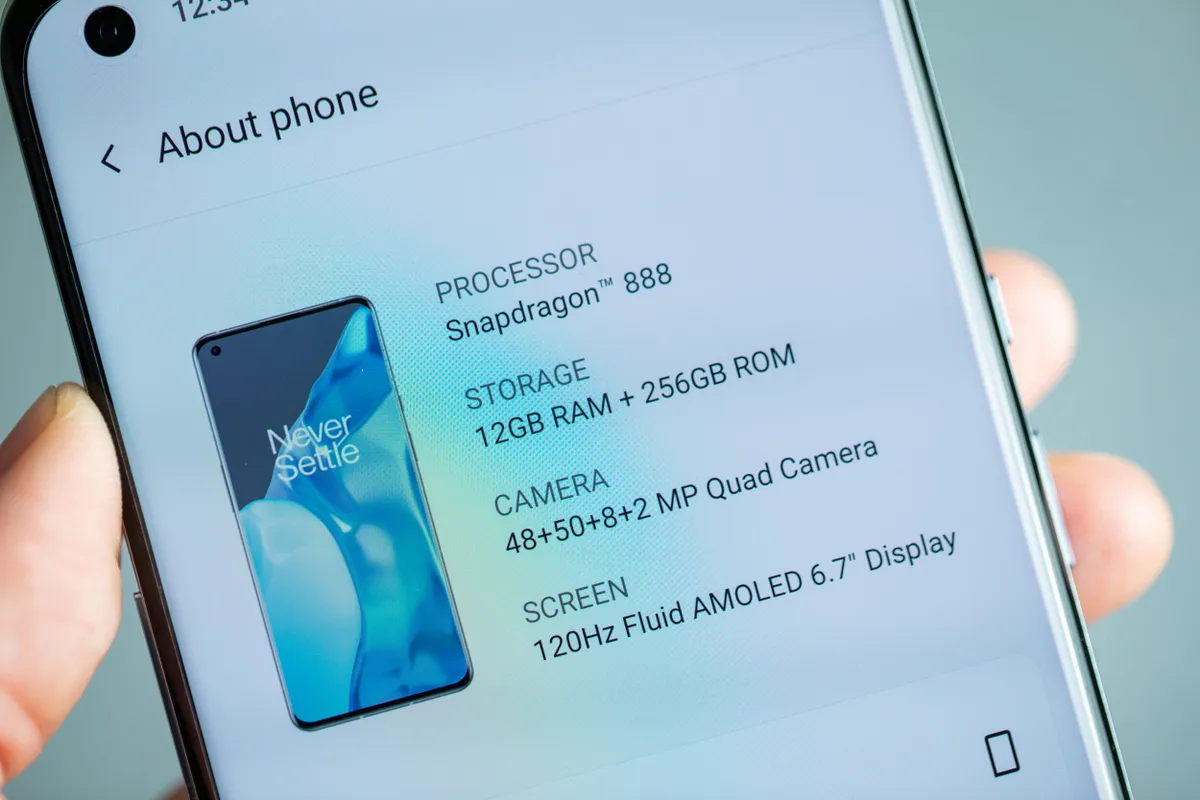 Even budget smartphones have at least 64 GB of storage (photo: CNET)
Additional features
Fingerprint scanner or face unlock: biometric protection is more secure than a PIN code.
Water resistance: a rating of at least IP67 protects against rain and spilled drinks.
Wireless charging: available on many models, including fast charging with compatible chargers.