Body fat tracking: Why your scales lie and how to get real results

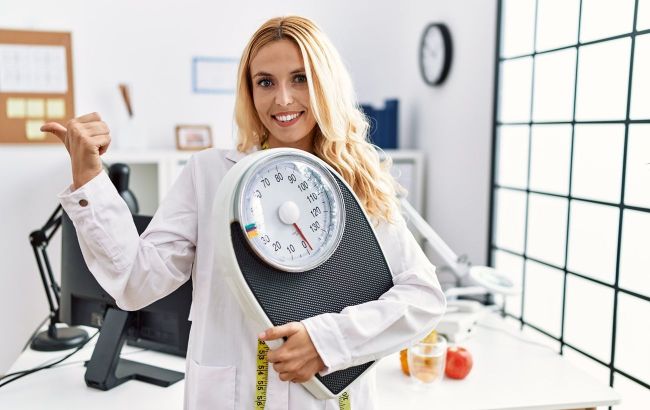 How to measure body fat percentage (photo: magnific)
What you should know about body fat percentage is explained by professor and dietitian Oleh Shvets.
Why BMI can mislead you
Body Mass Index, calculated as weight in kilograms divided by height in meters squared, is only a basic reference point.
A result between 18.5 and 24.9 is traditionally considered a healthy range. Values below 18.5 indicate underweight, 25 to 29.9 indicate overweight, and figures above 30 are classified as obesity.
However, this method has one critical drawback: it does not distinguish between fat and muscle tissue, and it also does not take into account sex, age, or ethnicity.
Because of this, a professional athlete with high muscle mass may be mistakenly classified as “obese.” Meanwhile, a person with a normal overall weight but a critical lack of muscle mass and excess dangerous visceral fat may be considered completely healthy according to this formula.
How to correctly determine body fat percentage
For a more accurate picture, experts recommend measuring body fat percentage. Normal ranges differ significantly by sex. For women, an acceptable average level is between 25% and 31%, while obesity is diagnosed at 32% and above.
Men naturally have a higher proportion of muscle mass, so their normal range is 18% to 24%, with obesity starting at 25%. The minimum level of body fat required for normal body function is 10% to 13% for women and 2% to 5% for men.
Such measurements can be done in several ways. At home, people most often use smart scales with bioelectrical impedance analysis or body circumference measurements.
More accurate results are provided by skinfold calipers, which measure the thickness of fat folds. Ideally, this procedure should always be performed by the same qualified specialist to avoid errors in tracking changes over time.
However, the most accurate and reliable methods in the world are DEXA scanning (dual-energy X-ray absorptiometry) and hydrostatic weighing in water.
These highly precise procedures require expensive specialized equipment and are less accessible, but they allow for an ideal calculation of the proportions of fat, muscle, and bone tissue.
Medical experts emphasize that tracking body fat percentage is only one way to assess progress during weight loss.
Instead of obsessing over numbers, it is better to focus on balanced nutrition, an active lifestyle, and mental well-being, and to design training plans only under the supervision of certified dietitians and doctors.
This material is for informational purposes only and should not be used for medical diagnosis or self-treatment. Our goal is to provide readers with accurate information about symptoms, causes, and methods of detecting diseases. RBС-Ukraine is not responsible for any diagnoses that readers may make based on materials from the resource. We do not recommend self-treatment and advise consulting a doctor in case of any health concerns.