Beyond Santorini and Ibiza: 5 secret European islands that won’t break the bank

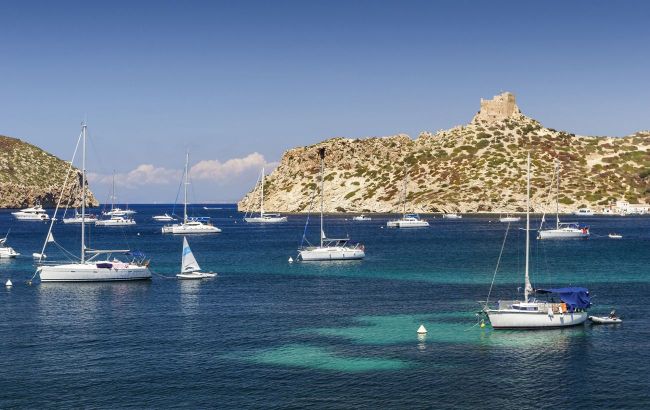 Little-known islands for vacationing, where there are almost no tourists (Photo: Getty Images)
When it comes to island vacations in Europe, the mind immediately conjures up the snow-white houses of Santorini, the packed nightclubs of Ibiza, or the majestic cliffs of Madeira. But hidden on the map of Europe are entirely different pockets of enchanting places, free from crowds of tour guides, giant hotels, and kilometer-long lines to rent lounge chairs.
RBC-Ukraine highlights five amazing and secret European islands that remain unknown to most travelers but are sure to impress with their authenticity and beauty.
Cabrera, Spain: Alternative to the Balearic Islands
While neighboring Mallorca is bursting at the seams with millions of tourists, the Cabrera archipelago lies just an hour’s boat ride south.
The main island of the same name is a closed national park where hotel construction is prohibited, and the number of visitors is strictly limited to a few dozen people per day.
Why it’s amazing: There are no cars here, just unspoiled Mediterranean nature, the ruins of a 14th-century castle, and the Blue Cave (Cova Blava), where the water glows a bright neon color due to a unique refraction of light. It’s the perfect place for a complete digital detox and snorkeling among wild dolphins.
San Nicolò, Italy: Forgotten paradise in the Tremiti archipelago
Most people who travel to Italy in search of island romance choose Capri or Ischia. However, hidden in the Adriatic Sea, not far from the coast of Apulia, lies the tiny Tremiti archipelago, where the island of San Nicolò is a true gem.
Why it’s amazing: San Nicolò is essentially one large, exposed rock fortress set amid turquoise waters. The island impresses with its majestic medieval Abbey of Santa Maria a Mare, which literally rises from the cliffs. There are no classic sandy beaches here; instead, there is silence, crystal-clear water, cozy rocky coves, and the feeling that you’ve stepped into the set of a historical film.
Hyrskari, Finland: Oasis of tranquility in the Baltic Sea
Finland is home to the world’s largest archipelago, and among its thousands of islands, Hyrskari remains a complete mystery to foreigners.
Located in the Gulf of Bothnia, this islet embodies the austere yet cozy Scandinavian aesthetic.
Why it’s amazing: Instead of palm trees, you’ll find maritime pines, moss, and smooth red granite cliffs, which locals call sheep’s foreheads. People come here to stay in a traditional wooden cottage with its own beachside sauna, pick blueberries right at their feet, go fishing, and watch the white nights in complete solitude.
Île-de-Bréhat, France: Island of flowers and pink granite
Located in the province of Brittany in northern France, the island of Bréhat (Île-de-Bréhat) is actually two islets that are connected at low tide. Thanks to the warm Gulf Stream, a unique microclimate has formed here.
Why it’s amazing: The island is completely car-free. You can get around only on foot or by bicycle. Bréhat is known for its incredible cliffs made of rare pink granite and its subtropical vegetation. Giant agaves, palm trees, and massive blue hydrangeas bloom here, contrasting with the rugged northern sea.
Porquerolles, France: Caribbean-style beaches on the French Riviera
The south of France is often associated with the luxury yachts of Saint-Tropez and Cannes. However, just a few kilometers from the bustling Riviera lies the island of Porquerolles, the smallest and most charming of the Hyères archipelago.
Why it’s amazing: The northern part of the island features long beaches with fine white sand and water so deep a shade of azure that it could easily be mistaken for the Caribbean. The island smells of pine resin, eucalyptus, and wild grasses. Smoking outside designated areas and driving are prohibited here, so nature has been preserved in its original state.