Alexander Lukashenko builds unique weapons plant for Russia

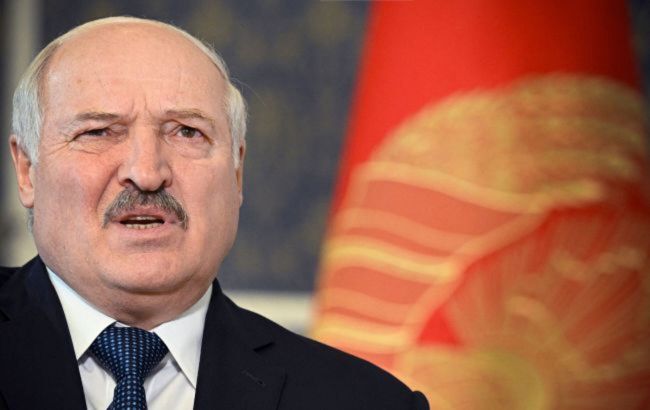 Photo: Alexander Lukashenko (Getty Images)
A classified infrastructure project is being implemented in Belarus that could directly affect the course of the war against Ukraine and significantly enhance Russia’s military capabilities, according to a comment by Volodymyr Zhyhar of the Belarusian opposition group BELPOL to Ukrinform.
Belarus is constructing a large facility to produce artillery and rocket ammunition tailored to the needs of the Russian army.
The project is being implemented under a classified regime and envisages the manufacture of Soviet-caliber munitions for use in the war against Ukraine.
Ammunition production and timeline
According to available information, the project, codenamed Dilianka, began in November 2023. It предусматривает a full production cycle for artillery and rocket ammunition of 122 mm and 152 mm calibers.
Volodymyr Zhyhar said the end products are intended for export and use in the war against Ukraine.
Construction is scheduled to be completed by December 2026. The launch of the plant is expected to significantly bolster logistical support for Russia’s armed aggression.
Who oversees project
The project was approved in a closed format by personal order of Alexander Lukashenko. The designated operator is a specially created entity, the Plant of Shell Casings.
Founders include Volatavto and the state-owned Precision Electromechanics Plant, while oversight is provided by Belarus’s military-industrial committee.
Zhyhar described the project as a tool for deeper Belarusian involvement in the war.
Location of facility
The production site is located in the Slutsk District of Minsk Oblast, on the grounds of a former military arsenal near the villages of Pavlivka and Shyshytsy.
Earlier assumptions suggested the construction of a closed military base, but document analysis points to an industrial facility rather than storage or missile deployment infrastructure.
Dependence on external supplies
Belarus does not produce key components for explosives, meaning the plant will rely on imports. The main partners named are Russia and China.
Zhyhar said Russia is supplying technological production lines, while China is providing filling and assembly equipment; negotiations are also reportedly underway with Iran and Pakistan.
Earlier, Lukashenko granted pardons to 123 people of different nationalities, with nine transferred to Lithuania, including 2022 Nobel Peace Prize laureate Ales Bialiatski, and the remaining 114 sent to Ukraine.
Separately, the presidents of Latvia, Lithuania, and Estonia have said any decision to halt rail connections with Russia and Belarus should be taken jointly by all three Baltic states.