2027 NATO summit faces uncertainty amid growing concerns — Reuters

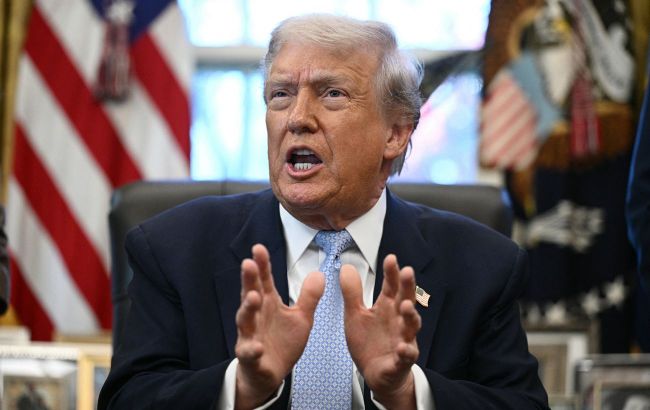 Photo: US President Donald Trump (Getty Images)
The NATO summit will take place in Türkiye as early as next week, and the leaders of the alliance’s member countries are actively preparing for it. However, plans to hold the summit in Albania in 2027 have been called into question because the US is dissatisfied with that country’s defense spending, according to Reuters.
According to sources, the draft statement for the NATO summit, which will take place next week in Ankara, currently makes no mention of the next meeting being held in Albania, despite an earlier announcement that the summit would be held there.
A European diplomat clarifies that the latest version of the text states that leaders are looking forward to the next meeting, but the draft document does not specify the time or place.
This move comes as European NATO members seek to demonstrate to US President Donald Trump in Ankara that they have made progress in fulfilling their defense spending commitments and intend to avoid open clashes with the American leader.
Uncertainty surrounding the summit in Albania also arose after Reuters reported in April that NATO was considering ending its practice of holding summits every year. This, in turn, could prevent a potentially tense meeting with Trump toward the end of his presidential term.
One source emphasizes that Albania’s defense spending is such that if NATO were to hold a summit in the country in 2027, Trump might be upset, which would lead to negative headlines in the media.
Commenting on the draft document regarding the summit, an Albanian government representative told Reuters that "drafts are drafts, not decisions."
How much has NATO committed to spending on defense, and how much does Albania spend
In recent years, official statements at NATO summits have typically explicitly indicated the venue for the next summit.
At the 2025 meeting in The Hague, leaders stated in their address that they were looking forward to the meeting in Türkiye, which would be followed by a meeting in Albania. There, NATO leaders responded to Trump’s demand by pledging to allocate 5% of GDP to defense and related measures over the next 10 years.
However, despite the fact that many NATO countries have increased their defense budgets in recent months, some countries are struggling to even meet the alliance’s previously established goal of spending 2% of GDP on defense.
"When you look at all 2%, almost all Allies are on 2%. Last year, Albania, Czechia, Slovenia were not but they have clearly committed to reach more than 2% this year. And then these three countries, when you look at the overall picture, it is a really small number," says the NATO Secretary General.
In a statement to Reuters, the Albanian government said it is "finalizing the necessary fiscal measures to align Albania's 2026 defence and defence-related expenditure with the trajectory agreed by NATO Allies at the Hague Summit”.
"Once these measures are adopted in the few coming days, Albania's defence and defence-related expenditure for 2026 will amount to 2.6% of GDP, in accordance with NATO's defence Expenditure Methodology. Of this, 2.2% of GDP represents core defence expenditure, while 0.4% of GDP represents other defence and security-related expenditure," the statement adds.
A European diplomat tells the agency that Albania may still ultimately host the summit.
"They are ramping up, we shall see where it lands. I still believe the next summit will be in Albania," the diplomat says.
NATO and US
This month, NATO Secretary General Mark Rutte arrived in Washington, where he met with US President Donald Trump. Bloomberg reported that he came to defuse Trump’s anger toward European allies who refused to assist him in his campaign against Iran.
Following the meeting, Rutte stated that NATO must defend not only its European allies but also the continental United States and ensure Washington’s decisive role on the world stage.
A few days later, Trump again criticized NATO for not providing enough assistance in the Strait of Hormuz. In particular, he called Germany and Italy very bad allies.