Surviving 1,424 days in hell: Azov fighter reveals torture, FSB tricks and life after release

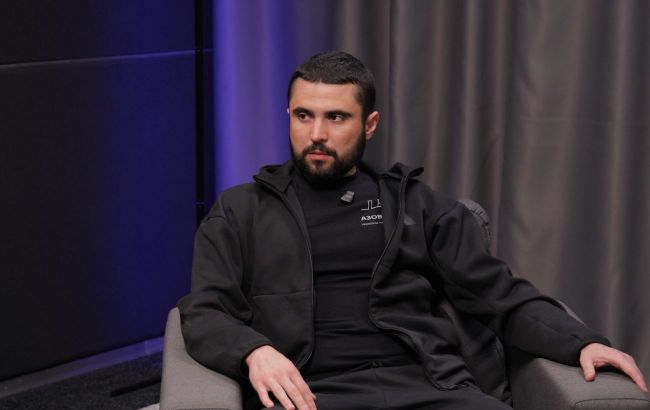 Photo: Serhii Bentsa (RBC-Ukraine)
An Azov fighter, Serhii Bentsa, survived years of captivity, brutal torture, and information isolation after leaving Azovstal.
He spoke about the inhumane conditions in Russian prisons, the psychological challenges he faced after returning home, and his fight to survive in an interview with RBC-Ukraine.
Key points
- The extraction promise: As they left Azovstal, the fighters believed promises that they would be taken aboard a Turkish ship and held in barracks for 3-4 months. They took their documents with them to speed up the filtration process, but instead ended up in the overcrowded barracks of Olenivka.
- 47 kg and mine water: Due to the horrific conditions of captivity, the fighter's weight dropped to 47 kilograms. The situation was made worse by stagnant mine water in Horlivka, contaminated with animal waste, which caused an outbreak of dysentery in the prison colony.
- Standing regime and prayers: In Russia, the prisoners were held in cells with painted-over windows, where they spent three months standing without being allowed to sit down. They were forced to memorize old church Slavonic prayers while standing in the dolphin position and read Russia's history aloud.
- The enemy's fear of Azov: Despite their numerical superiority and weapons, Russian special forces were terrified of Azov fighters. The prisoners feared nothing and, if necessary, could have overrun the prison compound—they only lacked the order.
- Losses at home: After being exchanged, Serhii learned that his girlfriend had stopped waiting for him, having written about it two years earlier. The hardest moment was his first phone call to his parents.
When the defenders of Mariupol left Azovstal in May 2022, they were promised an extraction and 3-4 months in barracks. Instead, it turned into years of brutal torture, transfers between prisons, and complete information isolation.
Serhii Bentsa passed through Olenivka, the hell of the Horlivka penal colony, Kirovske, and detention centers in Russia. After losing weight down to 47 kilograms and enduring the standing regime, he eventually returned to Ukraine.
But the hardest psychological blows awaited him at home—finding a message on social media saying he had not been waited for, and learning about his father's death during his very first phone call. Read Serhii's interview below about the reality of Russian prisons, prison guards' fear of Azov fighters, and the price of freedom.
On joining Azov, the February 24 breakthrough, and the promises of extraction
– Serhii, let's go back to 2020, when you decided to join Azov. Why did you make that decision?
– Because they had proper training. A classmate called me and said: "Look, I've got a position for you. It's a safe place, Mariupol." At the time, I really thought it was a safe place, kind of gray and depressing, but it was starting to develop.
On June 19, I signed the contract. For the two years before the full-scale invasion, I served as an operator in a radio technical surveillance group. We monitored radio communications, gathered intelligence on the enemy, and passed it on to the sector.
Then, in January, we received information that there would be a breakthrough—that they would come in from the Kharkiv and Sumy directions. Nobody believed it. Even with our experience and after analyzing the information, nobody thought it would actually happen.
On the 24th, we spent the night at our position, monitoring the airwaves. Then Grad rocket systems started striking Vodiane. Around five in the morning, they began attacking Shyrokyne. Our cables were cut, leaving us without internet or electricity. The commander said, "All right, pack up." So we returned to the brigade.
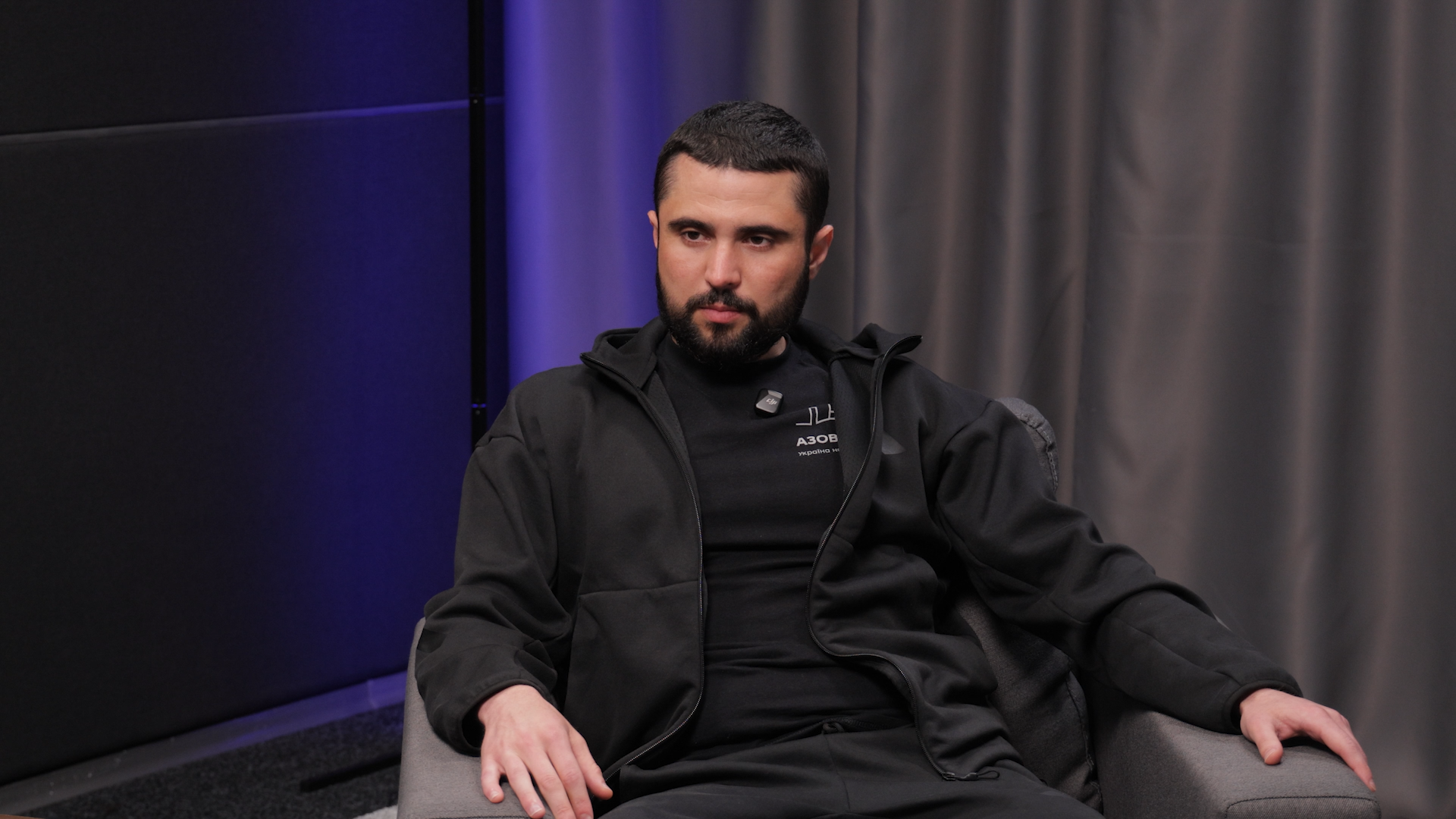 Photo: Serhii Bentsa (RBC-Ukraine)
You drive into Mariupol, and people are peacefully walking around, drinking coffee, heading for the trolleybus. Our unit was assigned to guard military facilities against looters, and we were also given quick reaction force duties. We drove around the city, responded to calls, and took part in assaults. At first, we served as anti-tank troops, and later as infantry.
– How did you get to Azovstal, and how was the decision to leave made?
– It was emotional. Our last position was near the plant. It was our final outpost. That was sometime in April, before Easter. Russian equipment—tanks and APCs—moved in and started tearing us apart. I have to thank Kirt. His group came out, destroyed several IFVs, and saved the lives of our personnel. We pulled back about half an hour before a tank arrived. After that, we moved into the plant.
Of course, we weren't thinking about captivity because we had been promised a Turkish ship—an "extraction." Everyone believed it. Then the order came from the higher command: leave. You will be held for three to four months. Bring as many documents as possible to pass filtration. The faster you get through filtration, the sooner you'll be exchanged and go home.
Yes, three to four months. On the 16th, the wounded were evacuated. I personally left on the 18th. We walked onto the bridge leading to the embankment toward Tahanrozka Street. The Russians searched us there. Then they loaded us onto buses from Rostov, and we left.
The hell of Horlivka: Knocked-out teeth and dysentery
– What awaited you in Olenivka, and what happened during the next stages?
– There was no reception in Olenivka. The administration came in and said, "Take off your shoelaces and belts." The barracks were overcrowded. At first, there were about 600 of us in one barracks.
Azov fighters were always treated differently. Azov members were placed in barracks 9, 10, 11, and 12, while everyone else was scattered among different barracks. We spent our days sleeping and reading books. Olenivka was still relatively calm, but for those who went through the disciplinary isolation unit, it was a different story. There were guys like Kyriusha and another one hobbit, who enjoyed abusing the prisoners. You could end up in the isolation unit for absolutely anything. Every morning I heard screams coming from that part of the prison—they started torturing people early in the day.
Then we were transferred to Horlivka (Kirovske Penal Colony No. 33). We were in the first transport. They told us, "Now comes the reception." Most of us had come from Azovstal, so we thought: we have an agreement, nobody is going to touch us.
 Photo: Serhii Bentsa (RBC-Ukraine)
One wounded guy got out first because he had a gunshot wound to his arm. Then we heard what sounded like popping noises. Someone said, "It's a traumatic pistol." I sat there counting: one, two, three... ten. I thought, maybe I can endure ten hits. Then another guy said, "No, that's not a traumatic pistol."
The guards shouted, "Any Azov fighters here?" We answered, "No." "Anyone from National Guard Unit 3057?" "Yes." You run out, throw your belongings aside, they spread-eagled you over the transport vehicle, and start beating you with PR-73 batons. Literally underneath the vehicle. That's how the reception started.
You walk down the corridor, and you're beaten all the way, with dogs and special forces around you. One of my teeth was knocked out while I was stating my surname and first name. A major wearing tactical gloves asked, "Can't you answer properly?"—and hit me in the face while saying it.
Then about thirty of us were marched in single file across the entire prison to the bathhouse. We washed, received clothes, and then they brought us the Russian national anthem and told us to memorize it by morning. I stepped outside, stood up—and that was it. I was beaten so badly that all my skin was scraped off and I slid along the wall of the building. My body gave out—I blacked out.
– How did the conditions in Horlivka affect your health?
– Well, it certainly didn't get any better. My joints wore out. I lost a lot of weight. I've gained it back now, but I lost it there. When I arrived in Orsk, I weighed 47 kilograms. By the time I was taken for the prisoner exchange, they weighed me at 50.450 kilograms. The 450 was grams, to be exact. I had two surgeries after captivity.
The water in Horlivka was terrible. They got it from a basement, some kind of mine. There were underground springs, mine shafts. They also had a utility yard where sheep and pigs ran around and relieved themselves into that water. They collected it and gave it to us to drink, which is why dysentery broke out.
– How did you survive?
– Somehow we survived. We just didn't drink it. Those who did suffered. They took us out to work in the industrial zone — doing pointless things: pulling weeds, carrying rocks from one place to another.
– Compared to Russian POWs in Ukraine, who make couches and get paid for it, you didn't have anything like that?
– Everything there was done for cigarettes — that was the currency. Nobody cared about me because I have a higher education in economics, so my job was to go pull weeds.
Isolation in Russia: Standing regime, old church Slavonic prayers, and the enemy's fear
– After Horlivka and Kirovske, you were transferred to Russia — to Orsk. What was it like there?
– Complete isolation for the last 16 months. Four walls, no information got in. The windows were painted over — you couldn't see the sun or the sky. In the fall, the cells were damp because the heating hadn't been turned on yet, and in winter the windows were left open so freezing air kept coming in. They turned the lights off at night.
When we arrived, we spent three months standing — there was a standing regime. Then they allowed one person to sit down and read a book. It was The History of Russia by Solovyov, published in 1850. You read it out loud, and everyone else in the cell repeated it after you.
 Photo: Serhii Bentsa (RBC-Ukraine)
They made us sing the anthem three times a day for all four years. And eight old church Slavonic prayers. As soon as we arrived for intake, they gave us the Our Father prayer to memorize. We were standing in a bent-over position, like dolphins, trying to read, learn, and recite it from memory.
There were no clocks. We told the time by the loudspeaker playing Gazmanov and Rastorguyev songs. We calculated the average length of the songs, multiplied it, and figured out that it was roughly two in the afternoon and lunch should be coming.
– Despite all that pressure, how did the Russians treat Azov fighters?
– They were afraid of us. There was a special forces unit there that came from Rostov. One of them carried stun grenades and constantly kept his hand on them. There had been shelling incidents before that terrorist attack, so they would grab their body armor, run around, dig in, while we just kept walking and laughing at them. They just stared at us. If someone had wanted to stage an uprising back then or tear the prison apart, all it would have taken was an order, and it would have happened. Nobody was afraid of anything.
Later, when we were taken to Russia and they started breaking us, we began to change. You're alone against special forces. When five men are breaking you, you're not much of a hero.
The FSB fabricates cases under Articles 105 and 205. Many people see a way out through a court sentence because they've been held for so long under general detention conditions. They've broken you down below rock bottom, you're sitting there alone. So all you have to do is say the right things, you get a 25-year sentence, they transfer you somewhere else, and suddenly there are perks — you can talk to your family, things get easier, you get a lawyer. But that still doesn't mean you'll be exchanged.
The road to the prisoner exchange and a double tragedy at home
– How did the exchange process happen?
– On March 6, they summoned us for questioning by the FSB. The investigator wasn't wearing a mask. I acted pretty boldly with him, and nothing happened to me because of it. He asked, "How can you be useful to us?" I said, "I don't have any money. I can't help you with anything." They didn't beat me or threaten me, and from that I concluded there was going to be an exchange.
I'd lost faith a long time ago. I still had hope, but not faith. We were all counting on Independence Day in 2025, but it came and went, and we just gave up.
On the morning of April 10, at 5 a.m., they came and took me to the punishment cell. There were six of us. We changed clothes and were taken for transport. We drove to the airfield in Orenburg for four or six hours. They loaded us onto a plane, tied us up, blindfolded us, and tied our hands. We flew to Omsk, then to Kizil (Perm Krai), and from there to Chkalovsky.
The whole time there was no bathroom, no food. You stood on your knees. In Chkalovsky they unloaded us into some kind of hangar, where we stood all night waiting for the guys coming through Rostov. In the morning they loaded us onto a plane again, and we flew to Gomel. From there we went by bus.
 Photo: Serhii Bentsa (RBC-Ukraine)
– What did you feel when you finally crossed the border?
– I've become very hardened. I didn't have that overwhelming feeling. In Chernihiv, before the hospital, I was actually shocked — there were so many families of missing soldiers there, holding photographs. We weren't allowed to talk to them because we had to go through all the procedures.
They gave me a phone. I logged into Instagram and started reading messages. One had been sent two years earlier: "I honestly waited for a year and a half. I'm not waiting anymore." I took it calmly. I'd already said goodbye to that person in my mind back in the detention center. It's much easier that way — you let the person go and move on. Four years is a long time, objectively. Right now I have very few emotions at all. I'm saving them for the future.
When I got out, the first person I called was my mother — she didn't answer. I called my father — he didn't answer either. Then my mother called back and said everything was fine, that they were in Poland, and my little sister was there too.
I asked, "Where's dad? Why didn't he leave?" She said, "You know, he's busy..." Then I found out he hadn't lived to see my return. He had died. I wanted to tell him that I was alive, that I was home, that everything was okay. I got through it in about half an hour back then, processed it all, but now it's slowly catching up with me.