'Nobody was ready for this war. We'll teach you everything.' Interview with Ukrainian special forces fighter


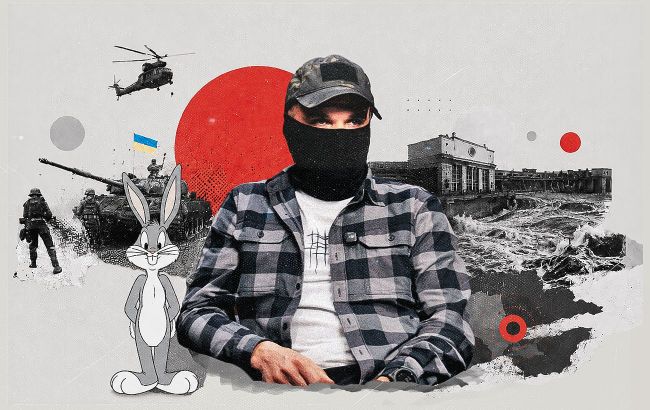 Photo: Kos, a Shaman Battalion fighter (collage by RBC-Ukraine)
Special forces fighters of Shaman Battalion (Shamanbat) carry out complex operations across all sectors of the front. In an interview with RBC-Ukraine, a Shamanbat fighter with the callsign "Kos" told how the defense of Kyiv unfolded, what is said at the front about mobilization, and why one of the soldiers saw Bugs Bunny in a tree in the Kherson region.
Key points:
- Unit versatility. Shamanbat carries out highly complex missions on land, at sea, and from the air, mastering new skills in the shortest possible time.
- First battle on a bridge. The speaker experienced the full-scale war at home in the Kherson region. To break through to Kyiv, he engaged in his first fight with the Russians directly on a bridge, opening fire from a car window.
- Psychological resilience. Despite heat, exhaustion, and hallucinations during the crossing of the Dnipro after the Kakhovka Dam explosion, the fighters completed the mission at the limits of human capability.
- Fear of mobilization. The fighter believes it is impossible to be fully prepared for war in advance. The key factors are character and motivation; everything else can be taught by instructors.
- Enemy tactics. Russians continue meat assaults, advancing over the bodies of their own dead. For them, surrender becomes the only escape from Russia's blocking units.
Among all Ukrainian servicemen fighting against the Russian occupiers, there are special units that carry out highly specific missions. One of them is the special forces unit of the Defense Intelligence — the Shaman Battalion.
A fighter from Shamanbat with the callsign "Kos" also prefers not to disclose the true nature and details of many special operations. However, it is known that the Shaman unit soldiers were among the first to defend Kyiv from the Russian invasion. They also took part in the counteroffensive in the Kherson region, where, incidentally, they experienced all the effects of swamp gas emissions.
RBC-Ukraine discussed with the fighter what Shamanbat fighters saw in Kherson, how they feel about those who avoid mobilization, and what they say about the end of the war.
The fighter Kos talked to us on condition of anonymity. Therefore, his callsign has been changed.
He was at home in the Kherson region when the rockets started flying. It was 4 a.m. on February 24, 2022. He stepped outside, watched the streaks cross the sky, heard the helicopters, and went back inside.
"I told my wife: 'Pack my things. I'm leaving.'"
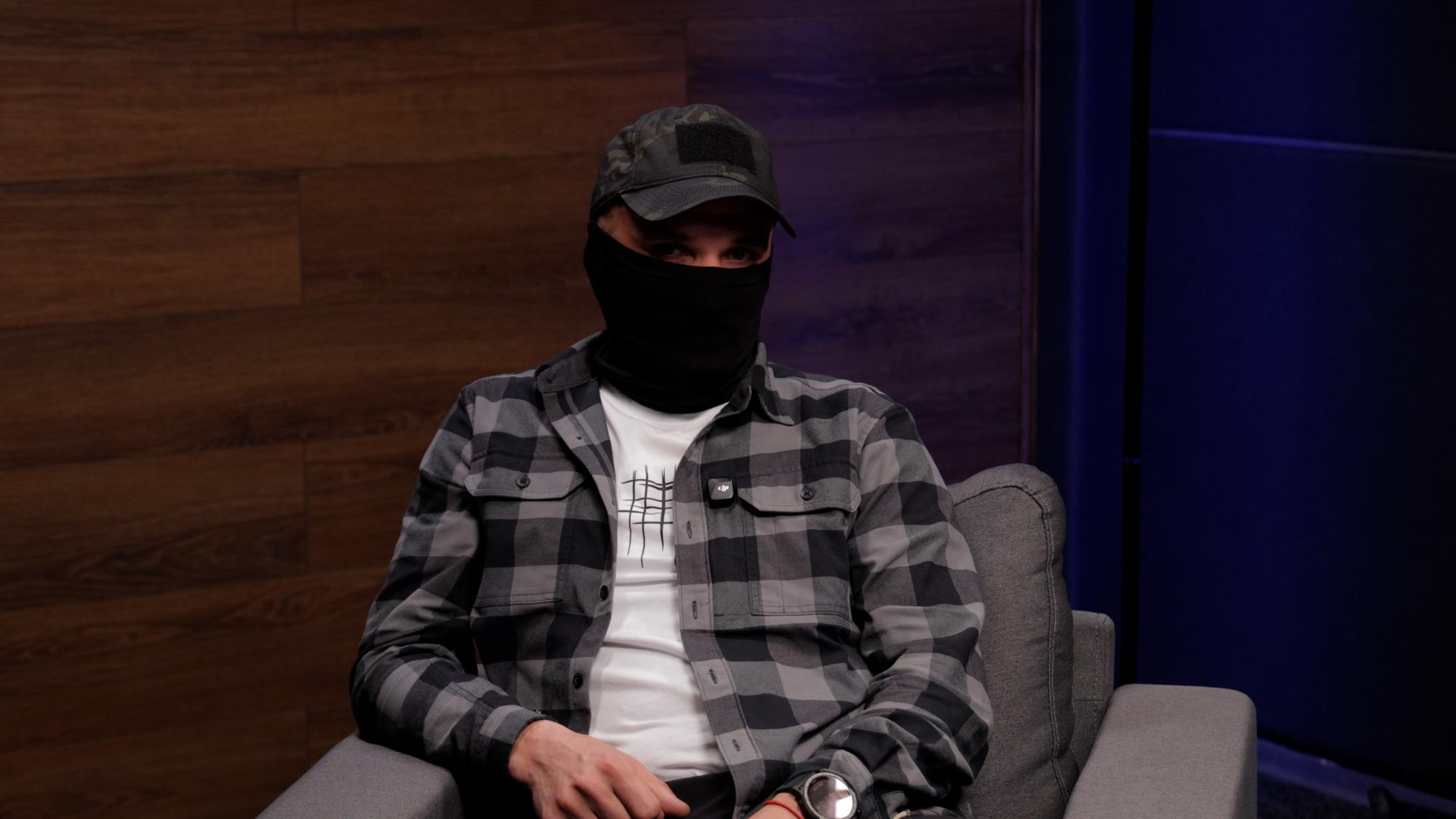
Shamanbat fighter with the callsign "Kos" (Photo: RBC-Ukraine)
Within an hour, he and a close friend were in a car heading to Kyiv. On the way out of the city, they drove onto a bridge and found a Russian soldier standing in the road ahead of them. "I told him — open the window," the fighter recalled. "If they stop us, just stop." One car separated them from the soldier. When the Russian turned toward them, the Ukrainian fired.
"My friend kept saying, 'What have you done, what have you done?' But I understood there was no other choice."
That was how his war began. The fighter, who goes by Kos, has since served in some of the most demanding operations carried out by Shamanbat — a Ukrainian special operations unit whose name is now synonymous, at least among those who know it, with missions nobody else wanted to take.
Unit built on mutual trust
Shamanbat was built on a simple premise: if a mission exists, the unit will figure out how to execute it. "We don't choose tasks by difficulty," Kos said. "We do what's asked of us — on land, on water, from the air. There's never been a discussion about whether we'd do something."
The unit's recruitment philosophy is equally blunt. "The main thing is motivation," he said. "If someone doesn't know how to do something, we'll teach them. If they don't want to — we'll make them." He paused, then added the line that functions as something of a unit motto: "Everything you don't know how to do, we will teach you."
Kos arrived at Shamanbat through informal networks — the kind of veteran-to-veteran connections that defined the early days of Ukrainian mobilization. He had done his compulsory military service starting in 2014, when the war in the east began. After that, he stayed in contact with other veterans. "We all knew the big war was coming. We just didn't know when," he said. "We had an understanding: if it's a full-scale invasion, we meet up within the hour."
They met up within the hour.
Kyiv, February 2022
In the first days of the invasion, Kos fought in the defense of the Kyiv region alongside soldiers who didn't look like soldiers. "We were in black pants, black jackets," he said. "And the Russians couldn't understand what was happening — who are these people in black jackets, and why are they fighting so hard?"
The Russians, he said, had planned a triumphal entry. They came in columns stretching ten kilometers. They had not expected resistance.
"When their company commander was killed, they ran around like chicks without a hen. Nobody knew what to do. The third and fourth vehicles — where their command was — had been destroyed." He described soldiers moving forward with no direction, no orders, no understanding of what the mission had become. "They were trained. But without leadership, it was over."
Russia would later call its withdrawal from the Kyiv region a "goodwill gesture." Kos is dismissive. "They took losses. Heavy ones."
Crossing the Dnipro River
Among the operations that followed, Kos returns most often to Kherson — the region where he grew up, whose left bank Russian forces seized in the first hours of the war.
When his unit was tasked with establishing a bridgehead on the occupied side of the Dnipro River, it had one problem: nobody in the unit had trained to cross a major river by boat. They had about a week. "From first training to execution — just over a week," he said flatly.
The operation was further complicated by the destruction of the Kakhovka dam, which flooded the riverbanks and left thick sediment across the shoreline. In the heat, under combat conditions, the gases rising from the mud began affecting the fighters after ten-plus hours on the ground. Kos described his unit's engineer stopping the group mid-mission and announcing, with apparent seriousness, that Bugs Bunny was sitting in a tree.
"A lot of the guys were having hallucinations," Kos said. When he returned to the rear himself, he saw figures — people in black shorts, black T-shirts — walking nearby. He looked through his equipment. Nothing. "But with my eyes, I could see them."
They slept, ate, and rotated out. "Everything was fine."
The Russian prisoners they took that day couldn't process what had happened. "They kept asking me: how did you do this? There's so much water. We were watching everything. This is impossible," Kos recalled. He told them: "Well, that's how it goes."
One of the prisoners, he noted, was originally from the Zhytomyr region of Ukraine. He had moved to Russia and then came back — on the other side.
Enemy, then and now
Kos has been fighting Russians intermittently since 2014. He says the behavior he witnessed in 2022 was something different. "In 2014-15, they didn't treat civilians the way they did in 2022," he said. "I'm not saying they did nothing then. But what happened with civilians in 2022 — that's when I understood there would be no dialogue."
He saw it up close in the Kyiv region, he said, before the full scope of what had happened in Bucha and elsewhere became publicly known. "There were fights literally on the next streets over, and we could see what was happening to civilians. How they were locked in basements. How they were wounded, and nobody helped them."
He doesn't accept the Russian soldiers' early claims that they had been sent on exercises and didn't know what they were doing. "They knew exactly where they were and what their plan was," he said. "That story about being sent by accident — that was their image. If they hadn't shot at us in street combat, it would be different."
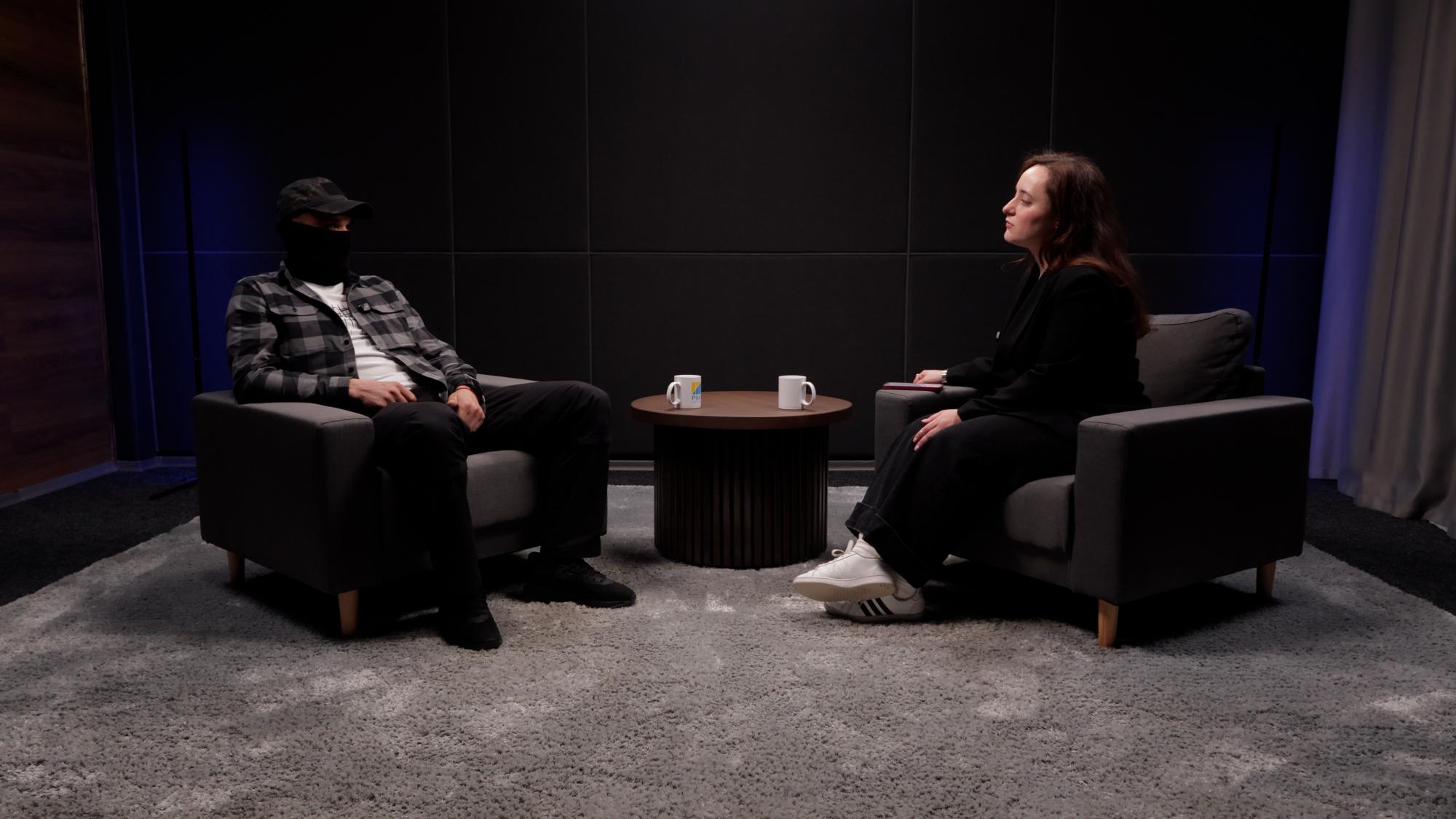
Shamanbat fighter with the callsign "Kos" (Photo: RBC-Ukraine)
Front line, now
On the current state of the war, Kos makes no effort at optimism or pessimism. He describes a Russian military that sends men forward because it has no other doctrine, and a Ukrainian one that plans, gives ground when necessary, and takes it back. "Nobody here goes head-on if we can avoid it," he said.
The prisoners he talks to paint a grim picture of what it means to fight for Russia today. "One told me it was easier to come surrender to us than to go back and get killed by the blocking unit," Kos said, referring to the squads deployed to shoot soldiers who retreat. "He said at least this way he had a chance of surviving."
He does not believe a major Russian offensive is imminent — or, at least, that it would be meaningfully different from what is already happening. "They're losing as many men as they're recruiting. They have reserves, but not for an offensive. It'll just be more meat assaults."
On mobilization
The debate over Ukrainian conscription — with complaints about the conduct of military recruitment officers on one side, and the growing demand for replacements at the front on the other — is not abstract for Kos. He has been fighting almost continuously since February 2022. He would like a three-month leave to spend with his family. Nobody has come to replace him.
He has limited sympathy for men who say they aren't ready. "Nobody was ready for this war. There's no such thing as 'consciously ready for war' — it's not learning English," he said. "Come. We'll teach you. You'll be at the level of Shamanbat, at the level of the Armed Forces. You won't just be thrown in. They'll teach you everything."
The fear of being sent straight to Donbas, of being wounded or disabled — he hears it and doesn't quite accept it. "There are guys who've served the entire full-scale war and haven't been wounded once, only contusions," he said. "Because it was planned. You sit at home on your couch and think you'll be sent straight to the front. That's not how it works."
What he's fighting for
His family spent four to five months under Russian occupation in the Kherson region after he left. For weeks at a time, while on special operations with no communications, he had no idea whether they were alive.
"I saw what they were doing to civilians in the Kyiv region," he said. "And I thought — that could be my family."
They got out. He says they're fine now.
On leave in Kyiv, he notices the coffee shops, the children in the parks. It doesn't unsettle him, exactly. "We're doing what we do so that people here can go out and have coffee and walk with their kids," he said. "Yesterday it was gray. Today it's white."
He doesn't claim to know what the endgame looks like or how the war ends. He's thought about what Putin wants — the desire to be remembered as a conqueror, to justify a decision that has cost hundreds of thousands of lives. "He wanted everything in 2022, and it didn't work out," Kos said. "Now he needs to prove he was right. He wants to go down in history as someone who conquered something."
As for Ukraine's victory: "I don't know how it will happen," he said. "But it will."