'Zelenskyy will be warmly received in Moscow.' How Russian POWs justify war against Ukraine


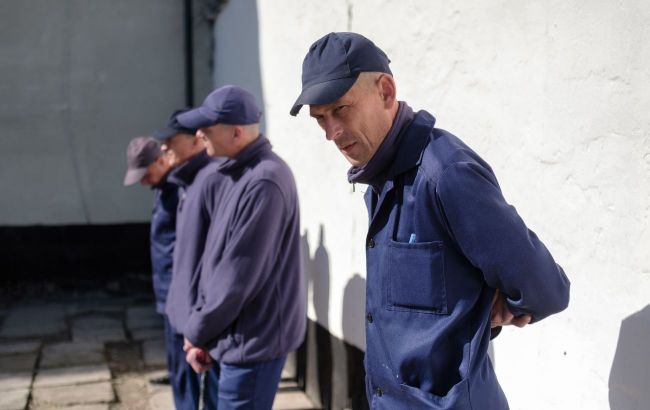 Russian prisoners of war (photo: Vitalii Nosach/RBC-Ukraine)
Among Russian prisoners of war, some went to war against Ukraine for an idea. RBC-Ukraine reports from a prisoner of war camp, what is this idea, how do Russians themselves explain why they are killing peaceful Ukrainians, and what is behind the slogan of so-called "defending Donbas."
Russian propaganda is one of the most powerful tools in Russia's war against Ukraine. This multi-layered construct has been built up over decades and today influences not only Russians within the country, but also people around the world.
While Ukrainians were wondering how anyone could believe the legend of the so-called crucified boy in Donbas, Russians were spreading it among themselves. Now, 11 years after those events, Russians are convinced that a full-scale invasion of a foreign country is justifiable.
Hundreds of Russians representing different segments of society are currently being held in a prisoner-of-war camp in Ukraine. Some went to war for money, while others, as they themselves claim, were deceived. Some are trying to repent, while others went to war for an idea. Today, it is difficult for them to distinguish between their own motivation and what was imposed on them by television.
Mechanic from Moscow region
Artyom Petukhov is 40 years old and was born in Podolsk, 36 km from Moscow. He describes his life rather succinctly, in a few words: "I went to a regular school. Then vocational school, work, the army. Then work again. That's it."
In the Moscow region, Petukhov went to work at a factory as a mechanic. That's where he was handed his draft notice.
"When the full-scale war began, when Russia attacked Ukraine, what was your reaction?"
"None."
"Didn't you care at all?"
"No, Russia just helped the people of Donbas."
Up to this point, the man speaks dryly and haltingly. He keeps repeating the same thing about how the people of Donbas asked Russia for help, but Petukhov doesn't know how exactly the Russian military helped them. Then the conversation turns to Vladimir Putin.
About 10 years ago, during a teleconference, a resident of the small town of Belgo in the Khabarovsk region addressed Putin. He said that he was a car enthusiast, paid transport tax, but there were no roads in the city. This phrase made the Russian President laugh. "Why do you need a car if there are no roads?" Putin asked him with a smile.
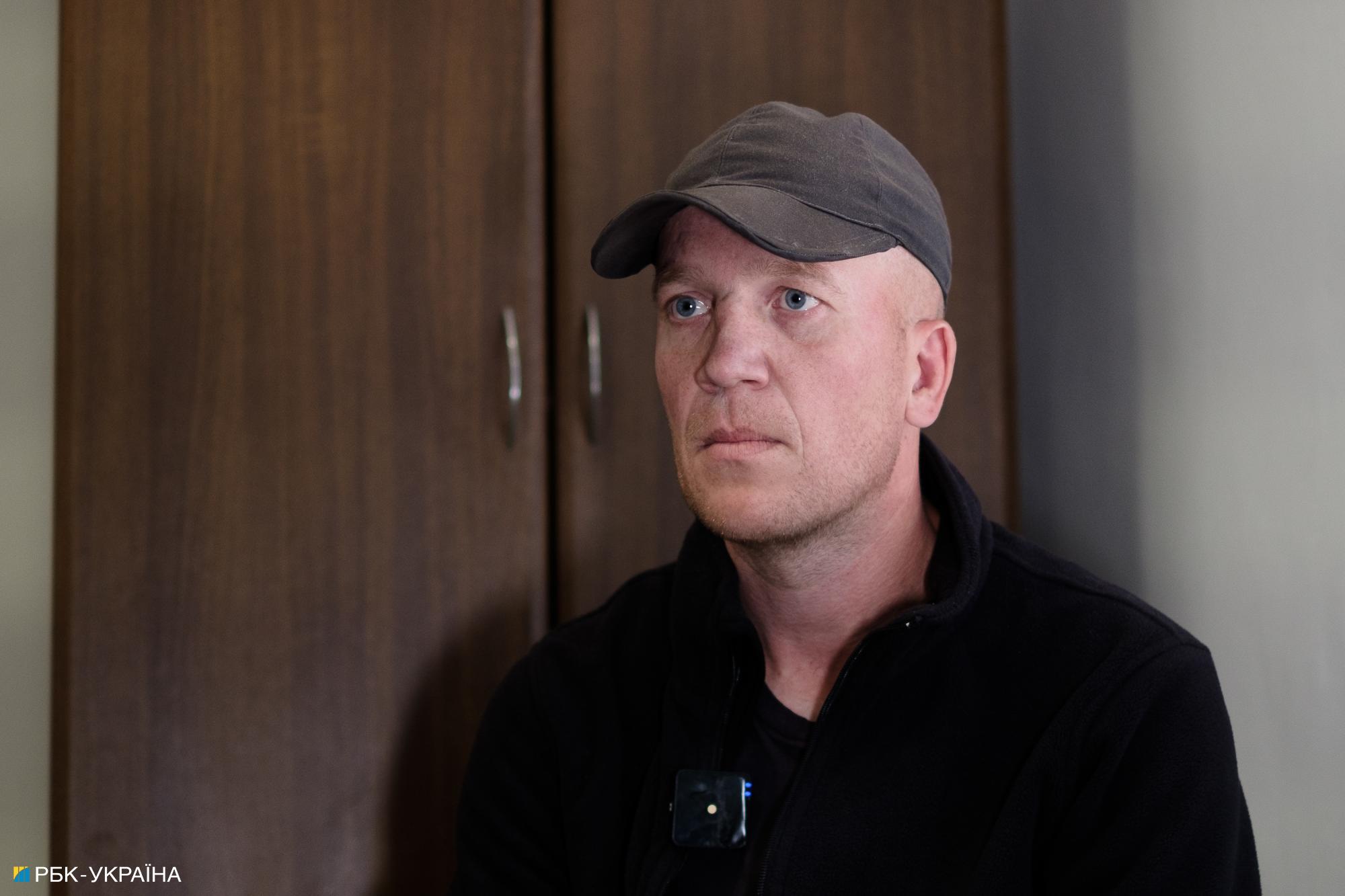 Artyom Petukhov (photo: Vitalii Nosach/RBC-Ukraine)
Artyom Petukhov had not heard about this episode. Nor had he heard about many others, where residents of remote and not-so-remote regions of Russia asked Putin for help. Moreover, this story does not prompt him to draw obvious parallels. If anything, it causes him slight irritation.
"We also have terrible roads in Moscow, just like in the Far East — the roads are the same everywhere."
"So why don't you build roads?"
"Well, they are building them, how should I know? I'm not a road builder, I'm just a regular mechanic, I work at a factory, and that's it."
Like many Russians, Petukhov has no questions for the authorities. He does not fully understand why he went to war, why Russia started it against Ukraine. Like many others, he uses the templates offered to him by propaganda. In his reality, Putin is saving Russia from corruption and Ukraine from shelling.
"Why did Putin start this war?"
"I already answered that question—to help the people of Donbas."
"Well, how does shelling Maryinka and Avdiivka and wiping Mariupol off the face of the earth help the people of Donbas?"
We show Petukhov a video from Maryinka. A destroyed city, with only piles of soot-blackened bricks remaining. The man watches the recording intently, then looks at us. When asked if this can be called help, Petukhov shakes his head. But after a few minutes, he gives the standard speech.
"You showed me the video. If I had my phone with me, I would show you how Ukrainian troops destroyed Donbas."
Artyom Petukhov is a classic example of the average Russian. He will not delve into the essence of the processes. For him, power is something total and final, it never changes, and he seems to have gotten used to it. His psyche saves him from uncomfortable questions, so he constructs a picture of the world where power is good and just. Therefore, there is no need to doubt its decisions.
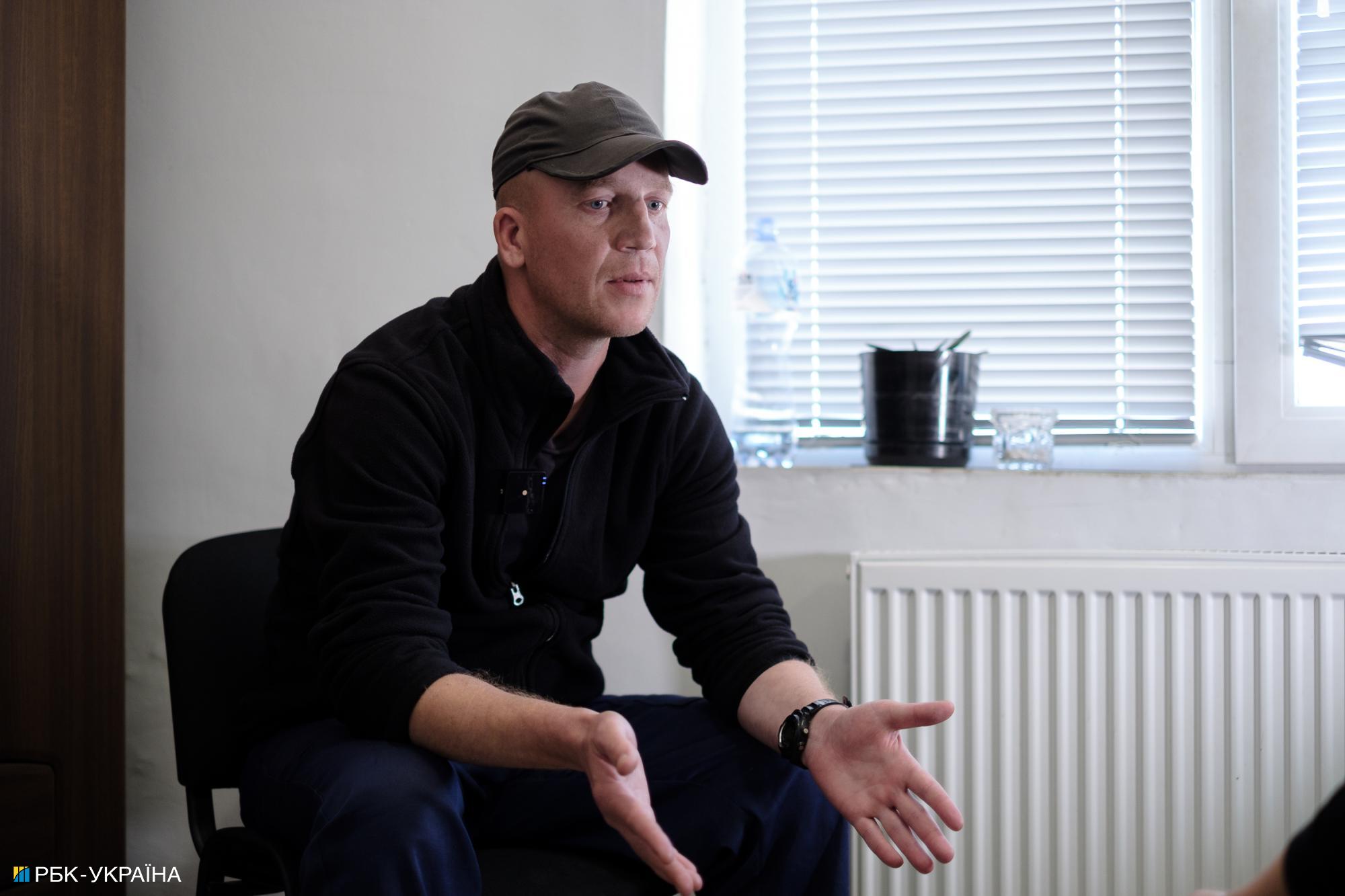 Artyom Petukhov (photo: Vitalii Nosach/RBC-Ukraine)
Many Russians exist in a similar paradigm, especially those who were sent or who decided to go to war themselves. Most of them live in depressed and economically backward regions. The war promises them the opportunity to earn money, and they are not concerned with moral and ethical issues. And if you start asking them questions instead, they will snap back and become aggressive.
They actively defend their logic. For Russians, especially those who have devoted part of their lives to war and captivity, it is coherent and correct. Because it allows them to justify their actions or their inaction. In their opinion, in 2014, Ukraine attacked itself, the residents of Donbas wanted to secede and join Russia, asked the Kremlin for help, and it did not refuse.
Armed occupation, rockets fired at residential buildings, civilians killed, small children, strikes on maternity wards and hospitals – all of this is denied. And for every Ukrainian argument, Russian propaganda has its own counterargument. And, by the way, propagandists often play ahead of the game and give Russians the opportunity to justify everything they do in advance.
"I remember in 2014 they showed how the referendums were held, and no one was carrying weapons. And there were no Russian troops at all. According to prisoners of war from Donbas and Luhansk, they had nothing to fight with. Nothing."
"So how did they fight?"
"With your weapons, the ones you attacked them with. What was left in their units..."
Artyom Petukhov, like many others, sincerely believes that in 2014, the residents of Donbas defended themselves against Ukrainian troops, apparently quickly learning how to use military equipment, firing from multiple launch rocket systems and artillery installations. He does not believe, or rather, does not want to believe that even then, Russian military personnel were behind the militia in Donetsk and Luhansk regions. After all, Putin denies this.
"In general, how do you feel about Ukraine now?"
"The same as before. The same as towards Europe as a whole. The only thing that interested me in Ukraine was football — Dynamo Kyiv and Shakhtar. That's all. And when the Euro was here — Ukraine and Poland — we rooted for one country. Your guys for Russia, our guys for Ukraine. We supported them. But now something has gone wrong."
At the end of the conversation, we ask the Russian about the conditions in the camp. He visibly perks up, starts smiling, and tries to joke. "The food is like in a prison camp, or rather, it's lean. If you want to fast, come here to fast. I should send your grandmother here."
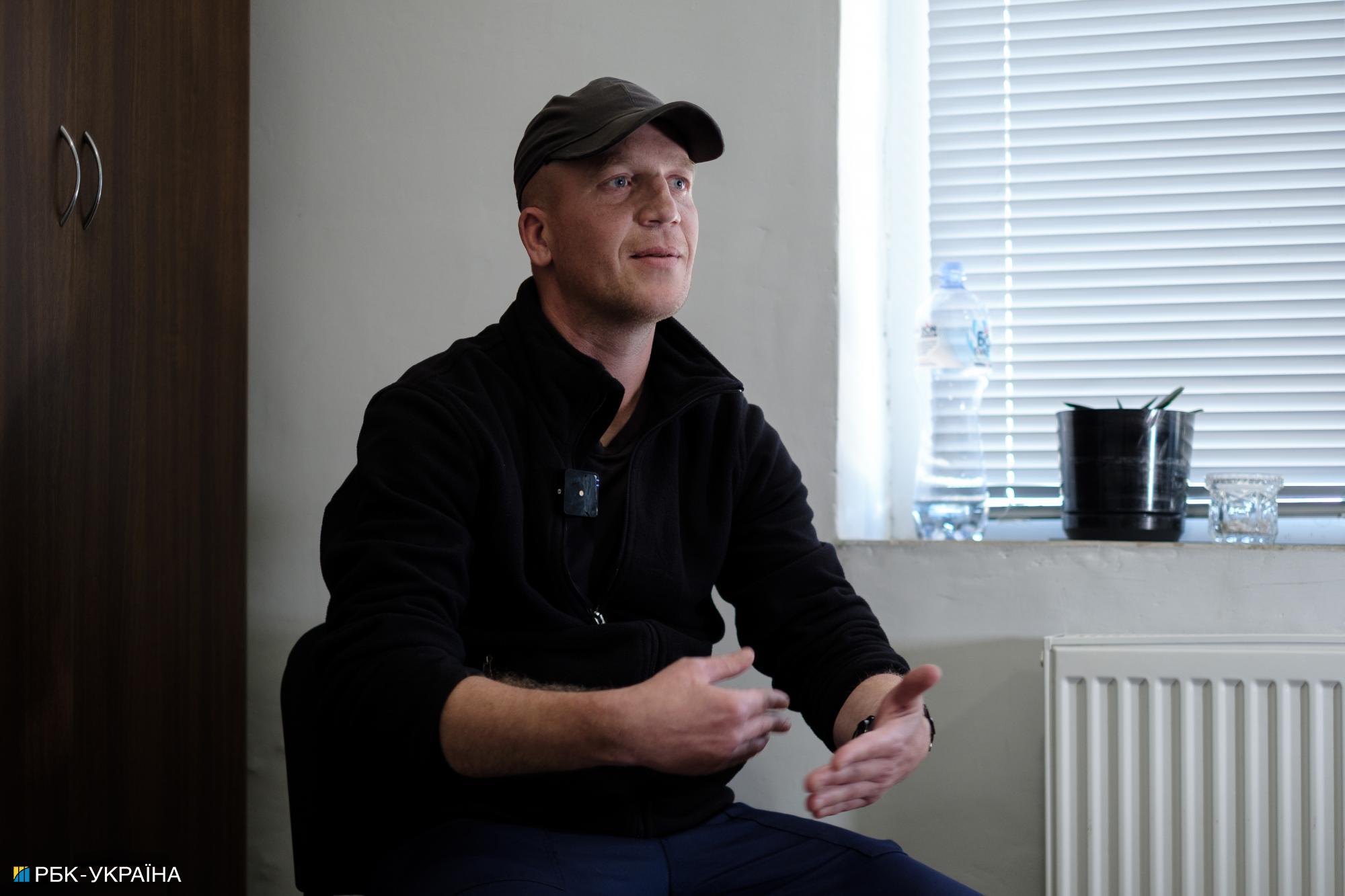
Artem Petukhov (photo: Vitalii Nosach/RBC-Ukraine)
Petukhov also likes that you can still eat Easter cakes in the camp — there are still plenty of them on the shelves in the local store. He talks about them with almost childlike enthusiasm.
In conclusion, we ask him how he thinks the war should end, and the Russian talks about negotiations. He says that it is the residents of the Ukrainian territories that are currently under occupation who must decide for themselves with whom they want to remain. And then Petukhov adds something that completely contradicts his previous arguments.
"I don't know who they are (Ukrainians from the occupied territories - ed.). I don't know my neighbor's name, and you're talking to me about the residents of Chukotka or Donbas, or somewhere else..."
"Well, you came to help the residents of Donbas."
"You already asked me that question."
Officer
Alexander Skvortsov is certainly different from his compatriot. He consciously chose a military career and obtained a higher education, so after Russia's full-scale invasion of Ukraine, he had no hesitation about what he would do. "Defend the interests of the state," as he himself put it.
Skvortsov was taken prisoner in Vuhledar. He managed to fight for the interests of the state from October 2022 to January 2023, that is, for about four months.
"How did that happen?"
"Well, it just happened. The assault was unsuccessful."
At first, it seems that Skvortsov, as a person with a broader worldview, will be more subtle in his attempts to prove his point. His arguments should be more refined, and his logic more coherent. In reality, however, it turns out that this Russian officer uses the same simple templates as our previous interlocutor.
"It's no secret that a civil war has started in Ukraine. Since 2014, Russia has been helping Donbas. In 2022, the army came in to protect the people of Donbas," he states.
"From whom?"
"From the western part of Ukraine, which came to the eastern part of Ukraine with weapons."
Skvortsov mainly uses two arguments, both of which are hackneyed. In his opinion, Russia invaded Ukraine with two goals: to protect the people of Donbas and to prevent NATO from expanding eastward. He finds it difficult to answer the question of when the North Atlantic Alliance attacked Russia, but he knows very well that it certainly has such intentions. "No one wants to have an enemy on their doorstep," the Russian reasonably notes and shrugs his shoulders.
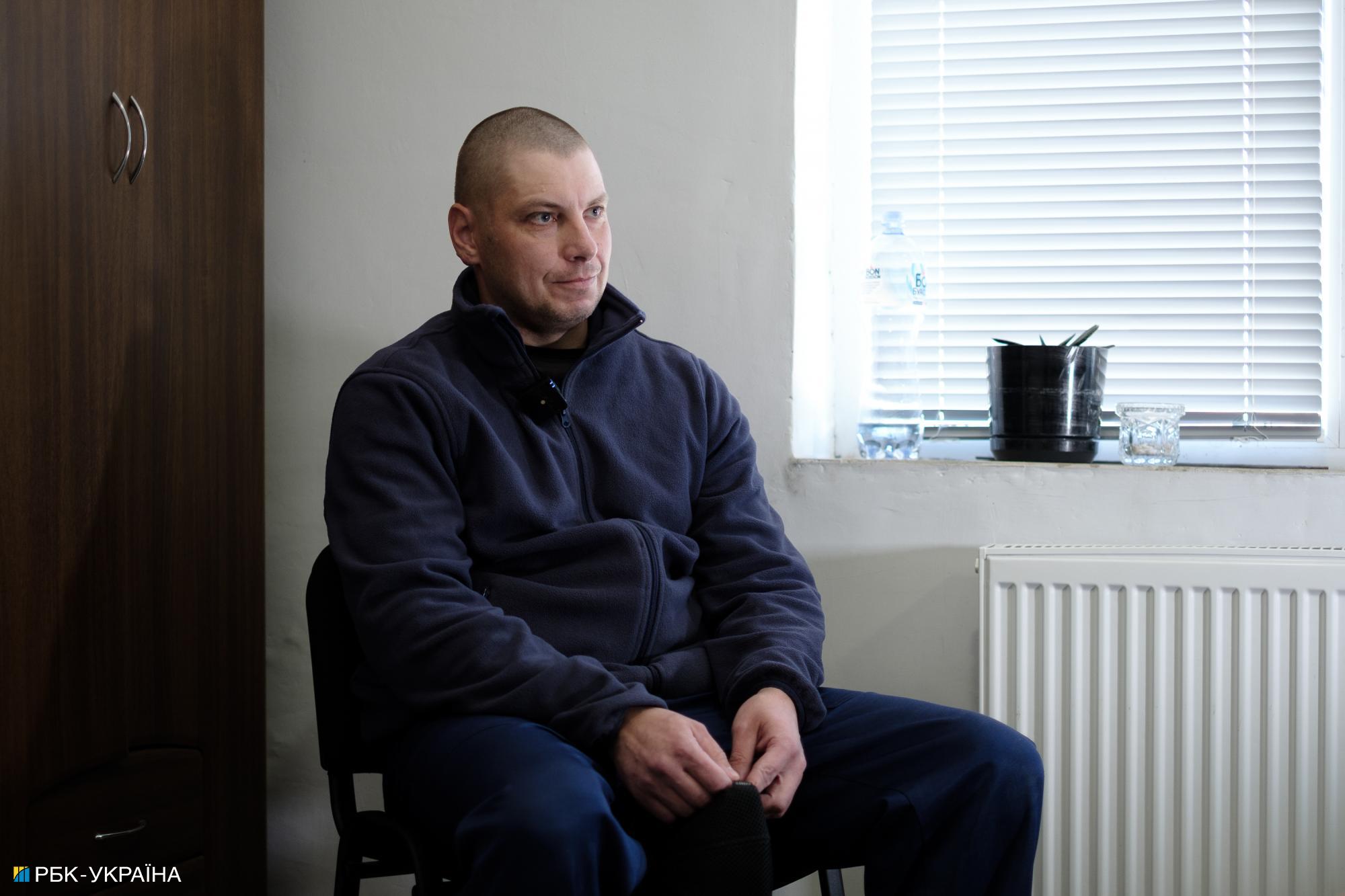 Alexander Skvortsov (photo: Vitalii Nosach/RBC-Ukraine)
Then the conversation moves on to details. Skvortsov feels comfortable with them. He reproaches us, the modern Ukrainian generation, for abandoning the memory of our ancestors. By the memory of our ancestors, he means the monuments to Soviet communist leaders, which Ukraine began dismantling in 2014. Everything in his speech seems logical and consistent until he hears the next question.
"What is happening in our country, the decisions we make, the monuments we tear down — what does that have to do with you? What does Russia have to do with it?"
Skvortsov pauses and thinks for a couple of seconds. Then he can't think of anything better to say than that Russia has nothing to do with it. He will stumble over simple questions like this many more times during the conversation. And each time, his face will show surprise.
Alexander Skvortsov and others like him are different from Artyom Petukhov. The latter is an average Russian whose interests are limited to three or four things. These are the basics: a roof over his head, food, a salary, and some simple hobby, such as football.
He will not ponder lofty matters, Russia's place on the world map, or its destiny. Intuitively, Petukhov and other hard workers like him will sometimes feel a sense of superiority when they say, "I am Russian."
Skvortsov is different. He is an officer, and they are often obliged to understand, at least to some extent, the broad ambitions of their state. And these ambitions flatter him. He sincerely does not understand the concept of Ukraine as an independent state because, in his view, Ukraine is part of Russia.
When discussing why Russia is firing on residential buildings, why it invaded and is trying to occupy territories, Skvortsov can find nothing better than to use the template of helping the residents of Donbas. And we, out of habit, show him Maryinka.
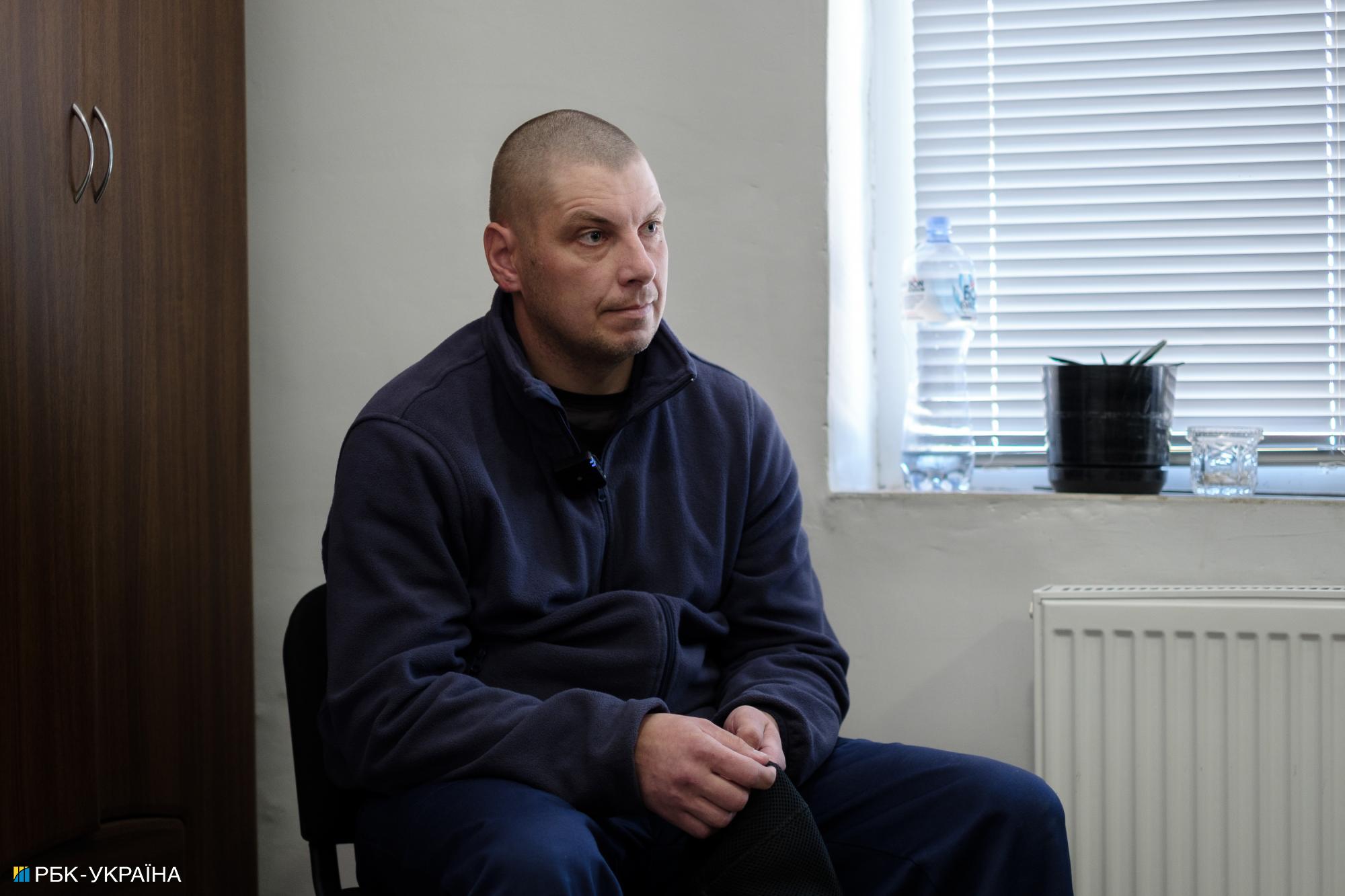 Alexander Skvortsov (photo: Vitalii Nosach/RBC-Ukraine)
"Your Zelenskyy can stop this. Just go for a talk."
"Zelenskyy has repeatedly offered talks in various formats. Where does Putin fit into this whole paradigm?"
"Putin said that Trump and Zelenskyy should come to Moscow."
"Do you think this is a reasonable condition under the current circumstances?"
"I'll tell you this: if Zelenskyy agrees and comes to Moscow, he will receive a very warm welcome there. Believe me."