Russian pincer advances at Pokrovsk and grinding campaign in Zaporizhzhia: Сomprehensive frontline analysis


 Ukrainian serviceman in the Donetsk region (photo: Getty Images)
Russian forces are intensively advancing in the Donetsk and Zaporizhzhia regions. What is happening in Pokrovsk, which footholds Russia is trying to establish, and why the situation in Zaporizhzhia is dangerous — read in RBC-Ukraine's analysis.
Key questions:
- What is happening in Pokrovsk, and what positions are Russian forces holding?
- Which three key footholds is Russia trying to create?
- What is the situation in the Zaporizhzhia region, and why is it dangerous for the regional center?
- What has Russia failed to achieve in the Kharkiv region?
Russia continues its attempts to seize as much Ukrainian territory as possible. While the Kremlin meets with American officials and searches for compromises within the US peace plan, Russian forces are trying to break through Ukrainian defenses.
US President Donald Trump again claims that Ukraine and Russia are closer to peace than ever, while Russian leader Vladimir Putin threatens to capture Donbas and other Ukrainian regions.
Today, the Donetsk region faces the strongest pressure from the Russian army. According to Moscow's conditions, Ukraine is supposed to abandon it. Obviously, even the Kremlin does not expect such an outcome, so it is trying to seize the region by force.
Russia's military command has still not come up with anything better than its infamous meat assaults. To take just one city—Pokrovsk—Moscow has deployed more than 100,000 troops. And every day, according to Ukrainian General Staff reports, Russia loses around a thousand soldiers on the front.
The Kremlin does not care about losses, but unfortunately, this strategy proves effective — Russian forces continue to advance and slowly gain new ground.
Pokrovsk and Myrnohrad: Russia's pincer assaults
"On the very approaches to Pokrovsk, Russians can move right through open fields in broad daylight. They hardly hide. They don't even try to camouflage. It looks absurd when they attempt it. We eliminate them, and more keep coming," says Serhii Lefter, an officer of the communications department of the Rapid Reaction Air Assault Corps, in a comment to RBC-Ukraine.
Today, Pokrovsk is one of the hottest points on the front, with particularly intense fighting. In Ukrainian General Staff reports, the number of combat clashes in this sector has, for a long time, exceeded all others several times.
The battle for the Pokrovsk agglomeration has been ongoing for months — rising intensity was noted back in May 2025. By early autumn, Russian forces had pushed deeper into the agglomeration and approached the city itself.
In October, the first Russian attempts to secure a foothold in Pokrovsk were recorded. Around that time, the Russian General Staff began publicly claiming that the city was under their control. To prove it, Russian sabotage groups used a tactic Ukrainian soldiers nicknamed the "flag-stick" — infiltrating the grey zone to plant a Russian flag. Throughout the heavy fighting, Russia has "captured" in such a way Pokrovsk several times in its news reports, but the battlefield reality does not match those claims.
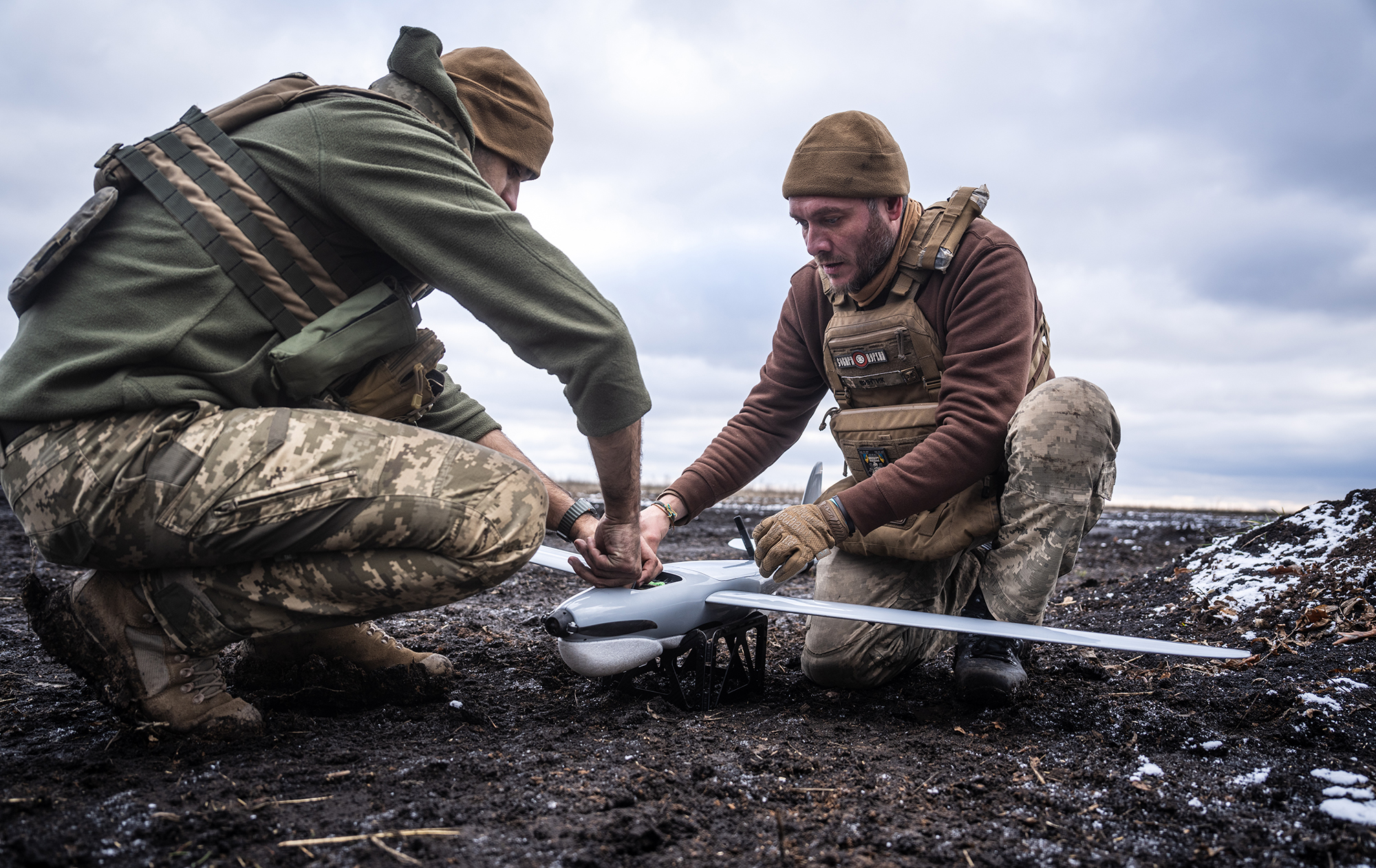
Ukrainian soldiers are preparing a drone near Pokrovsk (photo: Getty Images)
Still, the situation in the city and the surrounding agglomeration is difficult. Russia is trying to capture Pokrovsk and Myrnohrad, located to its northeast, from two directions: the south and the northeast. This has created a visible pincer movement on the battlefield maps. To close the pincers, Russian troops are advancing from Krasnyi Lyman and Nykanorivka to the north of Pokrovsk, as well as from Udachne and Kotlyne to the south, directly beneath the city.
To seize the Pokrovsk–Myrnohrad agglomeration, Russia recently deployed its operational reserve. Ukrainian units reported this in late November. For example, Russia reinforced its assault on Pokrovsk with the 76th Pskov Air Assault Division, previously recorded in the Kyiv region in 2022.
"Russians will keep bringing them in because they are being ground down. If taking Pokrovsk were easy, they would have done it already. But since they're stuck in urban combat, it's clear they lack manpower. This is their operational reserve, and they want to use it," Lefter explains.
Today, Russian forces have managed to secure positions in the southern neighborhoods of Pokrovsk. There is no clear front line in the city, but since the railway splits it in half, the military uses it as a reference point. Everything north of the tracks remains under Ukrainian control; south of them is a grey zone and Russian positions.
However, Ukrainian units and assault groups also operate in the southern part of the city. They conduct raids and clear neighborhoods. "In the southern outskirts, Russians have managed to hold their positions more firmly. We try not to let them settle in, but of course, it is harder there. There are firefights, we conduct raids, we try to set up ambushes," says Lefter.
Since early December, according to Lefter, Ukrainian forces have eliminated around 60 Russian soldiers in the city itself and wounded more than 40 — those they were able to count; the real numbers may be higher.
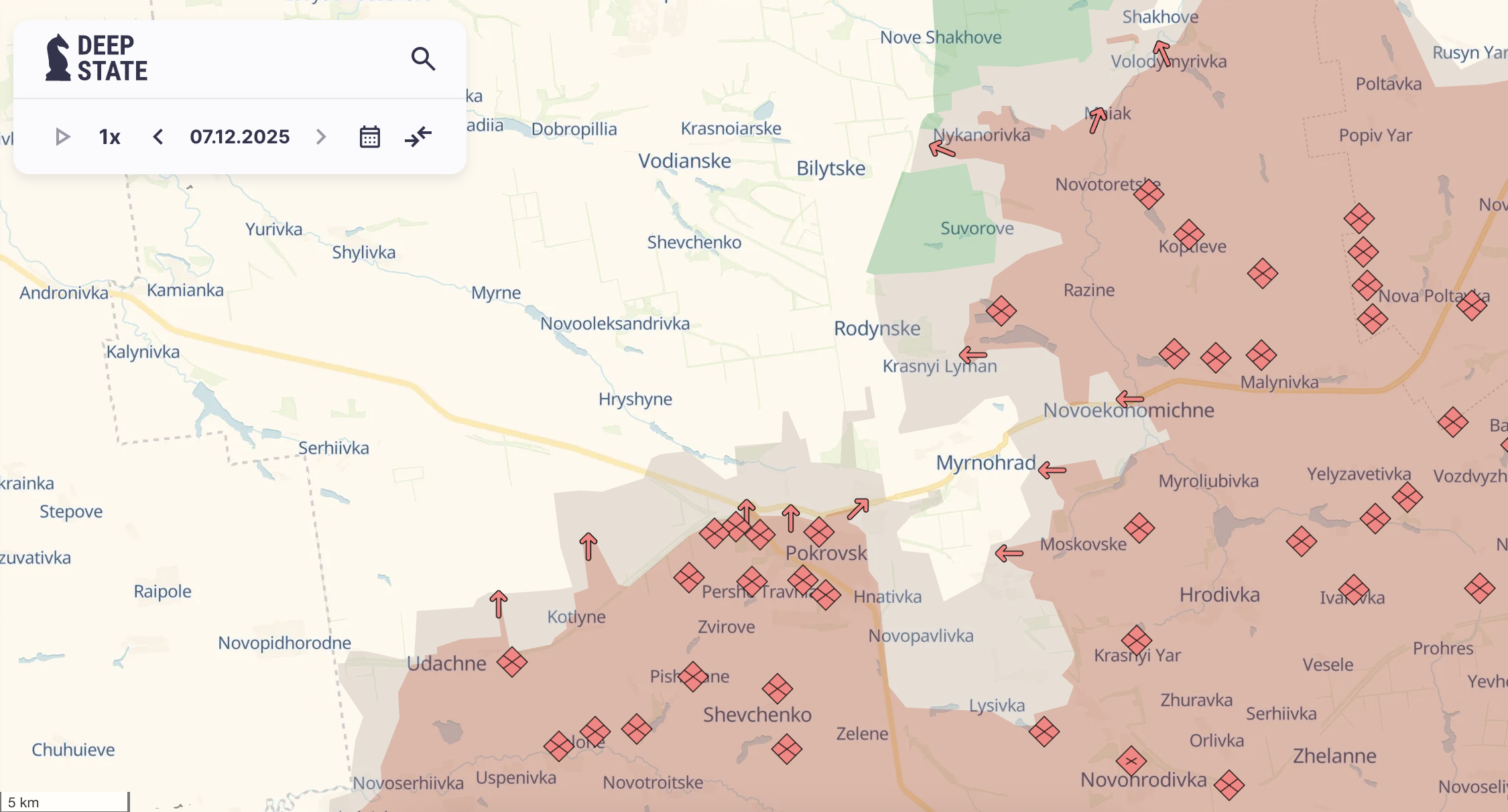 Pokrovsk and Myrnohrad caught in a Russian pincer (screenshot: DeepState map)
Due to weather conditions — frequent fog and rain — both sides struggle to use drones, making reconnaissance difficult. While the fog lasts, Russian forces try to move heavy armored vehicles into the city, but such attempts are rare, and Ukrainian troops destroy them. Lighter equipment can be moved faster and concealed.
As for artillery, Russian forces have positioned it south of the city, in nearby settlements, and periodically shell Ukrainian positions. Meanwhile, civilians continue to live in Pokrovsk. As of August, according to local authorities, around a thousand people remained. How many are still there today is impossible to determine.
"For obvious reasons, it is impossible to figure out how many civilians are still alive. The Russians enter the city and record videos showing how they supposedly 'care' about locals, but in reality, people in Pokrovsk are dying because of their weapons and their actions," Lefter adds.
Pokrovsk is important to Russia primarily because it could become a logistics hub. It would also give them greater ability to threaten key supply routes for Ukrainian forces.
Three footholds
A large concentration of enemy forces is now gathered in the Pokrovsk–Myrnohrad area. If part of these forces captures the agglomeration, the rest will be freed up — possibly to be redeployed to other hotspots, such as Chasiv Yar. And that opens the road toward Kostiantynivka, and from there to the Kramatorsk–Sloviansk agglomeration.
Today, four major population centers — Sloviansk, Kramatorsk, Druzhkivka, and Kostiantynivka — remain under Ukrainian control and form a single agglomeration in the Donetsk region. During their spring–summer offensive, Russian forces attempted to seize these cities by forming three strategic footholds: the southern one in the area of Pokrovsk, Myrnohrad, and Toretsk, the eastern one around Chasiv Yar, the northeastern one around Siversk and Lyman.
So far, Russia has failed to achieve its objectives on any of these footholds. Pokrovsk has not been captured, and in Chasiv Yar, Ukrainian defense forces still control part of the city. The situation has escalated in the Lyman and Northern sectors, but it has since been stabilized.
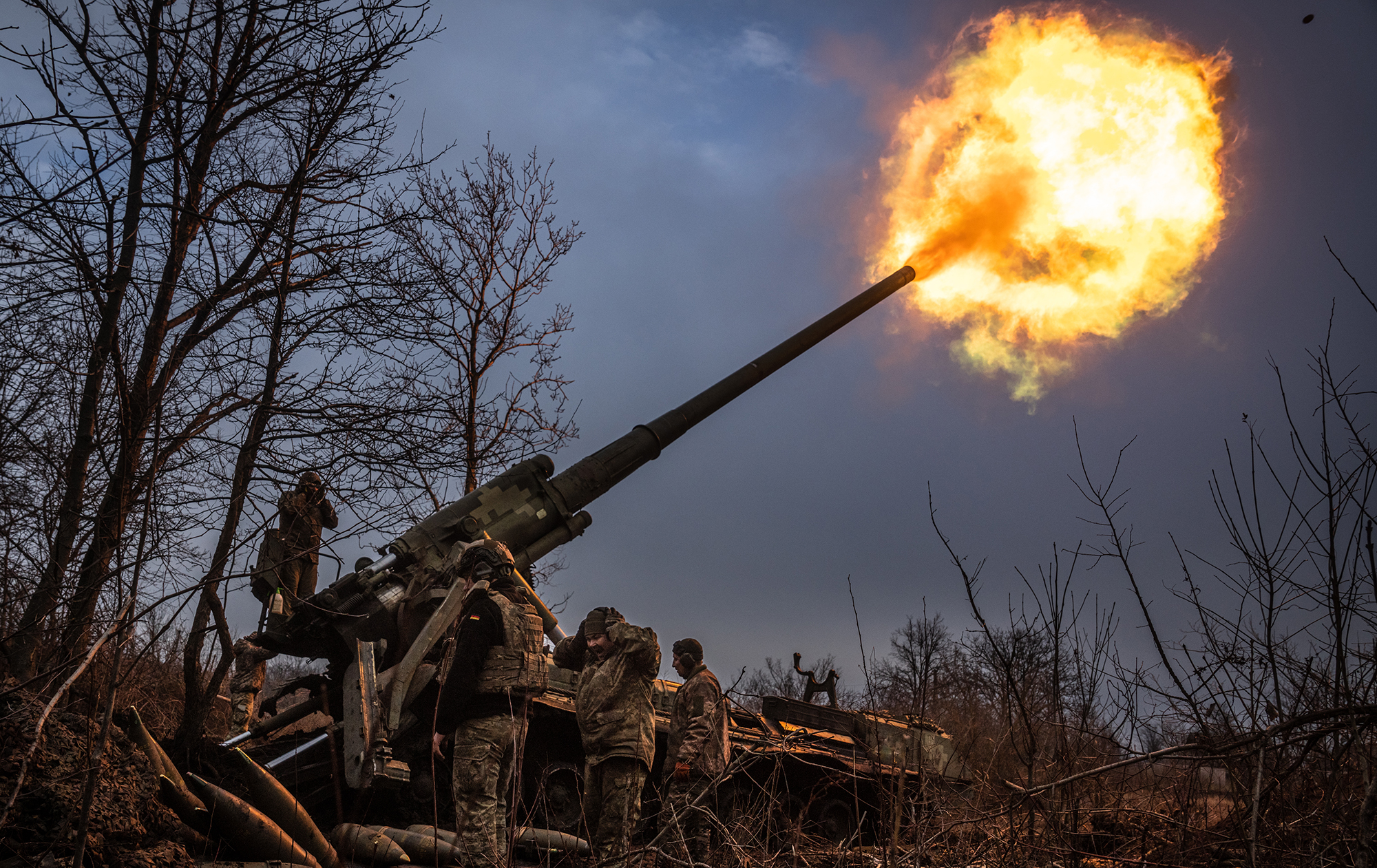
Ukrainian troops with a howitzer near Chasiv Yar (photo: Getty Images)
"However, the defensive operation continues around Pokrovsk and Myrnohrad, south of the Sloviansk–Kramatorsk agglomeration, and no offensive foothold has been formed there. Will the enemy push through? I think we have to be rational. Most likely, they will," says Ukrainian Armed Forces Colonel Vladyslav Seleznov.
Zaporizhzhia direction
If the enemy has concentrated about 140,000 soldiers to capture the Pokrovsk–Myrnohrad agglomeration, then roughly 120,000 are deployed for advancing along the Zaporizhzhia direction. Clearly, for Russia, this is the second most important front after Donetsk, although the Russian military command tends to act opportunistically, trying to break through wherever it seems feasible.
The Zaporizhzhia region, which Putin also enshrined in Russia's constitution, is currently about 70% occupied. As early as October 2025, Ivan Fedorov, head of the Zaporizhzhia Regional Military Administration, highlighted this. The Russians regularly shell Zaporizhzhia, including attacks using KAB-guided bombs, which are already reaching the city. Intense fighting continues throughout the region.
Recently, the situation has worsened around Stepnohirsk, southeast of Zaporizhzhia. Russian forces are attempting to advance along the former Kakhovka Reservoir, now overgrown with tall grass. This allows the enemy to hide in the greenery and periodically attack Ukrainian positions using sabotage and reconnaissance groups.
Stepnohirsk is strategically important because it opens a path to Zaporizhzhia. Russian troops are trying to reach the regional center, but considering how long it takes them to occupy much smaller settlements, they could face much larger challenges here.
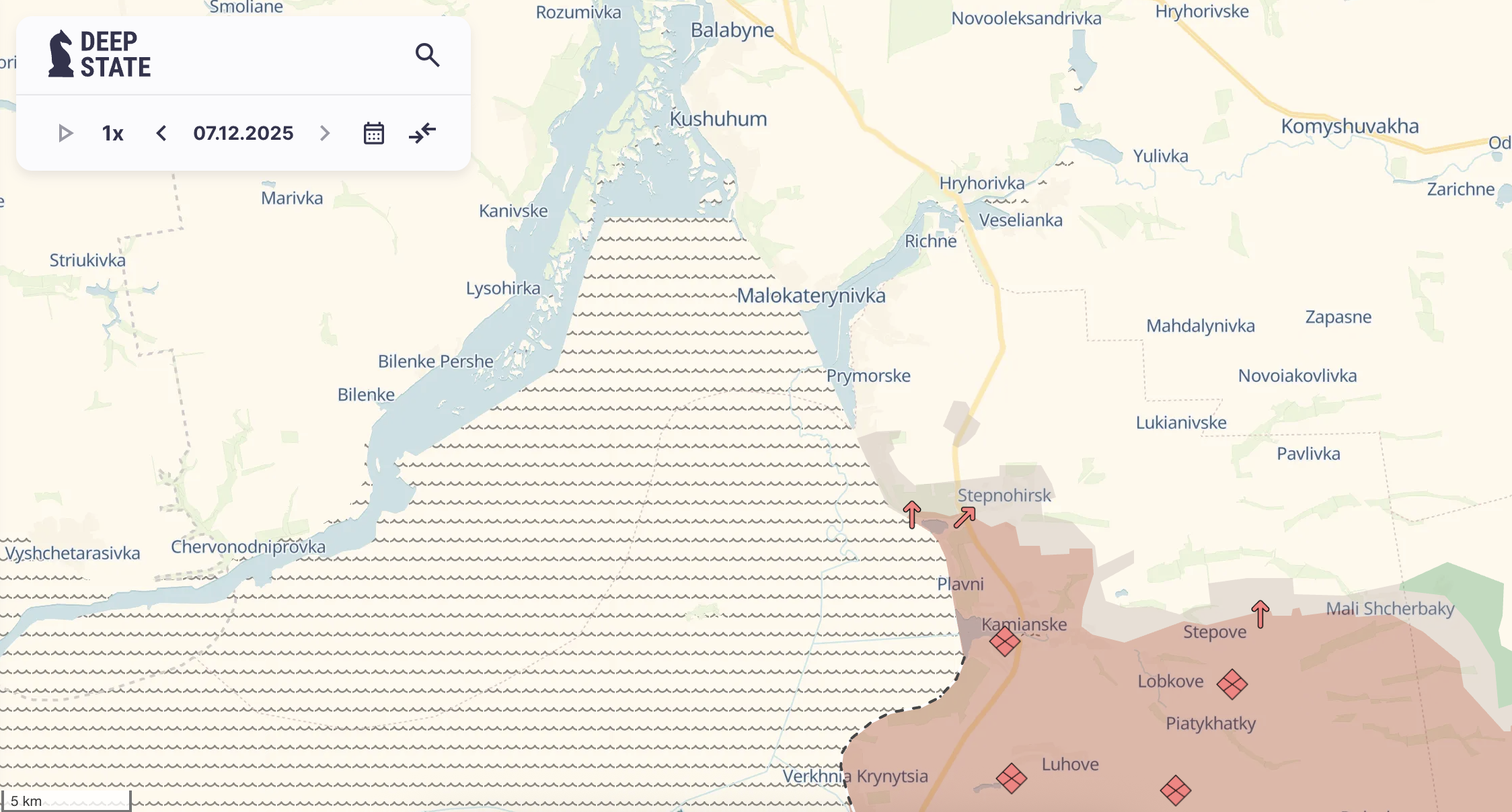 Russian forces are attempting to advance along the former Kakhovka Reservoir (screenshot: DeepState map)
Heavy fighting is also underway in the Huliaipole area. According to Seleznov, Russian troops periodically try to break into the city's eastern suburbs, using aerial bombs and artillery. As usual, the enemy destroys the city before attempting to capture it.
"Russia acts quite rationally, it seems to me. Before taking a settlement, they first destroy it. This has always been the case, starting with the war in Chechnya. That's how the enemy operates today as well. Every intact building becomes a firing point that enables effective resistance," Seleznov notes.
East of Huliaipole and within the city itself flows the Haichur River. Experts say it could pose a serious obstacle to the Russians if they continue their advance. The settlement is very important for Ukrainian defensive forces, but the intensity of fighting will also depend on the outcome of clashes in Pokrovsk and Myrnohrad. If the enemy succeeds there, part of their resources may shift to the Zaporizhzhia region.
Kharkiv region
While the Russian military command concentrates a large part of its forces in the Donetsk and Zaporizhzhia regions, some units are attempting localized breakthroughs in Kharkiv.
Periodically, Russian troops try to advance along the Kupiansk direction, in areas near Petropavlivka, Pishchane, and Kolisnykivka. Ukrainian defense forces have managed to isolate these Russian units, so for now the enemy is only replenishing losses—there's no real breakthrough.
"They bring in their forces across the border wherever possible. In most cases, this works for them because there is direct logistical connectivity at the strategic level. The exception is Kupiansk—the city has been effectively isolated. This has become the biggest trap for them," says Viktor Trehubov, head of communications for the Joint Forces group.
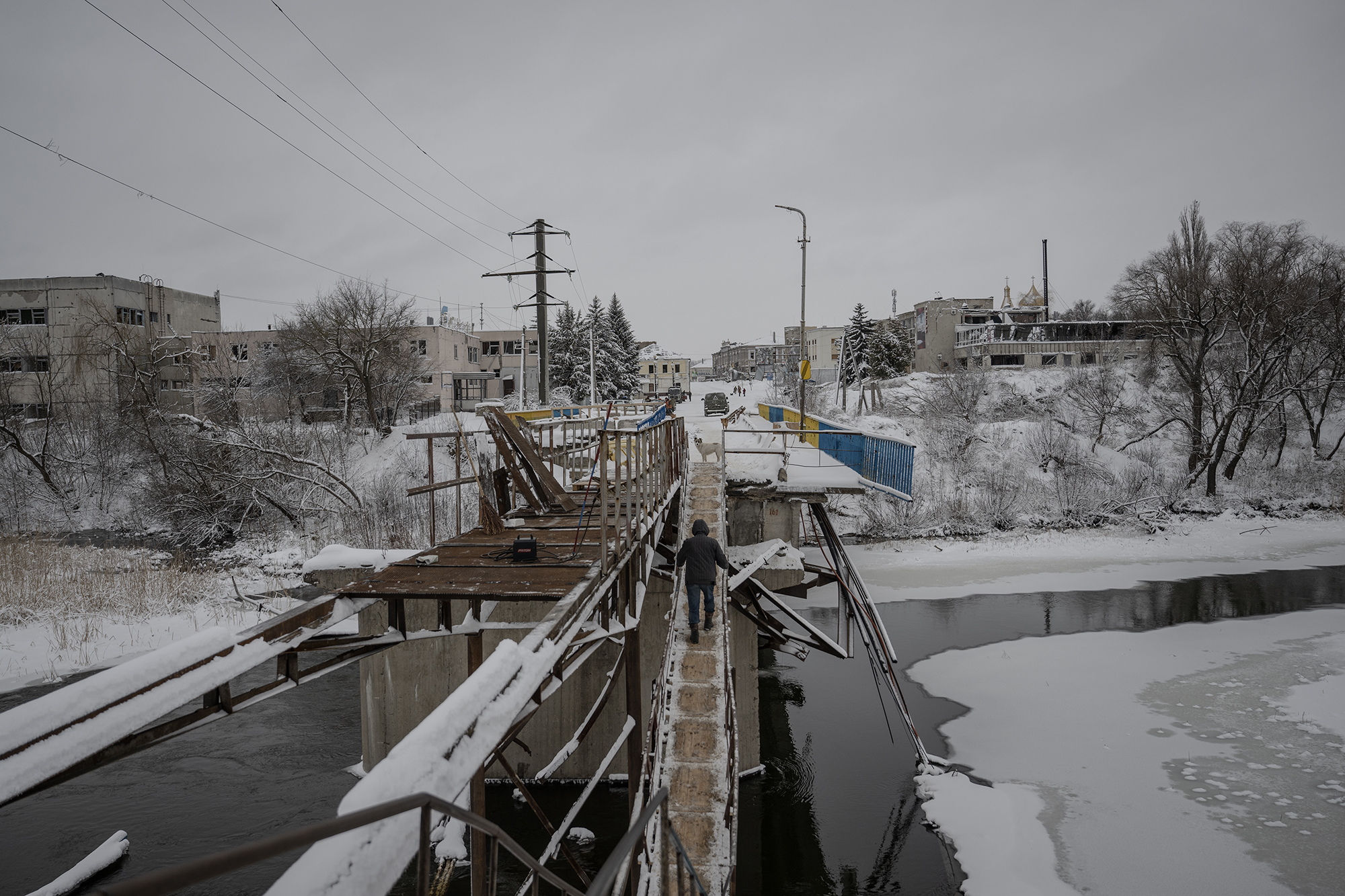
Russian forces frequently shell Kupiansk (photo: Getty Images)
Earlier, Ukrainian Commander-in-Chief Oleksandr Syrskyi also noted improvements along the Kupiansk direction. He said the city has been cleared of Russian forces, and Ukraine is pushing them back from the bridgehead north of Kupiansk.
However, the enemy has made some gains near Vovchansk. Russian forces have advanced into the city itself and near Tykhyi, northeast of Vovchansk. Military sources note that the city is largely destroyed, and the Russians are trying to consolidate positions among the ruins.
Weather conditions have limited the use of drones, giving the enemy more opportunities to carry out offensive actions while Ukrainian reconnaissance is restricted. At the same time, the eastern and western outskirts remain under Ukrainian control, and every attempt by the Russians to raise their flag over Vovchansk ends disastrously for them.
***
The Russian military command will continue attempting to seize as much Ukrainian territory as possible. Putin himself outlined these plans in an interview with Indian journalists, aiming to capture the Donbas and "Novorossiya," referring to the country's southeast.
No diplomatic maneuvers, US peace initiatives, or negotiation attempts have produced results. As long as the Kremlin feels it can advance on the battlefield, it will do so, without regard for the number of casualties.
"The scale of enemy losses is truly staggering. In November, the numbers were just over 30,000 killed and wounded, including 25,000 killed. In other words, in high-style terms, today Putin's generals are paving the way to Ukrainian territory with the bodies of their soldiers," says Seleznov.