Referendum on peace? Why Zelenskyy wants people to approve peace deal


During talks on ending the Russia-Ukraine war, the idea of holding a nationwide referendum to approve a peace deal has emerged.
RBC-Ukraine explains the reasoning behind this idea and how realistic its implementation might be.
Key questions:
- What does President Zelenskyy say about the referendum?
- Is there a legal framework for it?
- What are the political pros and cons?
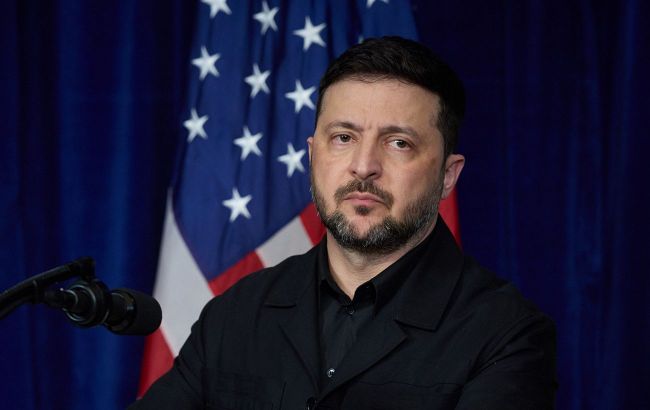
After years of war, Ukrainians could go to the polls to vote on a peace agreement that may involve certain territorial compromises with Russia. This is the scenario outlined by Ukrainian President Volodymyr Zelenskyy during discussions on ending the Russia-Ukraine war.
The initiative unexpectedly came to the forefront on December 11, during Zelenskyy's interaction with journalists.
"I believe people of Ukraine should answer this question. Whether through elections or a referendum, there must be a position of the Ukrainian people," Zelenskyy said.
He later repeated this point several times in various forums, including during a personal meeting with Donald Trump.
Why Ukraine has held only two nationwide referendums
Referendums are widely used around the world to decide a variety of issues. Typically, they address socially sensitive topics such as abortion, same-sex marriage, or leaving the European Union. Switzerland, for example, uses referendums to decide the majority of local-level issues.
In Ukraine, nationwide referendums have been held only twice. The first took place on December 1, 1991, to confirm the Act of Declaration of Independence adopted by the Verkhovna Rada (Ukrainian Parliament - ed.) on August 24 of the same year. The sole question was: "Do you confirm the Act of Declaration of Independence of Ukraine?" Voter turnout exceeded 84%, and 90.32% voted in favor of independence – an absolute majority in all regions, including Crimea and the eastern regions.
This referendum not only legitimized Ukraine's independence but also became a key factor in the collapse of the USSR. Its results made the continuation of the Soviet system impossible.
The second nationwide referendum was held on April 16, 2000, initiated by President Leonid Kuchma amid a political crisis and his confrontation with the Verkhovna Rada.
Voters were asked four questions: about confidence in parliament, the creation of a bicameral parliament, reducing the number of deputies, and lifting parliamentary immunity. All questions received over 80% support with roughly 80% turnout.
However, the results were never implemented due to political opposition and criticism from international organizations, which saw the referendum as an attempt to strengthen presidential power.
After 2000, the topic of nationwide referendums became toxic for a long time due to associations with Kuchma's attempt to usurp power. A 2012 law under Yanukovych, allowing referendums bypassing parliament, was called dictatorial, and after the Revolution of Dignity, the Constitutional Court annulled it, leaving a legal gap.
President Zelenskyy aimed to fill that gap early in his term, fulfilling one of his campaign promises. In 2020, he introduced the "On People's Power Through an All-Ukrainian Referendum" bill to the Verkhovna Rada, which passed in January 2021.
However, first the COVID-19 pandemic, and then the full-scale Russian invasion, made holding a referendum impossible. Now, as Zelenskyy raises the idea again, it has become clear that legal obstacles are no less significant than practical ones.
Legal challenges
Holding a referendum would require the same infrastructure as national elections. This involves resolving a range of issues, from updating the voter registry to enabling Ukrainians abroad and military personnel to vote.
However, as Deputy Chair of the Central Election Commission Serhii Dubovyk told RBC-Ukraine, the new legislation has never been applied in practice.
"The information-analytical system meant to ensure the referendum under the new law has not been developed, and no funding has been allocated. We would have to carry out painstaking work if the issue arises," Dubovyk said.
At the same time, a referendum in its currently proposed format could conflict with the Ukrainian Constitution.
The President of Ukraine is obligated to call a nationwide referendum only in one case: when the Verkhovna Rada passes a law to amend Section I (General Principles), Section III (Elections. Referendum), or Section XIII (Amendments to the Constitution). This is the only situation requiring a referendum by the President, explained RBC-Ukraine Andrii Mahera, a constitutional law expert at the Center for Political and Legal Reforms and former Deputy Chair of the Central Election Commission (2007–2018).
The Verkhovna Rada itself can also call a nationwide referendum only in one case – regarding changes to Ukraine’s territory (Article 73 of the Constitution). But this does not mean any territorial issue can be put to a plebiscite at will, Mahera emphasized.
Territorial changes are allowed only within the principle of the country’s unitary structure (Article 2: "Ukraine is a unitary state," its territory is intact and inviolable) and must comply with the ban on violating territorial integrity (Article 157: the Constitution cannot be amended to undermine independence or violate territorial integrity).
"This means a nationwide referendum on territorial changes is possible only in cases of expanding Ukraine’s territory. As far as I understand, neither Moldova nor Slovakia plans to join us, so there is no subject for a nationwide referendum by decision of the Verkhovna Rada," Mahera explained.
There is also the option of a referendum initiated by the citizens, which requires collecting at least three million signatures from eligible voters. Signatures must come from at least two-thirds of the regions, with at least 100,000 in each. Even in this case, however, the referendum question cannot violate the Constitution.
"And those eager for a referendum should understand that, unlike elections, a referendum requires mandatory turnout for it to be considered valid. In Ukraine, that is over 50%," Mahera added.
It goes without saying that during war or even a temporary ceasefire by Russia, holding a referendum would be extremely difficult. Another issue is that Russia is more interested in manipulating the process than in the referendum itself.
Russia’s games
On the one hand, Russia opposes a referendum. "The Russians’ attitude toward a referendum is not positive. Why? Because a referendum requires security, security infrastructure. What does that mean? It means a ceasefire is needed. And the Russians do not want to give us a ceasefire for that many days," Zelenskyy said.
On the other hand, the Kremlin, in its usual style, is already trying to use the referendum issue to its advantage. Citing intelligence from the Foreign Intelligence Service, Zelenskyy reported that the Russian authorities have tasked their officials with preparing the possibility for Ukrainians in occupied territories and in Russia to participate in Ukrainian elections or a referendum.
According to him, Moscow's goal is to bring up this issue intentionally, arguing that a large number of Ukrainians live there and that they have the right to vote, so that Russia can later claim it does not recognize the voting.
The Kremlin itself has repeatedly used fake referendums to justify the occupation and annexation of territories, starting with Abkhazia in 1999, then Crimea and Donbas in 2014, and later in 2022 on other occupied territories of Ukraine.
According to RBC-Ukraine, Russian negotiators conveyed to their US counterparts the idea that without a referendum, the formalization of an agreement could be insufficient — Ukraine might allegedly maneuver as it did with the Minsk agreements. This became one of the factors why the US is leaning toward supporting a plebiscite.
An additional benefit for Russia in this situation could be the division of Ukrainian society.
"If this (territorial issues - ed.) goes to a referendum, there will still be a large share of people against it and a large share in favor. Overall, we can expect that Ukrainians will support some agreement. But already the next day, internal conflicts among Ukrainians will start: what did we fight for, what should we do, what did we get, were we deceived, or not…" said Oleksii Antypovych, head of the Rating Sociological Group, in an interview with RBC-Ukraine.
Diplomatic maneuvers
Under these conditions, the strategy of the Ukrainian leadership is to keep the topic of a referendum on the radar, while also conveying to the US that any vote would be extremely difficult. At the same time, Kyiv needs to maintain Donald Trump's support. Despite efforts to diversify assistance, Ukraine remains dependent on the US for intelligence and certain weapons.
"As I understand it, the task is to delay as much as possible, given that political conditions in the US will continue to change, including the upcoming electoral processes such as the midterm elections," said Ukrainian military officer and political consultant Oleksandr Antoniuk in a comment to RBC-Ukraine.
Next November, the US will hold midterm congressional elections. The outcome will determine whether Trump continues to hold full authority or faces an opposition-controlled Congress under the Democrats. In this context, criticism from Ukraine's supporters could be politically damaging for Trump.
According to the expert, it is clear that appealing to the will of the people was the only option available to the Ukrainian President.
"Basically, we are simulating the negotiation process in a way that preserves certain positions. Clearly, the referendum itself will not resolve the issue, but the preparation process, including security guarantees and other bureaucratic procedures, will delay the issue over time. Obviously, that is the main calculation," Antoniuk summarized.
Going forward, the key question will be whether the US is willing to push Ukraine on the referendum or consider alternative options, such as ratifying the agreement through the Verkhovna Rada. This will determine not only the pace of negotiations but also whether Kyiv can maintain societal unity and Western support without making painful concessions under pressure.