Political deadlock or a new war? Four scenarios for Israel and the risks for Ukraine


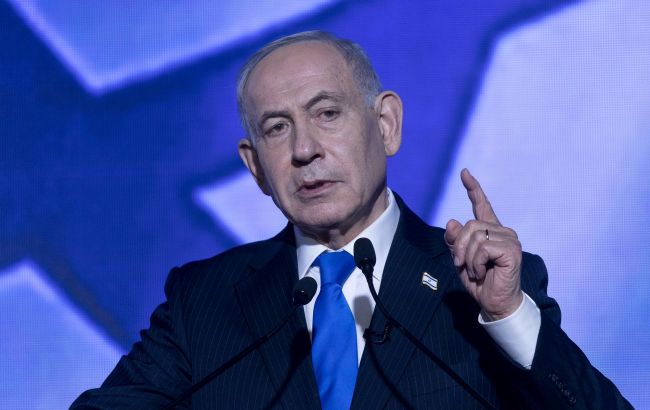 Benjamin Netanyahu (Photo: Getty Images)
The results of yesterday’s parliamentary elections in Israel are turning out to be unexpected. Prime Minister Benjamin Netanyahu and his allies have performed better than anticipated.
Can Israel’s seemingly eternal prime minister stay in power? Why could the election results lead to a new war, and what impact could they have on Ukraine? Read the analysis by RBC-Ukraine below.
Key takeaways:
-
Netanyahu’s incomplete victory: The governing bloc is ahead, but military reservists’ votes will determine the final balance of power.
-
Political deadlock: Israel could hold another election if no coalition can be formed.
-
Risk of war with Iran: To remain in power and avoid trial, Netanyahu could escalate tensions in the region.
-
A blow to Ukraine: A possible new Middle East conflict would deepen the global shortage of Patriot air defense systems and drive up oil prices.
“Netanyahu lost and must go!” was the main message from Israel’s opposition just hours after polls closed. Some jubilant supporters even jumped into fountains to celebrate.
By morning, however, the euphoria had completely faded. As votes were counted, it became clear that not only was Netanyahu’s Likud party comfortably in first place, but the governing bloc as a whole was also well ahead of the Zionist opposition bloc.
Vote counting is still underway, with nearly 85% of ballots counted. Next comes the tallying of so-called “double envelopes” — ballots cast by Israelis voting outside their registered residential districts. The vast majority of these voters are army reservists. Because of the security situation, their number is higher than ever in this election.

Israeli military personnel (Photo: Getty Images)
Their votes are highly unlikely to go to parties representing Israel’s Arab minority or ultra-Orthodox religious parties whose members are exempt from military service. Instead, the votes will likely be distributed in varying proportions among Netanyahu’s party, his ultranationalist ally Itamar Ben Gvir, and the Zionist opposition.
In any case, winning first place in an Israeli election is only the beginning. The main challenge is forming a coalition with at least 61 lawmakers in the 120-seat Knesset.
Israeli society is deeply fragmented and polarized, while the electoral threshold for entering the Knesset is relatively low, at 3.25%. As a result, more than a dozen parties win seats in the relatively small parliament.
At the same time, most major political players are unwilling to form alliances under any circumstances with the two parties representing Arab citizens of Israel, who account for about 20% of the electorate.
Israel now faces an extremely tense round of coalition negotiations and a battle over the premiership. Events could unfold in at least four ways, some with consequences extending far beyond Israel’s domestic politics.
Scenario 1: No deal, early elections
According to the latest vote count, Netanyahu’s party and its allies are projected to hold 54 seats in the next parliament. The Zionist opposition bloc has 49 seats, while the two Arab parties together have 17 seats.
In another country, those 17 seats would be a kingmaker: whichever side secured their support could form a comfortable parliamentary majority.
But in Israeli politics, any form of cooperation with Arab parties is often viewed by voters as “betrayal,” although one Arab party did participate in a governing coalition several years ago.
Netanyahu will not form an alliance with Arab parties under any circumstances. His allies include either ultra-religious Jewish parties or ultranationalists who openly advocate discrimination against Arab citizens and dream of expanding Israel’s territory at the expense of other Arab countries.
The governing bloc’s confrontational “us or them” rhetoric appears to have mobilized both Arab voters and those most hostile toward them.
The Zionist opposition is, on average, somewhat less radical. Nevertheless, several politicians in the bloc also categorically ruled out any cooperation with Arab parties ahead of the election.
This creates a stalemate in which neither side can secure the 61 votes needed for a majority. Netanyahu will likely be given the first opportunity to form a coalition, with 28 days to do so and the option of a 14-day extension. If he fails, someone from the opposition could be given a chance.
If that attempt also fails, Israel will have to hold another parliamentary election, likely in the spring of next year. The country has already experienced a similar cycle: between 2019 and 2021, Israelis voted four times in less than two calendar years.
Scenario 2: Netanyahu builds a coalition by poaching opposition lawmakers
The practice of lawmakers defecting from the opposition to join a governing coalition, individually or in groups, is not unique to Ukraine. It also happens in Israel, although extreme social polarization makes such defections relatively unpopular.
The opposition’s main unifying slogan in this election was “Netanyahu must go!” Switching sides to join a coalition led by Netanyahu himself would resemble the infamous move by Ukraine’s Socialist Party, led by Oleksandr Moroz, which abruptly abandoned the “Orange” camp and joined Viktor Yanukovych’s camp in 2006.
That move effectively ended the Socialists’ political careers: they never returned to parliament. Similar consequences could await defectors in Israel. They would not lose their seats, but their political careers could be over, as their voters are unlikely to forget such a move.
Still, if the final results leave Netanyahu just two or three seats short of the 61 needed for a majority, attempts to recruit the missing votes from the opposition camp are almost certain.
Scenario 3: A national unity government
Despite the confrontational nature of Israeli politics, there have been examples of broad coalitions in which bitter political rivals reached agreements to avert a political crisis or respond to an external threat hanging over Israel.
Such a scenario was discussed even before the election: a possible alliance between Netanyahu’s Likud and Yashar, the party led by leading opposition figure Gadi Eisenkot.
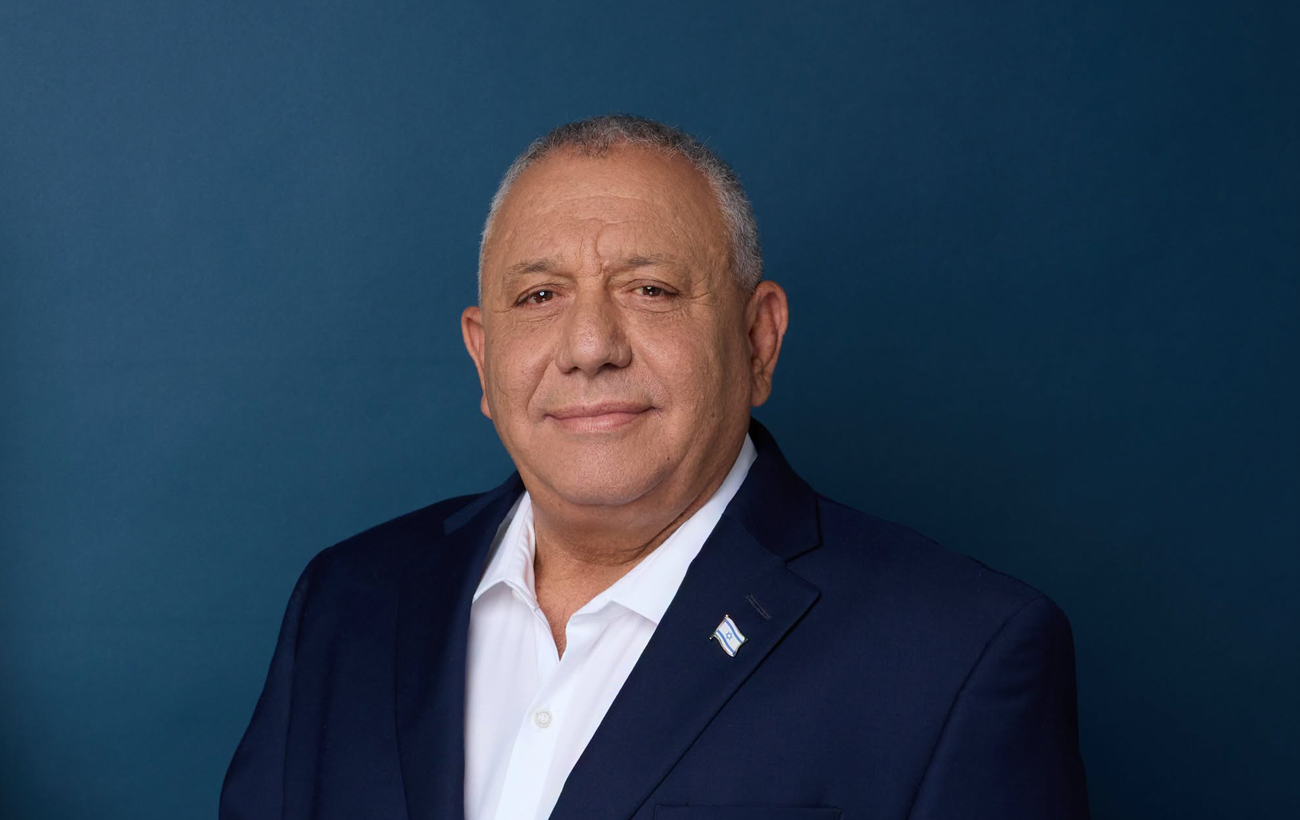
Gadi Eisenkot, leader of the main opposition party Yashar (Photo: facebook.com)
As things stand, Likud and Yashar together have only 47 seats, far short of the 61 needed. They would need to bring in at least one more party, and probably two. Given the sharply conflicting ideologies and difficult personal relationships among Israeli politicians, such a coalition would be extremely fragile.
Some of these contradictions could be set aside if Israel once again faced an extraordinary external threat or found itself in a major war. The argument would be that the country was in danger, Israel’s very survival was at stake, and old grievances had to be put aside temporarily.
Before the election, media reports suggested Netanyahu was allegedly planning to launch another major campaign against Iran with precisely these considerations in mind. However, the military’s General Staff leadership and Netanyahu’s most important international ally, Donald Trump, reportedly opposed the idea. Trump faces his own elections in early November — the US congressional midterms — and a new Middle East war that could push oil prices higher is the last thing he needs.
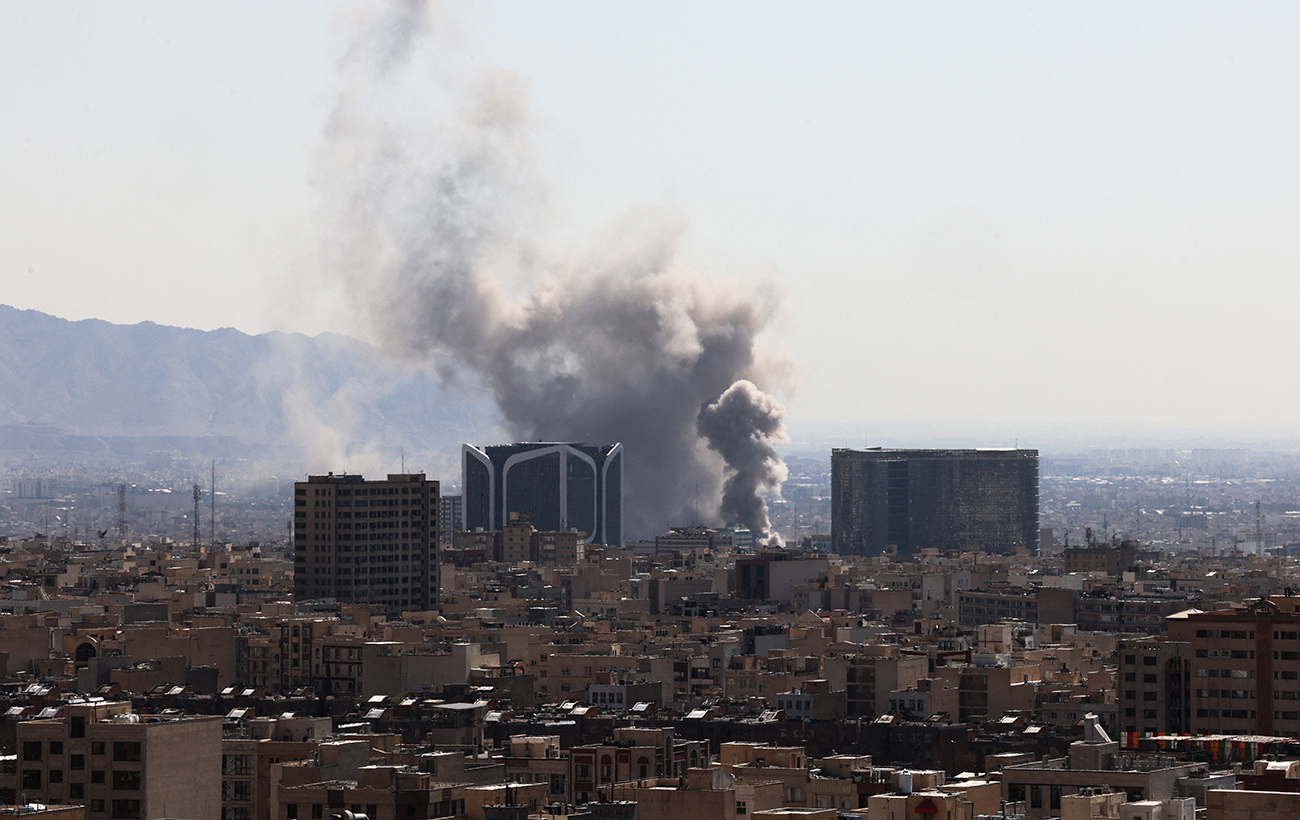
Strike on Tehran on March 1, 2026 (Photo: Getty Images)
Read also: US warns Gulf allies of possible renewed strikes on Iran after midterms – WSJ
However, The Wall Street Journal reports that after the US congressional elections, Washington could revisit the idea of a new campaign against Iran. On election night, Netanyahu himself spoke of a “unique opportunity to eliminate the Iranian threat once and for all.”
Scenario 4: A parliamentary maneuver to oust Netanyahu
Despite outperforming expectations, Netanyahu and his allies are almost certain to fall short of the 61 seats needed to secure a majority on their own. That means parties opposed to him — both Zionist and Arab — will collectively hold a parliamentary majority.
One potential scenario would see the Zionist opposition, with support from Arab parties, first elect its own speaker of the Knesset and then pass a law barring people under investigation in corruption cases from serving as ministers.
In practice, this would shut Netanyahu out of the premiership. That is precisely why staying in power is so important to the current prime minister. Facing multiple legal cases, Netanyahu could very well end up behind bars if he loses the office.
Once the prospect of Netanyahu becoming prime minister again is eliminated, Israel could return to the early-election scenario, since no stable coalition would be likely to emerge.
The main obstacle, however, remains the same: the difficulty of securing agreements between Zionist politicians and Arab parties, even if the cooperation involves only a few joint parliamentary votes rather than a formal coalition.
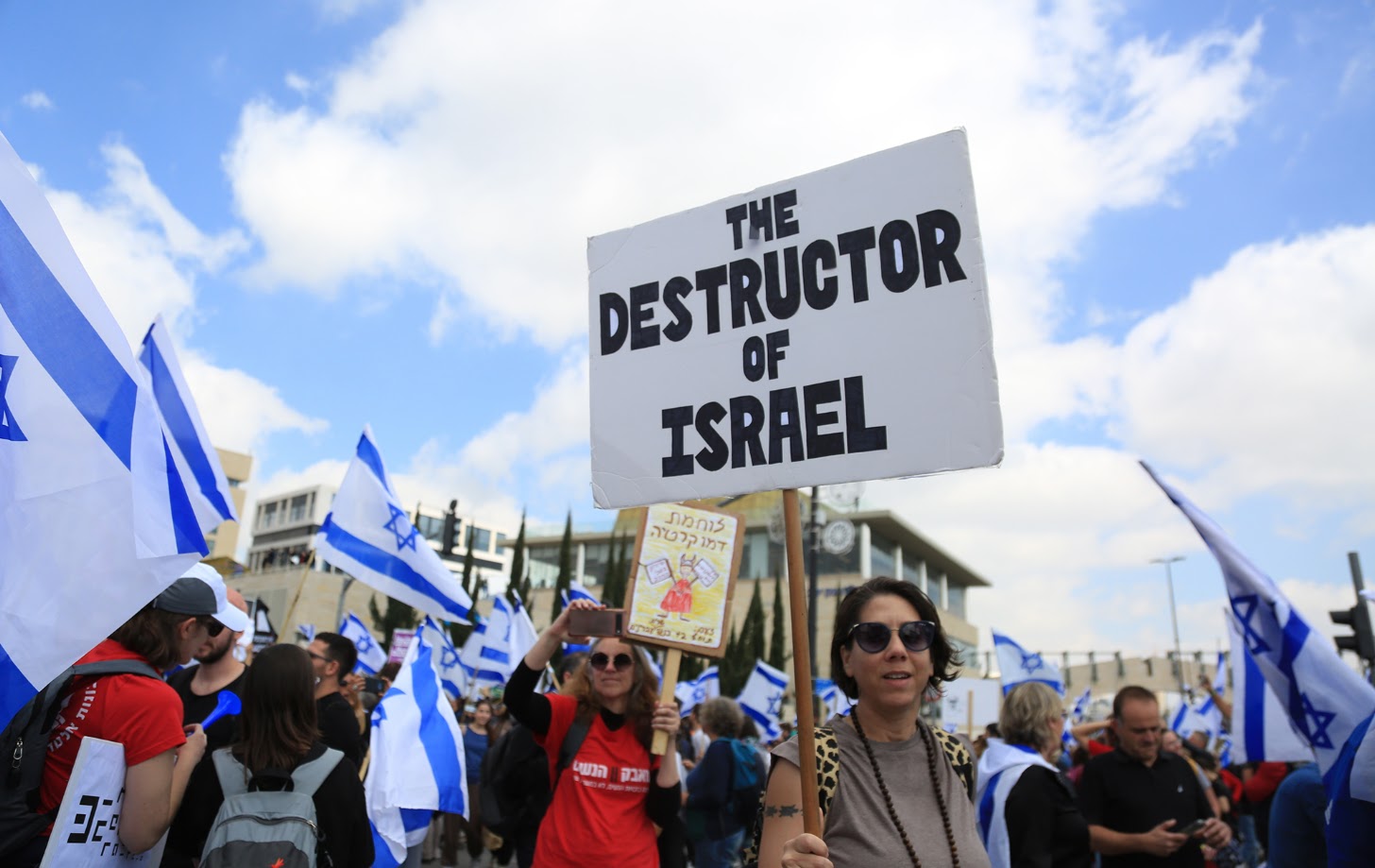
Protests against Netanyahu in Israel (Photo: Getty Images)
There is little doubt that Netanyahu would vigorously portray such a move as “betrayal” by the opposition, and perhaps even as a “coup.” After all, his governing bloc will win noticeably more seats than the opposition bloc. If he is then denied the chance to become prime minister through such a maneuver, it could look like a genuine “conspiracy.”
The opposition also understands that cooperation with Arab parties could come back to haunt it in the next early election — and potentially very badly. For that reason, while the scenario is not impossible, it appears unlikely.
***
If Israel’s coalition negotiations lead to renewed regional escalation, the consequences of the October 27 election will be felt around the world.
A new conflict with Iran would not only drive up global oil prices — increasing Russia’s revenues in the process — but also worsen the shortage of Patriot air defense systems. The US and Israel would need these systems to protect themselves against retaliatory Iranian strikes, leaving Ukraine with even greater difficulty securing defenses against Russian ballistic missiles.
In the worst-case scenario, therefore, the consequences of votes cast by Bedouins in Rahat or ultra-Orthodox Jews in Bnei Brak could be felt directly by residents of Kyiv or Dnipro, thousands of miles away.
Quick Q&A
– Who is winning the Israeli election, and has a coalition been formed?
Benjamin Netanyahu’s Likud party and its allies have taken the lead, but they have not yet secured the 61 seats needed for a majority. The final distribution of seats depends on the count of “double-envelope” ballots, cast mainly by army reservists.
– Why are Israel’s political blocs at a deadlock?
Neither the governing bloc nor the Zionist opposition can reach 61 seats without support from Arab parties, which hold 17 seats. However, most key political players categorically reject an alliance with them, viewing it as political “betrayal.”
– What scenarios could Netanyahu face?
There are four possible paths: another early election in the spring, recruiting defectors from the opposition, a fragile national unity government, or a parliamentary maneuver by the opposition to bar Netanyahu from serving as prime minister.
– How could Israel’s election affect Ukraine?
If Netanyahu chooses to escalate the conflict with Iran to remain in power, oil prices could surge, and Patriot air defense systems could become even scarcer as the US and Israel use them to repel Iranian attacks.