Kremlin's double game: How Russia selling peace to US while prepping Russians for war


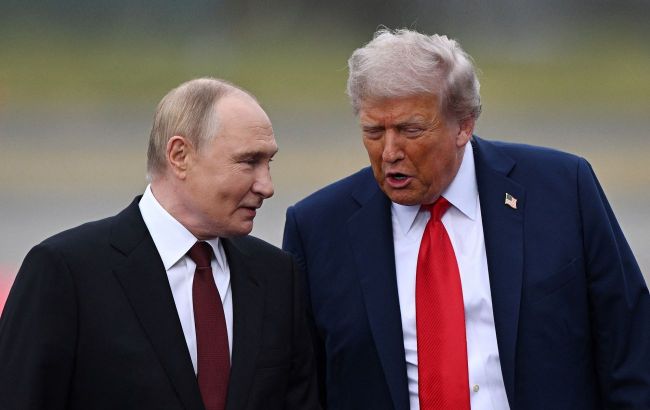 Vladimir Putin and Donald Trump (photo: Getty Images)
Russia is attempting to demonstrate to America that it is ready for negotiations, but within society, this topic is presented differently. RBC-Ukraine examines how Russians perceive the US peace plan and what is happening in Russia.
Key questions:
- How is the Kremlin conveying its readiness for negotiations to the US?
- How is Russia shaping public opinion on the peace plan?
- What is the 'Dolina effect'?
- What is the situation on the front lines while Putin says he is ready for negotiations?
Ukraine and Russia have entered another round of negotiations mediated by the US. While the Trump administration is trying to do everything it can to bring the leaders of the two countries to the negotiating table, Russia is in no hurry to compromise.
Publicly, Vladimir Putin discusses peace and, smiling, shrugs his shoulders at the question, "Why are we being sanctioned?" However, within Russia itself, no one is seriously discussing negotiations. While the Kremlin is selling rhetoric about its absolute readiness to discuss anything to the West, its statements to the domestic audience are somewhat different.
At the same time, no one on the front lines has heard anything about peace talks—the fighting is fierce and intense, especially in the Donetsk region. Judging by the number of troops that Russia has concentrated in several areas, the rest of the region is planned to be taken over by Russia, if not by diplomatic means, then by force. However, the Russians may require a lot of time and resources to do this.
Outside Russia
On Tuesday, December 2, US Special Envoy Steve Witkoff and US President's son-in-law Jared Kushner arrived in Moscow. The American guests wanted to discuss the peace plan, which had undergone numerous changes in a few weeks, with Vladimir Putin. They were obviously hoping to leverage Donald Trump's authority and their own charisma.
The conversation with the Russian president lasted between 4.5 and 5 hours, according to various estimates. This was followed by walks through Moscow at night and a trip to a restaurant, where financier Kirill Dmitriev treated the Americans to kulebyaka and dried venison. A few hours earlier, Dmitriev had spoken to the press, saying that the conversation had been useful, constructive, and meaningful. No compromises were reached, but Putin did send Trump some political signals.
The next day, December 3, Kremlin spokesperson Dmitry Peskov commented on the negotiations in his usual manner. "It would be incorrect to say that Putin rejected the US peace plan for Ukraine," Peskov said, assuring that the Russians would talk to the Americans for as long as necessary.
 Yuri Ushakov, Kirill Dmitriev, and Steve Witkoff (photo: Getty Images)
Today, the Russians' behavior and their demonstrative immaturity in negotiations surprise few. In almost four years of war, the Kremlin has not changed its style. Putin assures that he is ready to discuss peace and has never been against a diplomatic solution to the so-called Ukrainian question, but in reality, everything comes down to territory. And this time, Ukrainian lands have become the cornerstone.
"For Americans, they (the Russians, ed.) create the illusion that an agreement on Donbas is necessary, that sooner or later, Russian troops will capture this territory of Donbas anyway. If not in six months, then in a year, but they will take it anyway. And, unfortunately, they have convinced the Americans of this. When Dan Driscoll (US Secretary of the Army - ed.) visited Kyiv, he repeated this thesis that it is only a matter of time before the Russians take Donbas, so agree, agree now, before it is too late, before the situation worsens," says political scientist Volodymyr Fesenko in a comment to RBC-Ukraine.
The Russians understand that they can sell this to the Americans, but Ukraine will not agree to such a state of affairs. It is much more revealing how the Kremlin sells this to the Russians themselves. And in short, it doesn't.
Inside Russia
Today, only a few journalists conducting street polls mention the negotiations on the Russian domestic agenda. "Whatever Vladimir Vladimirovich says, that's how it should be," respondents tell one of the local Russian media outlets when asked how the war should be ended.
State propagandists only touch on the topic of negotiations when they need to praise the US for its zeal to close the so-called Ukrainian question or scold Kyiv for its unwillingness to do so. And some populists even say that they may be mistreated if the Armed Forces of Ukraine withdraw only from the Donetsk region. For example, the head of the Accounts Chamber, Sergei Stepashin, recently stated that the next stage of the special military operation should be an advance on Mykolaiv and Odesa. This does not align with the Kremlin's official rhetoric.
"There are statements directed outward — 'thank you, America, for your help, we will try to reach an agreement, but Ukraine is inadequate, so we don't know what will come of it.' There are also signals to Russians from various politicians, deputies, and others. They are mostly aggressive. And about the fact that 'they are trying to deceive us, but Putin will wisely figure it out and will not allow us to be deceived. Therefore, we must win the war,'" explains Russian opposition political scientist Ivan Preobrazhensky in a comment to RBC-Ukraine.
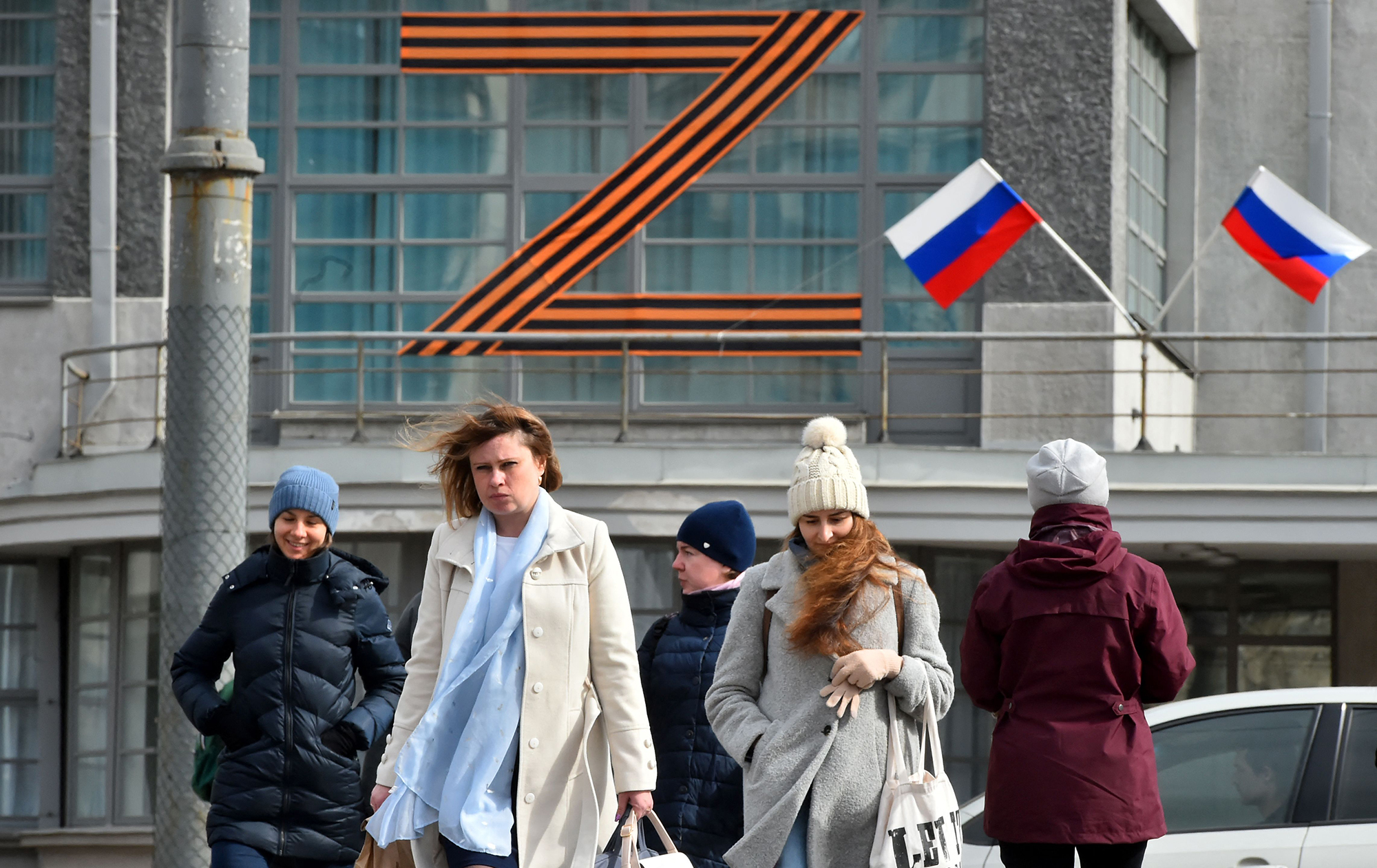 St. Petersburg (photo: Getty Images)
Another telling point is the attitude of Russians toward Donald Trump himself. It is surprising that after each unsuccessful round of negotiations, Trump's rating falls in Russia itself. At the same time, Putin's rating may fluctuate, but it remains within its limits.
"Putin is, so to speak, Teflon-coated, because he is perceived as having no alternative. And as long as he is perceived as having no alternative, attitudes toward him will not seriously deteriorate, and this will not break through in the public sphere at all. Because this is already punishable, and everyone understands this perfectly well," Preobrazhensky adds.
The Russians themselves are traditionally not asked about the negotiations, and everything is done to ensure that they do not reflect on this issue. They are encouraged to maintain a smoldering contempt for the West, and hatred for Ukraine itself is periodically stirred up within society. No one talks to them seriously or prepares them for the possibility that they will have to give something up or stop themselves. But within society, there is a general fatigue with the war. Another issue is that Russians themselves are quite inert and do not believe that they can change anything.
"They have a kind of passive loyalty. They support whatever the leadership says. They don't like the war; they would like to end it, but the war does not directly affect them. Therefore, they will support any decision made by their leadership. So Russians do not have a unified point of view or position on this issue. But still, unfortunately, public opinion in Russia does not influence Putin's decision to end the war," Fesenko notes.
For the same reason, propaganda does not even try to explain to society why Ukraine is being asked to withdraw only from the Donetsk region. After all, not only are the Donetsk and Luhansk regions included in the Russian constitution, but also the Zaporizhzhia and Kherson regions. Some propagandists emphasize the importance of getting everything, but state television channels do not focus on this.
At the same time, the paranoid Kremlin still keeps its finger on the pulse of public sentiment and reacts to every increase in its rhythm.
'Dolina effect'
A term that sounds so absurd that it seems like fiction has recently been introduced into the Russian public sphere. It all started when Larisa Dolina, a well-known Russian singer who actively supports the war, was allegedly deceived. Some time ago, she sold her apartment, received the money, and then announced that she had sold it under the influence of fraudsters and had given the money to them.
With the alleged assistance of Putin himself, Dolina got her apartment back. She did not return the money she received from the sale. In the 1990s, this scheme was particularly popular, often referred to as the grandmother's scheme because the sellers of the apartments were mostly elderly women.
The fact that Dolina got her apartment back caused public outrage, and she began to be canceled everywhere. She was denied advertising collaborations, cut from a New Year's film, and attacked on social media. And in the midst of all this, neat statements suddenly began to appear that some Russians suffer from real fraudsters and are left with nothing, while others, the privileged, receive protection from Putin.
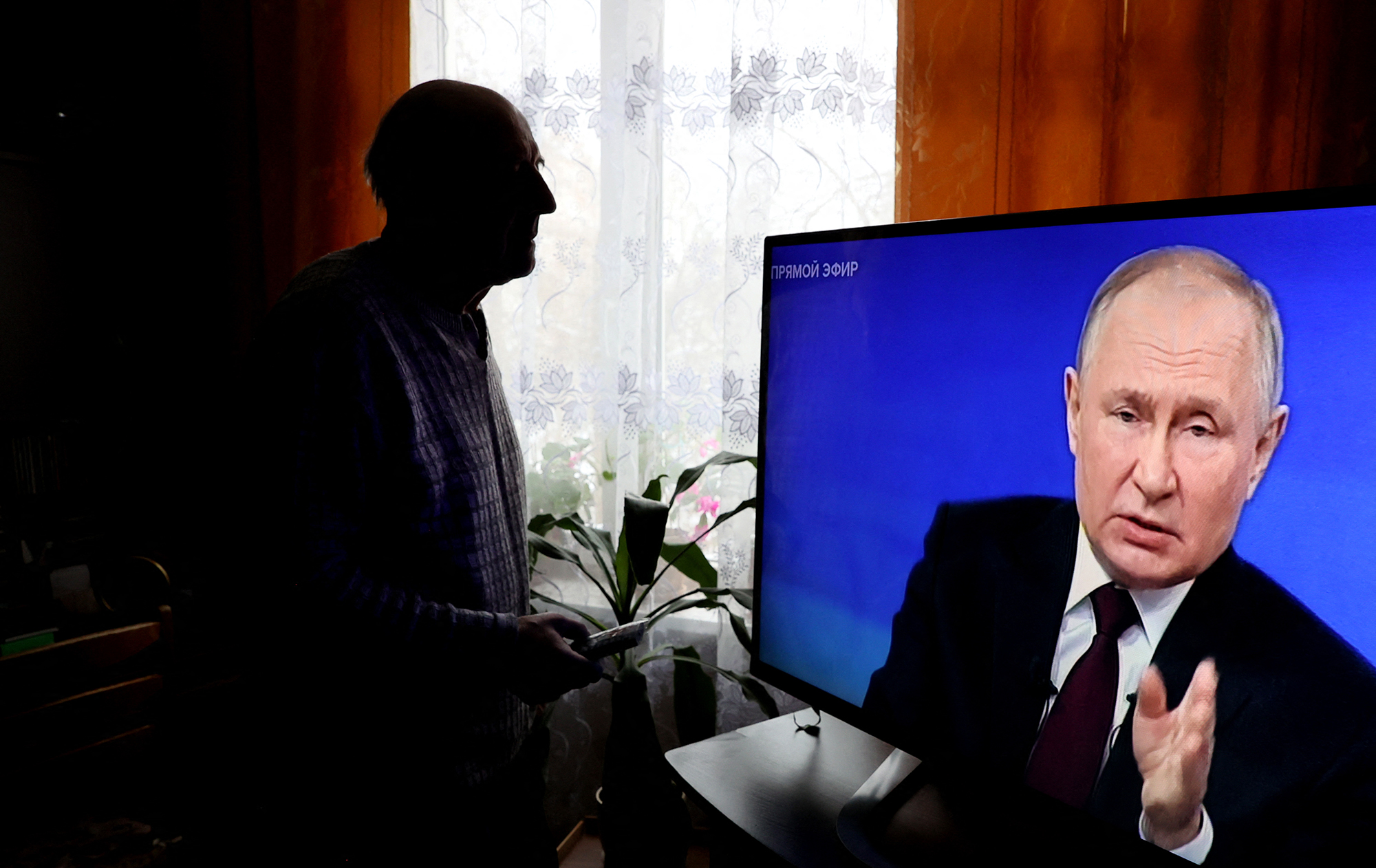 A Russian watches Putin on television (photo: Getty Images)
"The situation clearly shows how stressed Russian society is. There is everything at once — fear, hatred, and everything that people would like to vent on Putin, if they could vent anything on him. This is, in general, aggression, in particular, towards Putin's government. Why, at Putin's word, was an unfortunate woman who paid for this apartment have it taken away from her, even though there are questions there too, and so on," Preobrazhensky notes.
At some point, pro-government propagandists intervened in the situation, recording it on Dolina herself. Videos of the singer being rude to those around her began to spread across the internet, she was discussed on television, stories were written about her, and sketches were filmed. Behind this controlled hype, it became clear that the authorities were apparently afraid of what this could lead to.
"There is a so-called theory of collective action, according to which protests start small. That is, there must be a single point where all possible contradictions converge. But it seems that this is being successfully channeled. The authorities will most likely cope with this and, on the contrary, allow society to let off steam and trample on Dolina," adds the Russian political scientist.
No matter how absurd the case itself may seem, it shows how much the Kremlin fears and controls the mood within society. This is another reason why there is little talk of negotiations and attempts are made not to mention them as something important at all.
The Kremlin understands that Putin's sentiments and those of society differ from each other, so it is better to accommodate the former and not give the latter any extra reasons to think.
Frontline as indicator of Russia's plans
At meetings between the American and Ukrainian delegations, the latter emphasizes its red lines, which lie in territorial issues. Ukraine makes it clear that it does not intend to leave the controlled part of the Donetsk region, freeing it for the Russians. And the Russians themselves see this clearly. Therefore, while the Kremlin is putting pressure on Washington at the diplomatic level, Russian troops are putting pressure on the Armed Forces of Ukraine at the front.
The situation in several areas is difficult today—the Russians have concentrated most of their forces in the Donetsk region, but are also putting pressure on Zaporizhzhia. The intensity of the fighting peaked in November, just as the US resumed negotiations.
"November is notable for its high level of combat intensity. Russia has made territorial gains, capturing about 505 square kilometers during the fighting in November. The lion's share, 40%, is in the east of the Zaporizhzhia region. As for the dynamics, they speak for themselves. Russia is trying to implement the track for which the so-called special military operation began in the first stage - the complete occupation of Donbas," says Colonel Vladyslav Selezniov of the Armed Forces of Ukraine in a comment to RBC-Ukraine.
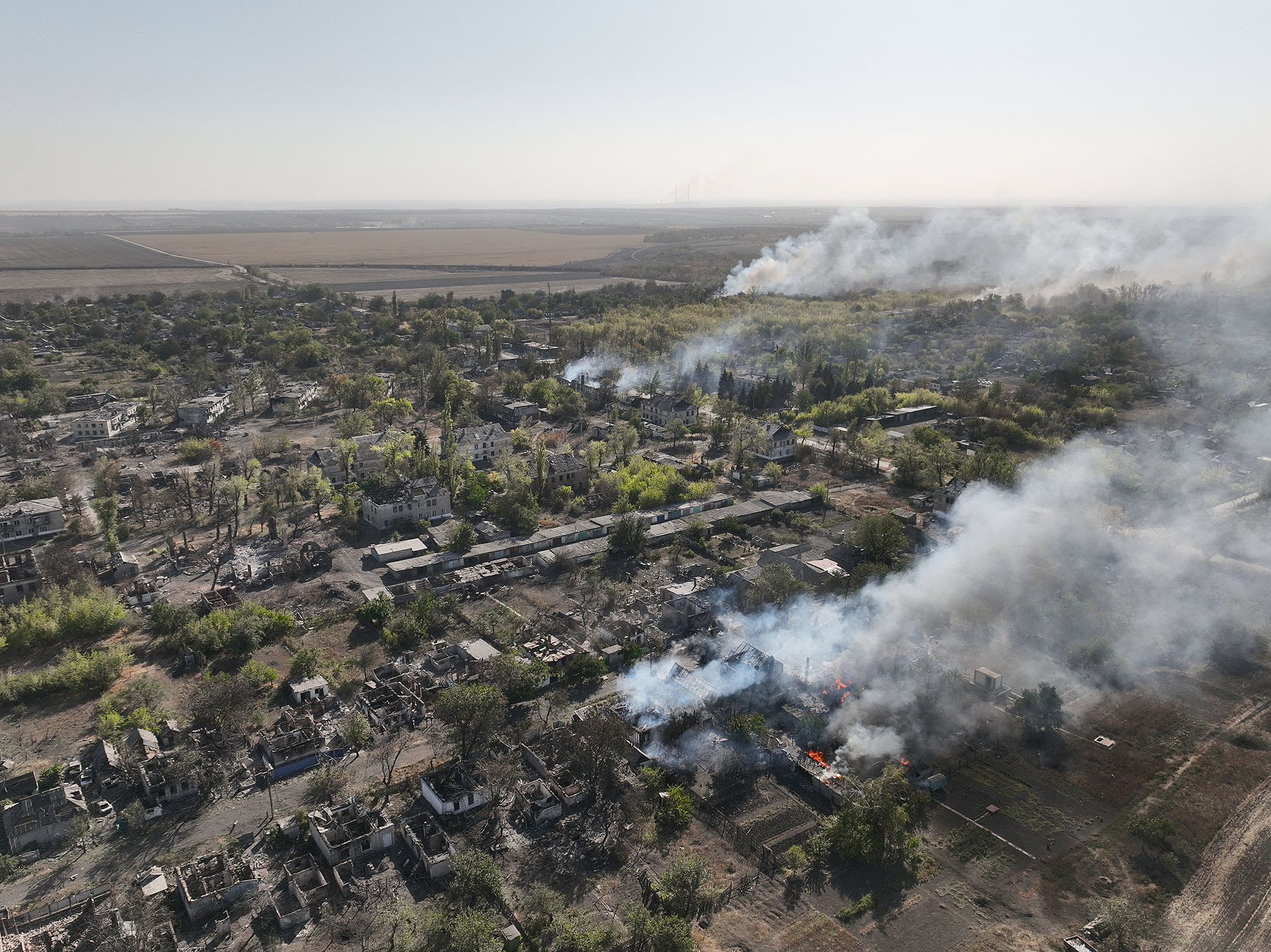 Pokrovsk in September (photo: Getty Images)
In total, approximately 650,000 Russian troops are involved on the front lines, with over 140,000 fighting in the Pokrovsk direction and about 120,000 in the south of the Zaporizhzhia region. The Kremlin continues to mobilize reservists into the war, suggesting that reserves may be dwindling. But the tough economic situation allows Putin to find human resources.
Whereas previously many Russians refused to go to war, and only residents of depressed regions took up arms, today this so-called depression is expanding its geography.
Every month, the Russian army loses about 30,000 people, 65% of whom are killed directly. However, the pressure on the Donetsk region continues. The Russians are making every effort to capture Pokrovsk. Having failed to do so before the start of negotiations, they began to capture the city on Russian TV.
During the active fighting for Pokrovsk, propagandists have already stated several times that Russian troops have managed to liberate the city. The General Staff of Ukraine denies this.
"The situation in Pokrovsk is tough. But the Ukrainian Defense Forces continue to hold the northern part of the city along the railway line. Our units are also continuing active operations to eliminate Russian pockets," says Major Andrii Kovaliov, spokesperson for the General Staff of the Armed Forces of Ukraine, in a comment to RBC-Ukraine.
Judging by the intensity of the fighting, the Russians appear unlikely to slow down and are not seriously considering the possibility of a truce. Moreover, they are not investing anything in the substance of the negotiations themselves. For them, this is another opportunity to stall for time and try to capture as much of the Donetsk region as possible, thereby creating fewer obstacles in the future. And the Trump administration, consciously or unconsciously, is giving Putin this opportunity.
***
Today's mood in the Kremlin is no longer misleading to anyone. Putin communicates with the Americans in an emphatically polite manner, thanks Trump, and does his utmost to show his interest in resolving the so-called Ukrainian issue. But at the same time, he is winking at his audience.
"He wants to show everyone that these statements are for external consumption. That is, we are not serious here at all. Well, Trump is a fool; we are telling him this, but you should not believe it too much. You understand perfectly well where this is actually going," Preobrazhensky notes.
Russia is obviously no longer very afraid of the US President's swings. The Kremlin sees that they do not lead to any serious consequences, even if they are on the opposite side. Therefore, they are willing to play along with any peaceful initiative from Washington, while insisting on their own terms. And so far, it remains to be seen when Trump himself will see this. If he is ready to open his eyes at all.